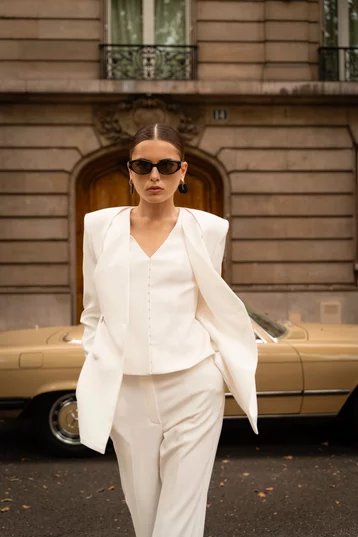
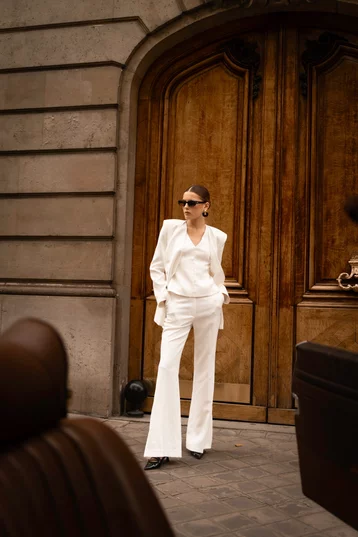
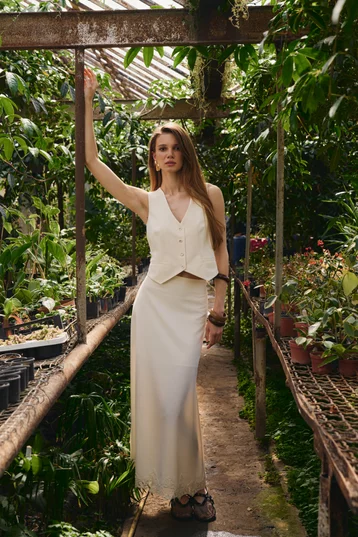
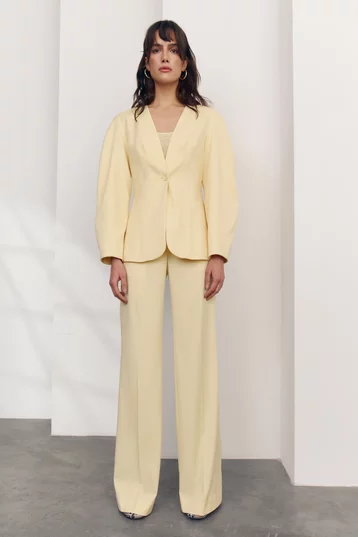
Images for a photo shoot
How to choose an outfit that looks better in the photo, but in real life
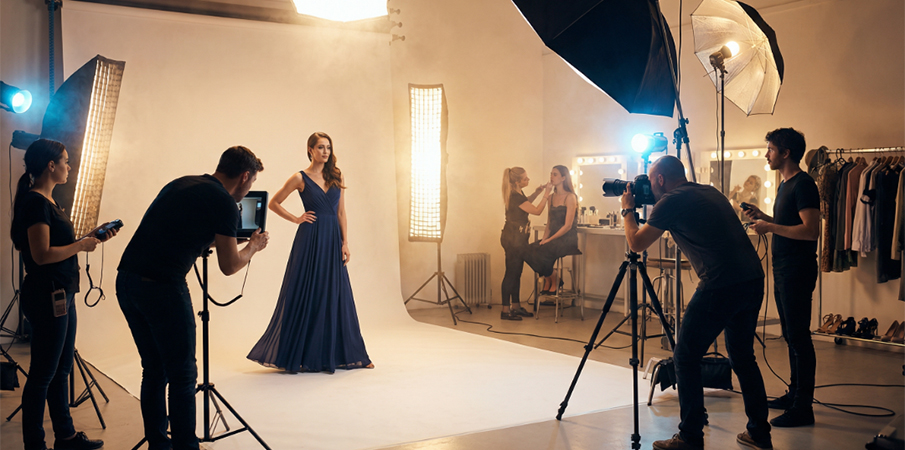
The photographer is responsible for lighting, angles, and post-processing. You are responsible for the look. And this is the part where most people make the same mistakes: they choose a favorite item that “doesn’t work” on camera or get lost in a variety of outfits. In this article — a systematic approach to choosing looks for any type of photoshoot.
How to choose a look based on the photoshoot concept
Mistake #1 is starting with the wardrobe. The correct sequence: first the concept, then the location, then the look. Clothing should be part of the visual solution, not a random set of beautiful items.
Ask the photographer three things: what the background will be, what the lighting will be, and what mood the photos will have. The answers to these questions will narrow your choices by half.
Studio shoot: a neutral background requires detail accents
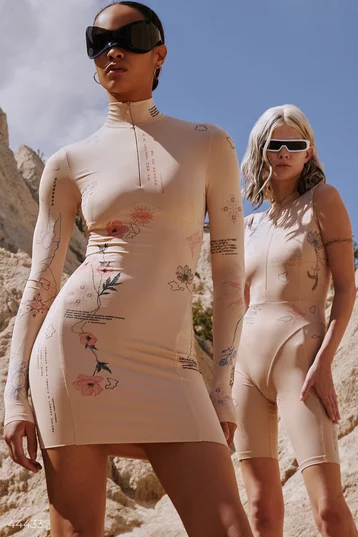
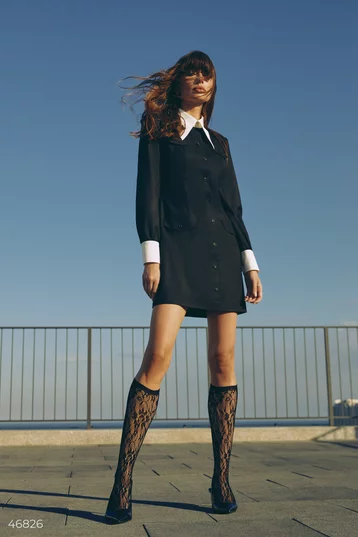
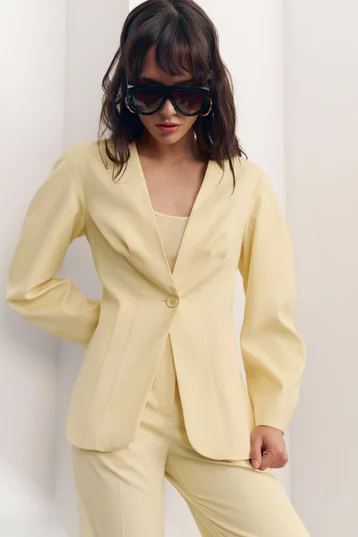
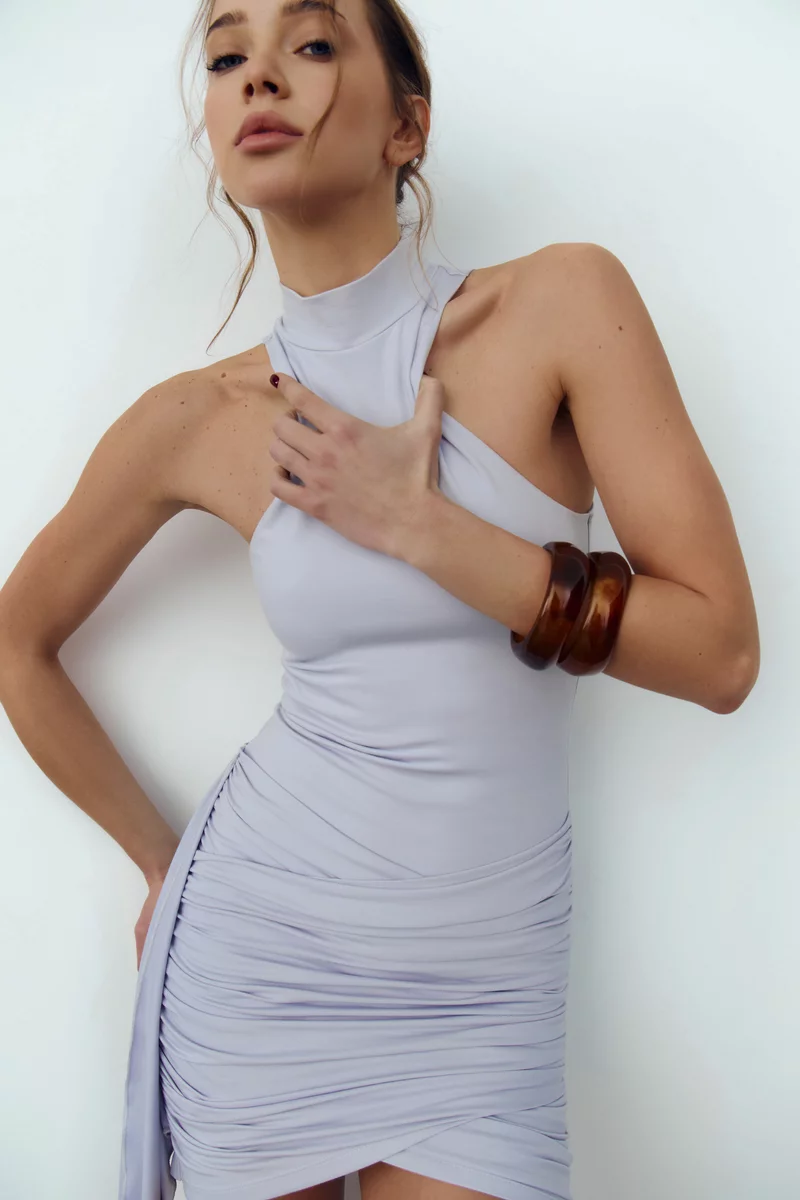
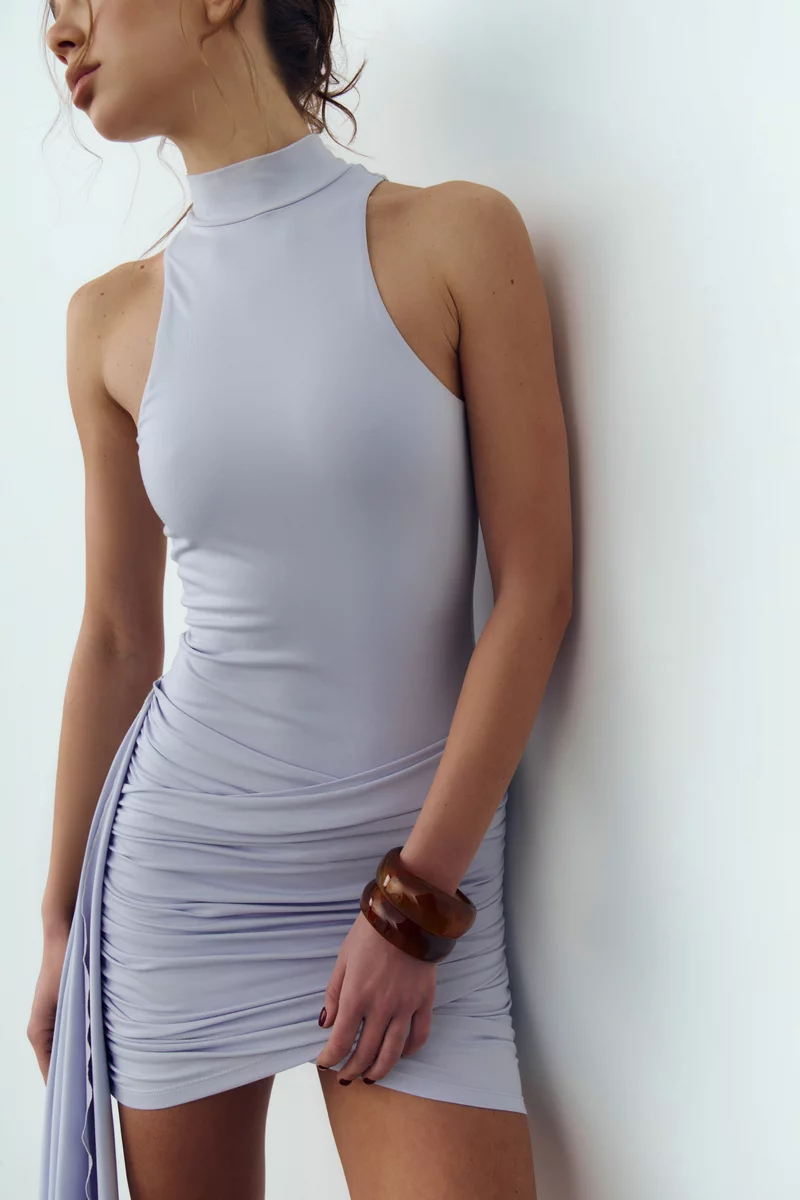
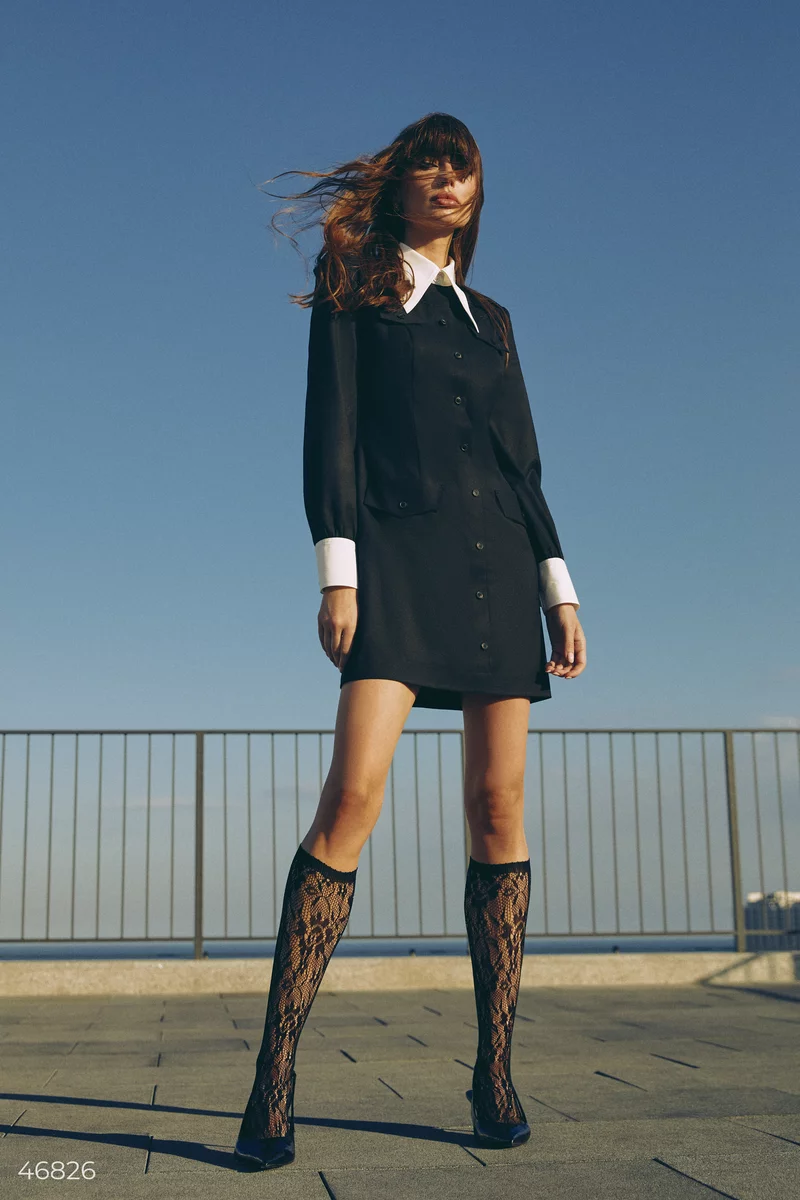
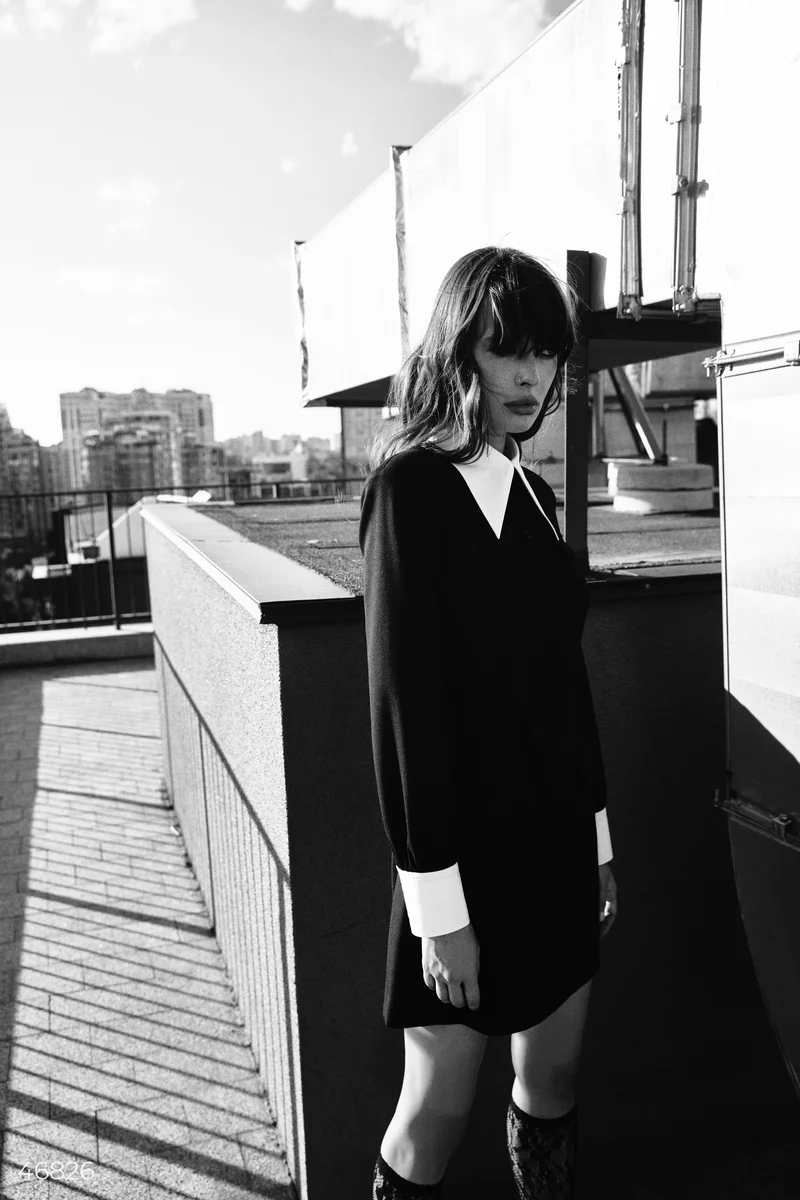
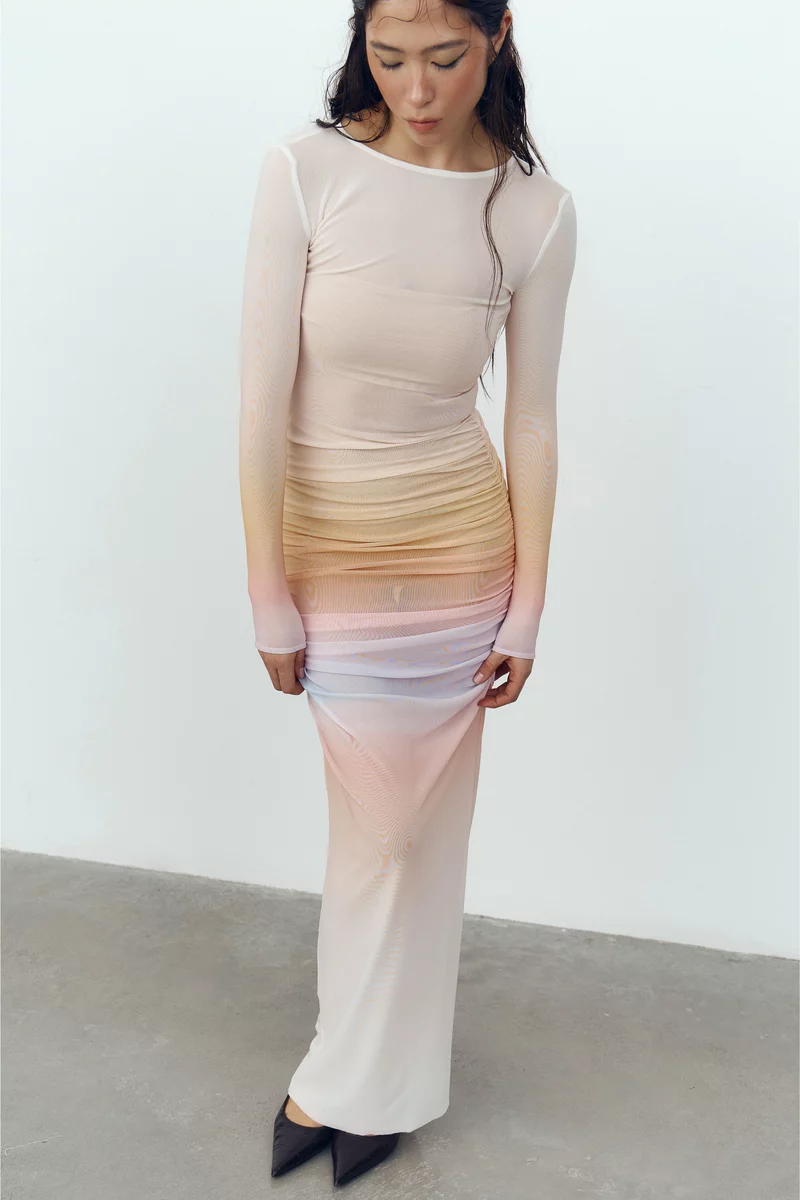
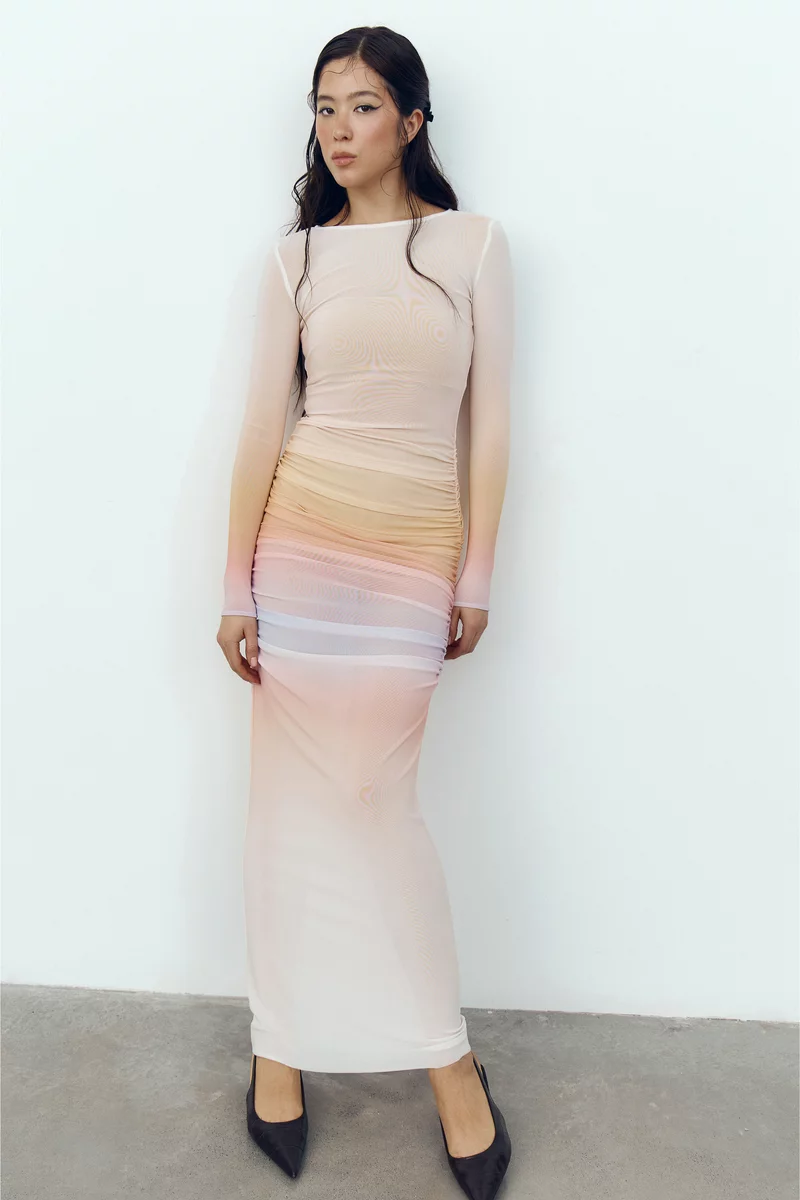
In a studio, there is no environment that “works” for you. All the visual weight is on the clothing, silhouette, and details. Clear silhouettes, expressive collars, interesting sleeves, or textured fabrics work well here. Minimalism in color with maximum emphasis on cut is a fail-safe formula for a studio shoot.
Outdoor photoshoot: fit into the location, not get lost
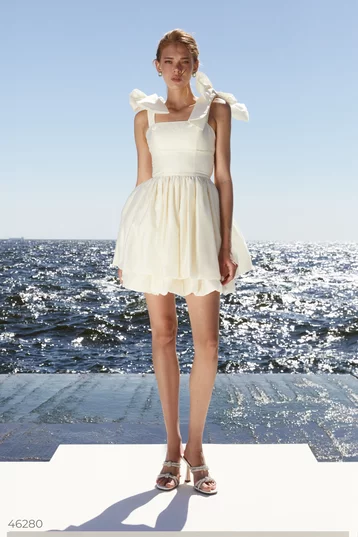
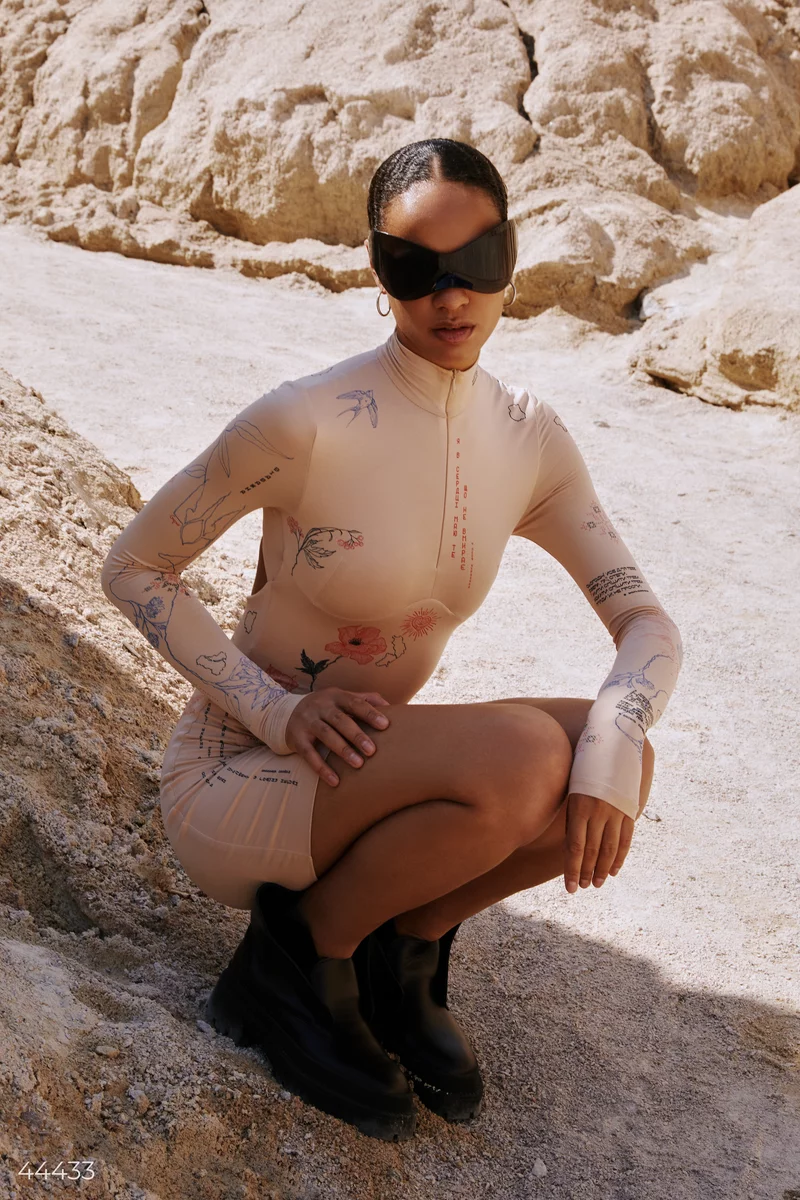
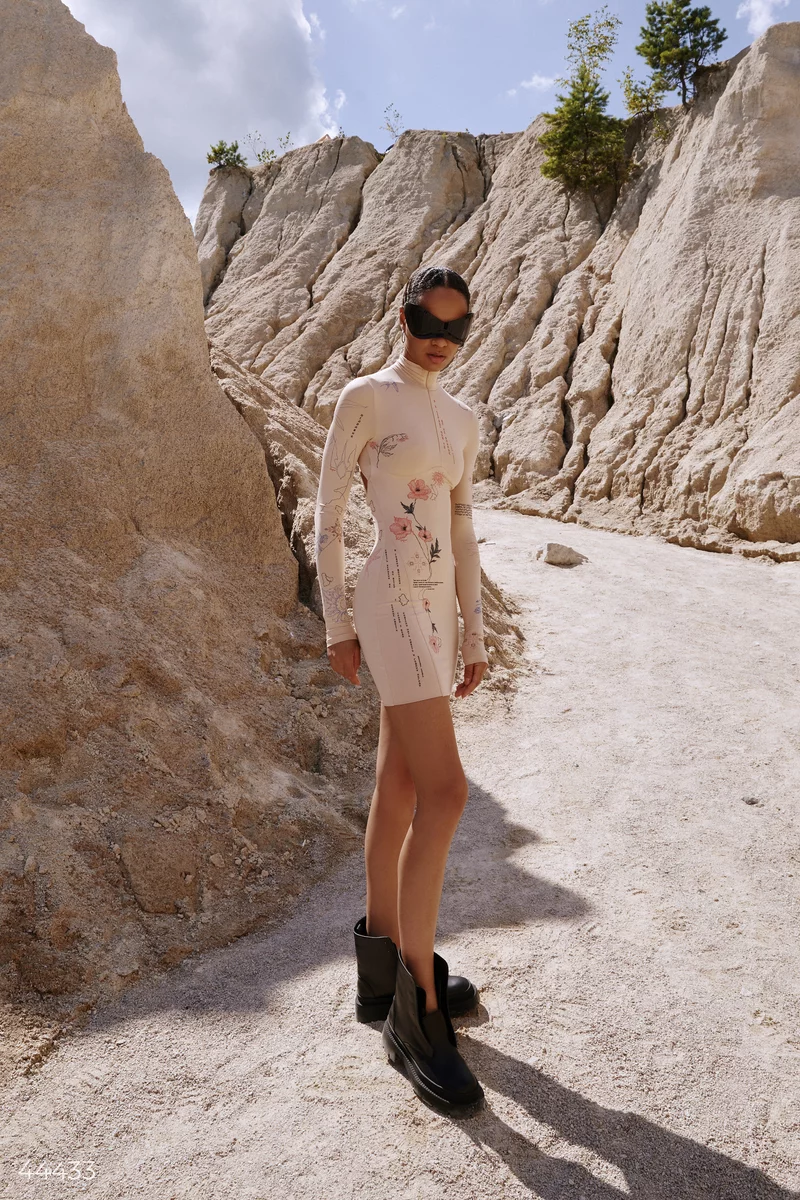
Nature already creates the mood — your task is to support it, not compete with it. Earth tones, natural textures (linen, cotton, knits), and soft prints work far better than neon colors or business style. Outdoors, light fabric movement is your ally: silk blouses, wide skirts, and dresses with slits add liveliness to the frame.
How many looks to bring to a photoshoot
A universal rule: 1 look per 30–40 minutes of active shooting. For a standard 1.5–2 hour session, this is 2–3 outfits — the maximum comfort without rushing.
A common mistake is bringing 5–6 looks and spending half the time changing. As a result, each look is shot superficially. It’s better to have 2 well-thought-out outfits with several accessory variations than 5 that are never fully captured.
Basic formula: 1 neutral look + 1 statement look. The first is for portraits and details, the second for conceptual shots and dynamics.
Color and print: what reads well on camera
The camera perceives color differently than the human eye. Some shades “blow out,” others get lost. Small prints flicker when compressed.
| Works | Use with caution | Avoid |
|---|---|---|
| Pastels: lavender, powder pink, beige | насыщенный red — overexposure on the face | White on fair skin — blends with the background |
| Neutrals: ivory, coffee, khaki | Bright yellow — gives the skin a yellow tint | Black-and-white small checks — moiré effect in photos |
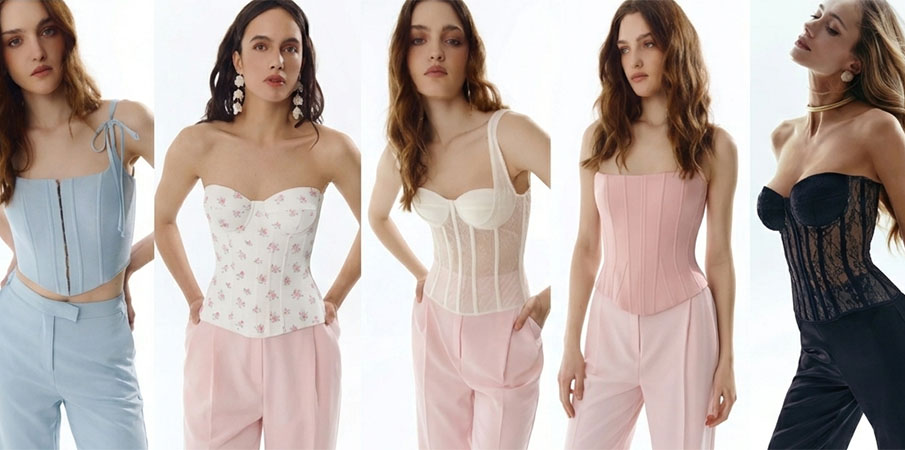
| Muted tones: terracotta, olive, dusty rose | Orange — depends on skin tone | Small polka dots — flicker when the file is compressed |
| Monochrome — always a safe choice | Metallics — reflect under flash | Neon colors — overexposure |
| Rich solid colors in soft lighting | Large sequins — ok, fine glitter — no | Busy all-over print — overloads the frame |
Golden rule: the softer the light on set, the more saturated the color you can choose. In harsh sunlight or with flash, any bright shade risks blowing out.
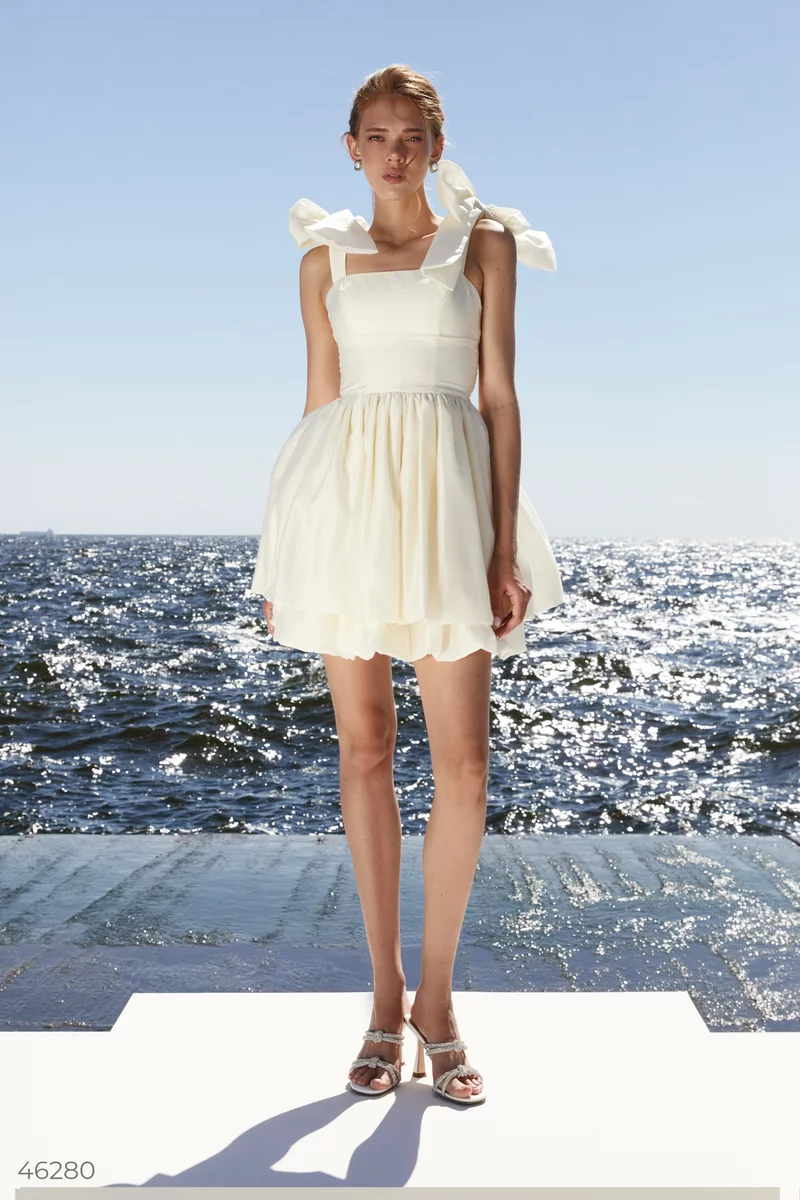
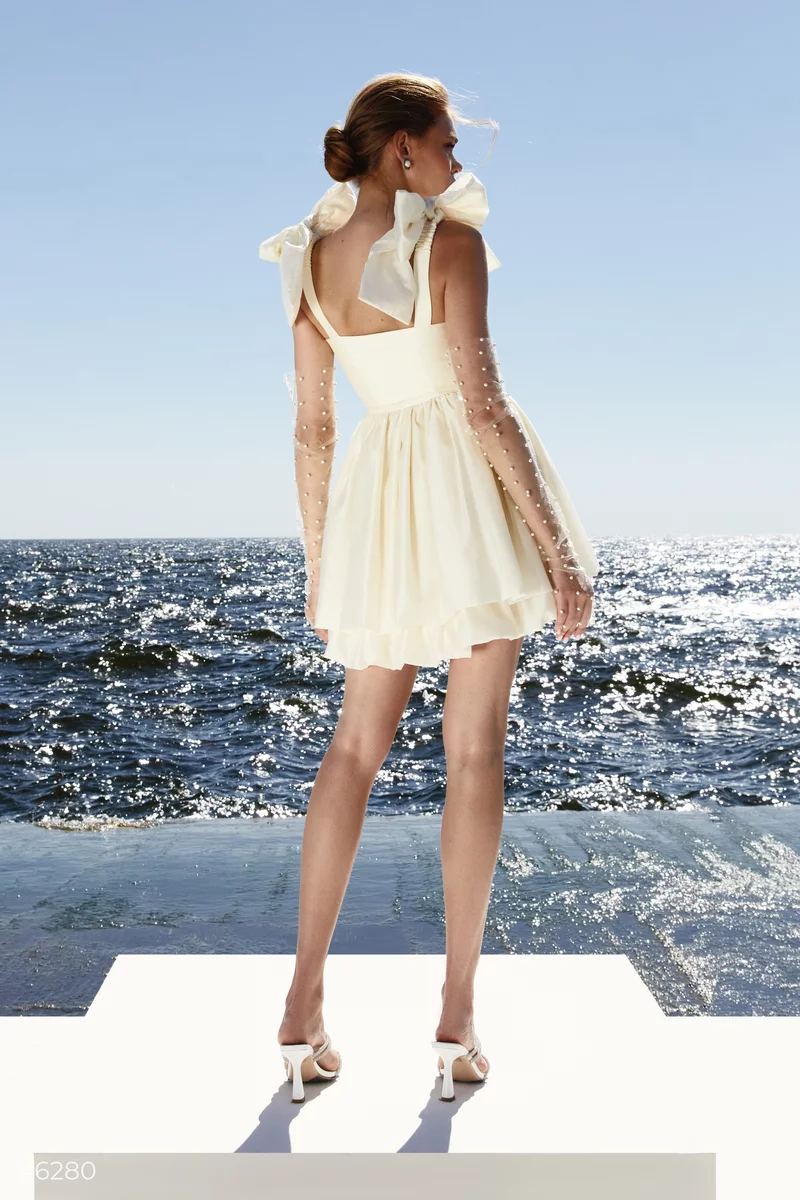
Common mistakes when choosing clothes for a photoshoot
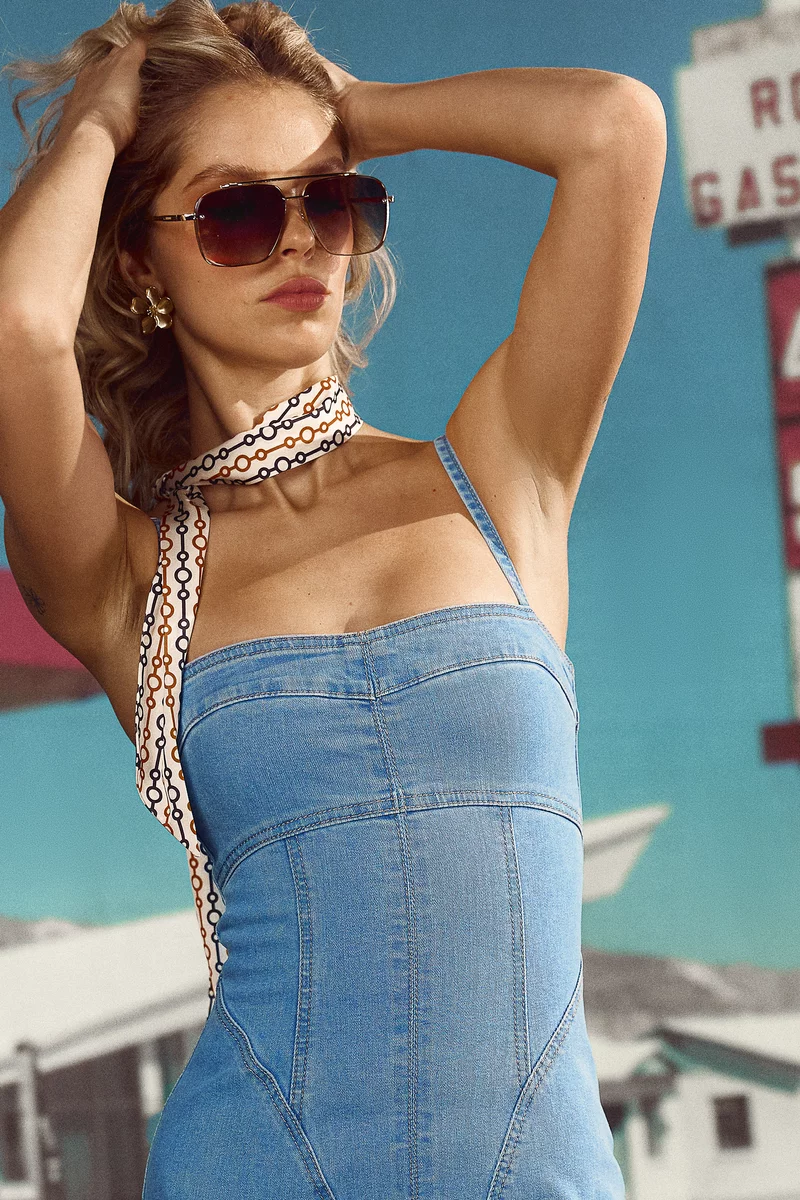
- Busy all-over print. A large, complex print across the entire body is the most common mistake. In a photo, it competes with the face and overloads the frame. If you want a print, use it locally: a scarf, a skirt, or a single element.
- New clothes that haven’t been worn. A new item at a photoshoot is a risk. You don’t yet know how it fits in motion, whether a strap rubs, or if the fabric sticks out in an unexpected place. Wear the new look at home for at least 2–3 hours before the shoot.
- Mismatch between silhouette and frame format. Portrait shooting focuses on the upper body. Collar, shoulders, and neckline matter here. Full-body shots require a complete silhouette. Clarify framing with the photographer in advance and choose the look accordingly, not the other way around.
- Wrinkled or unpressed clothes. The camera ruthlessly captures creases. What is unnoticeable in real life looks sloppy in photos. Bring a steamer to the shoot or allow 15 minutes to prepare the look.
Looks for different formats and locations
Studio: silhouette as the main focus
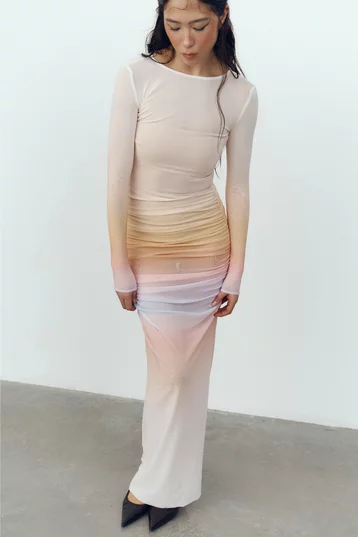
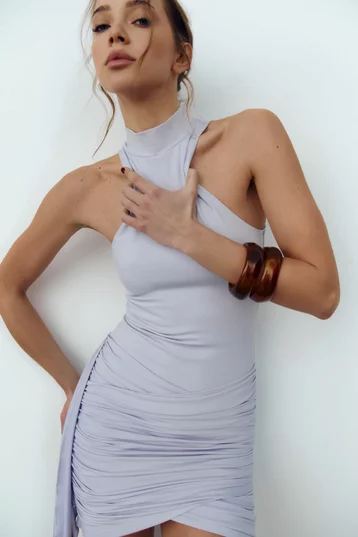
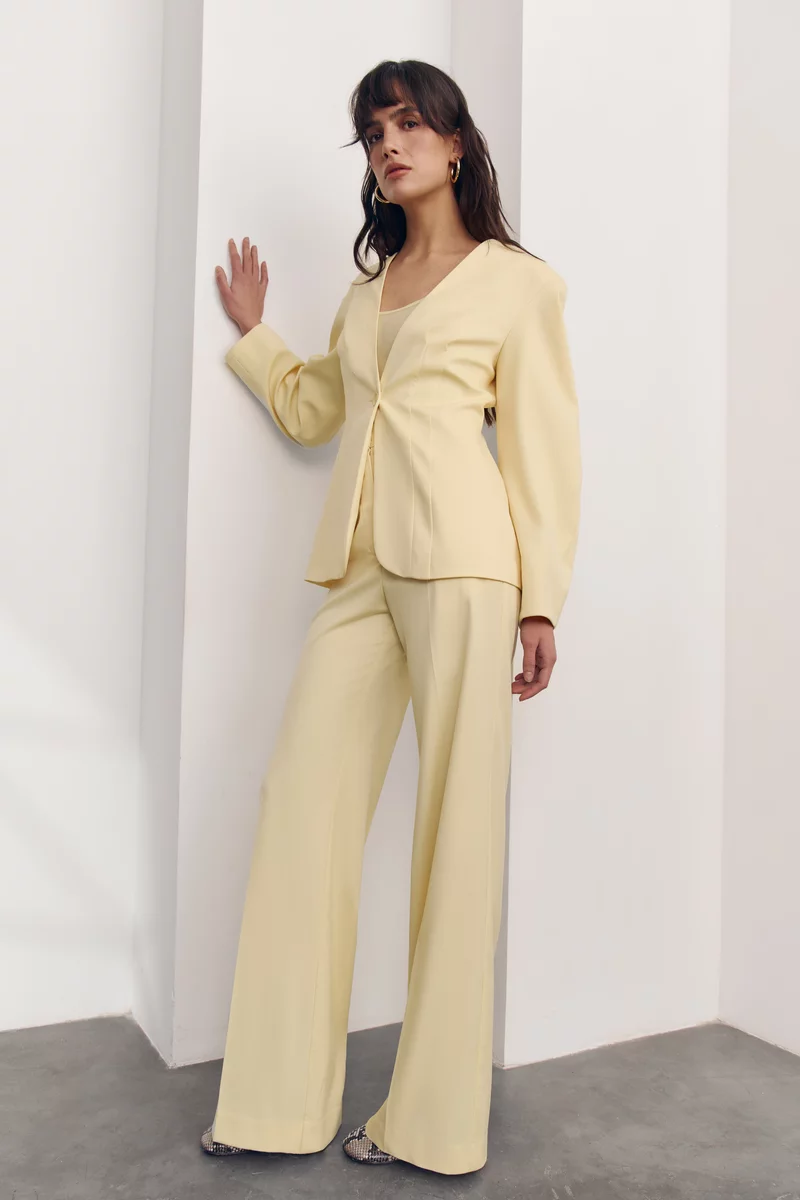
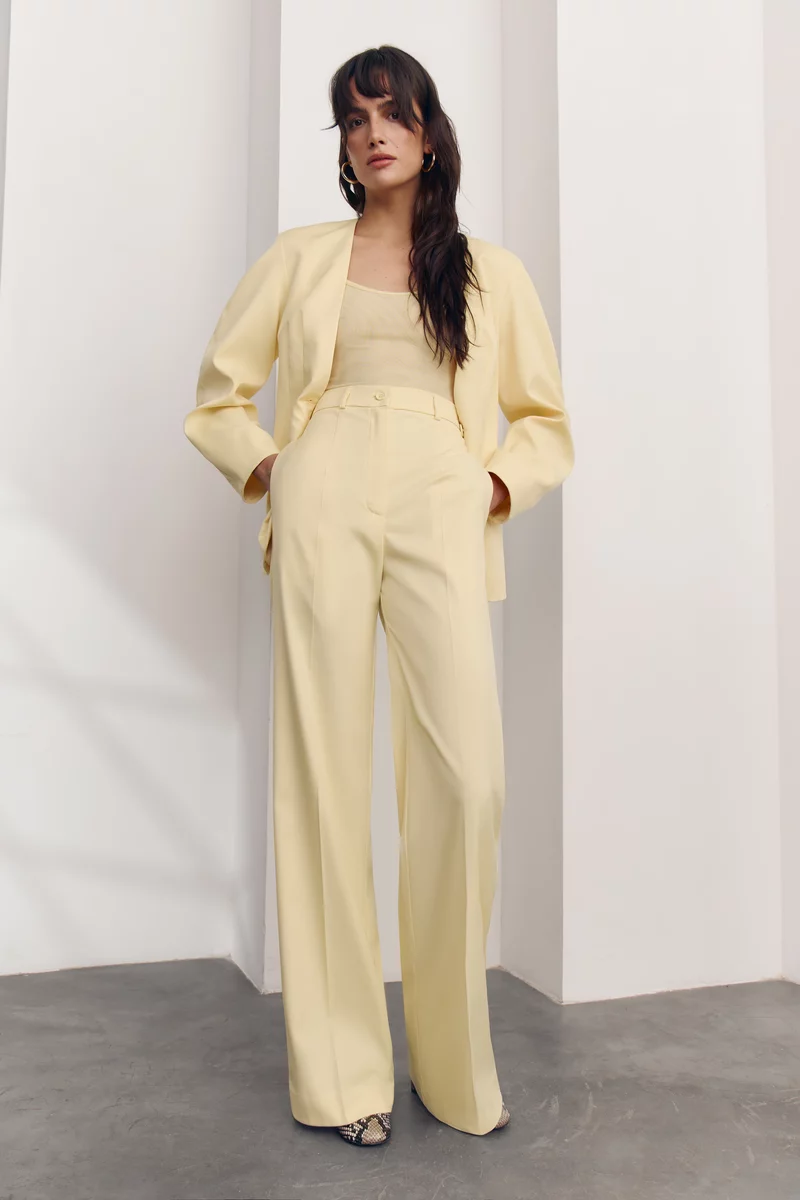
Priority is a clear shape. Fitted dresses, structured blazers, and turtlenecks work well. Avoid baggy silhouettes — without an environment, they make the look shapeless. Color: monochrome or a two-tone set.
Urban photoshoot and street style
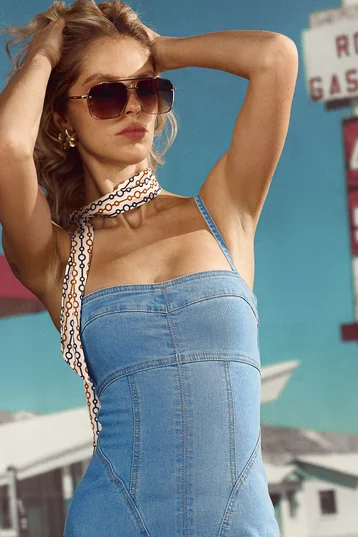
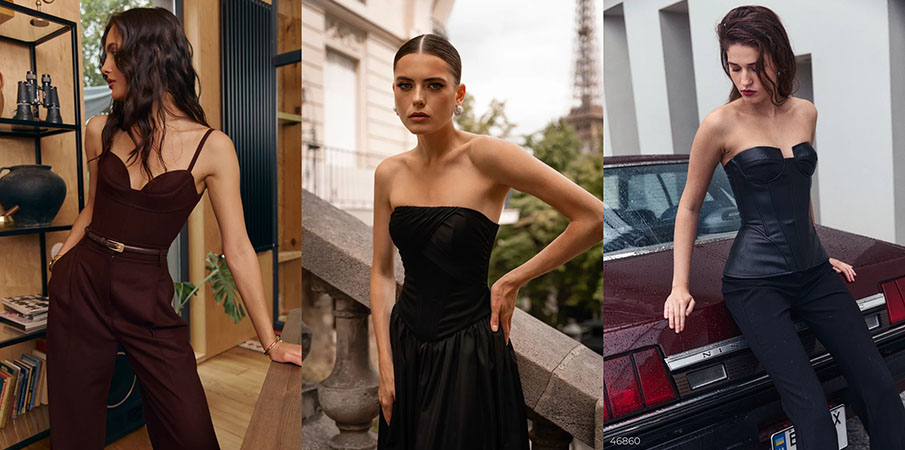
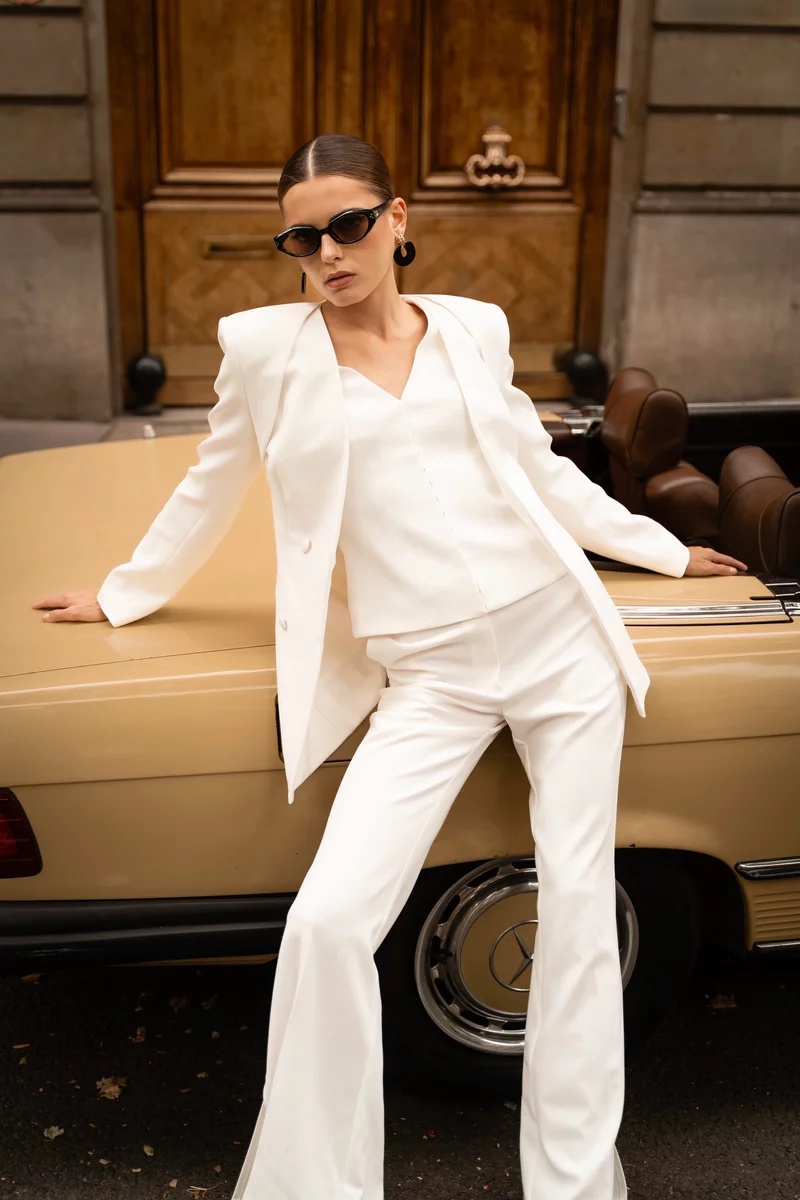
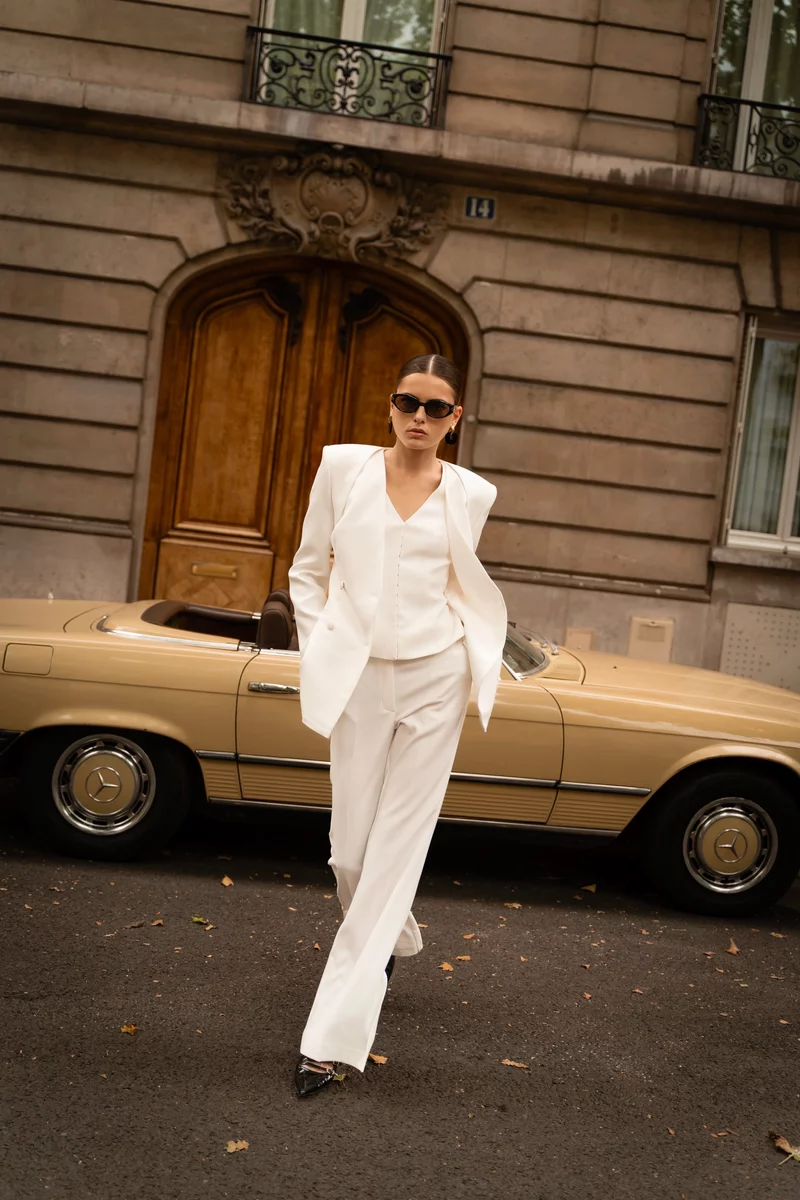
The city provides texture: brick walls, graffiti, storefronts, metal. The look should be expressive enough not to get lost against a busy background, but not so loud that it competes with it. Good options: a trench coat, jeans with an interesting top, leather elements, and a statement accessory.
Nature and open spaces
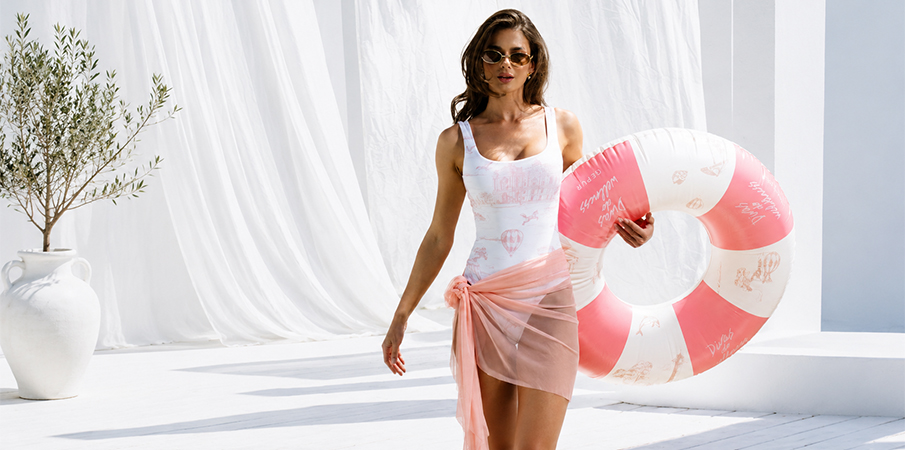
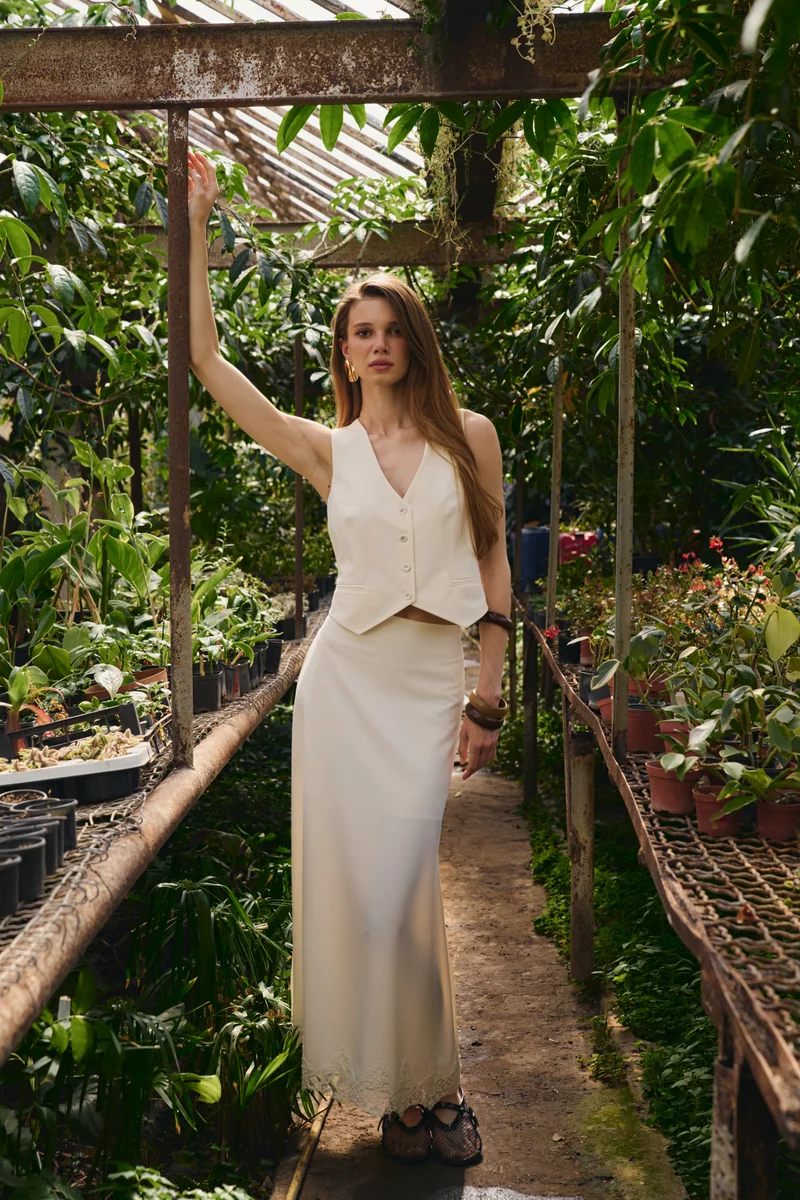
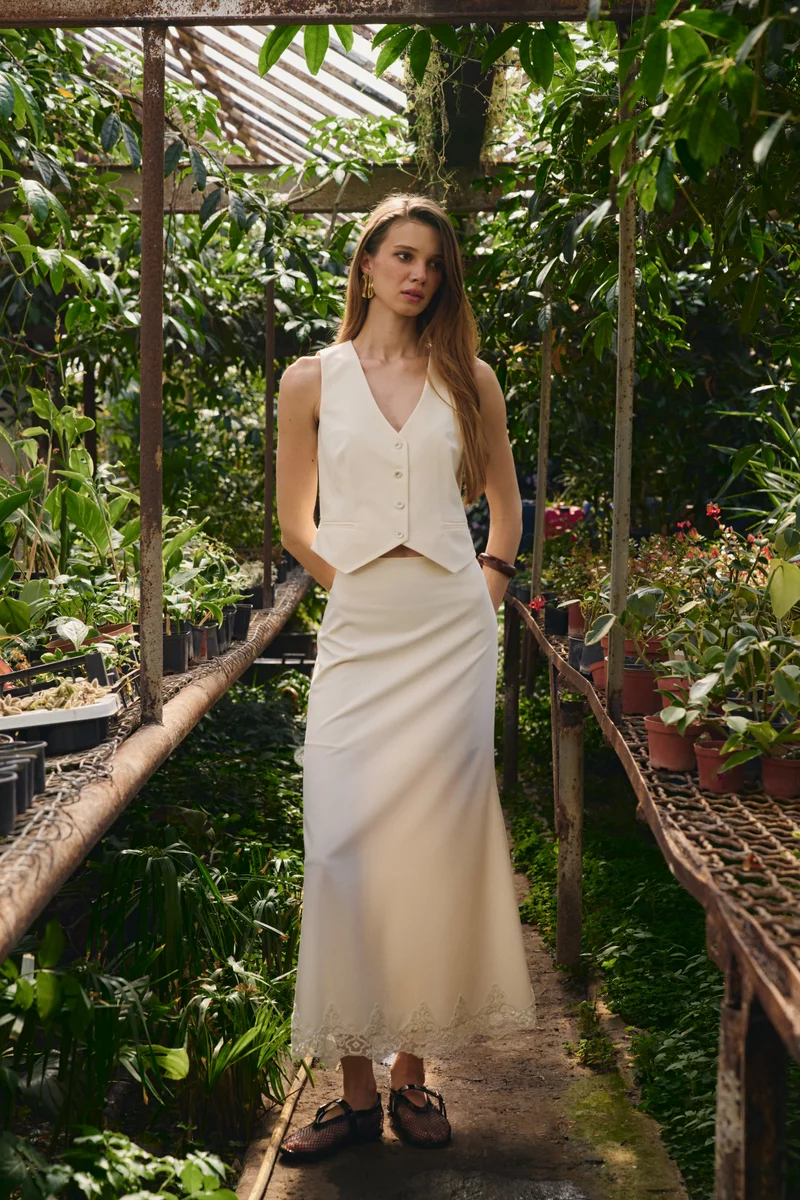
Lightness and movement are your tools. Focus on natural materials and a muted palette: cream, olive, terracotta, dusty rose. Avoid synthetic fabrics — they reflect poorly in sunlight. Ideal choices: silk, cotton, viscose, linen.
Family photoshoot: look for a woman
In a family shoot, the woman’s look sets the tone for the entire frame — the color scheme for other participants is built around it. A flawed strategy is choosing the dress after deciding on others’ outfits.
What works in a family photoshoot:
- Midi dresses and skirts — add femininity and movement, look good alongside children at different levels in the frame
- A neutral base with one accent element — easier to fit into a cohesive palette
- Textured fabrics instead of smooth satin — satin reflects, texture looks more natural
- A color present in the location — terracotta near brick walls, cream in nature, dusty rose in the studio
- What to avoid: an overly formal evening dress in a daytime shoot — the style mismatch between participants will be obvious. The look should align with others, not dominate.
Accessories and details: less is more, but more precise
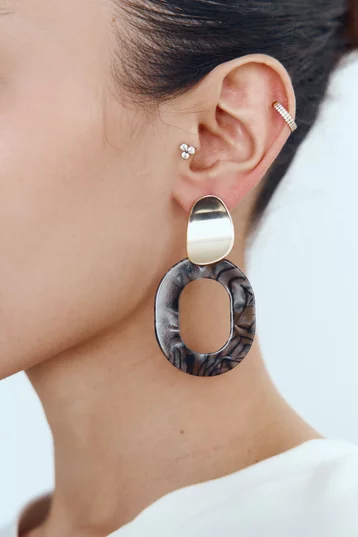
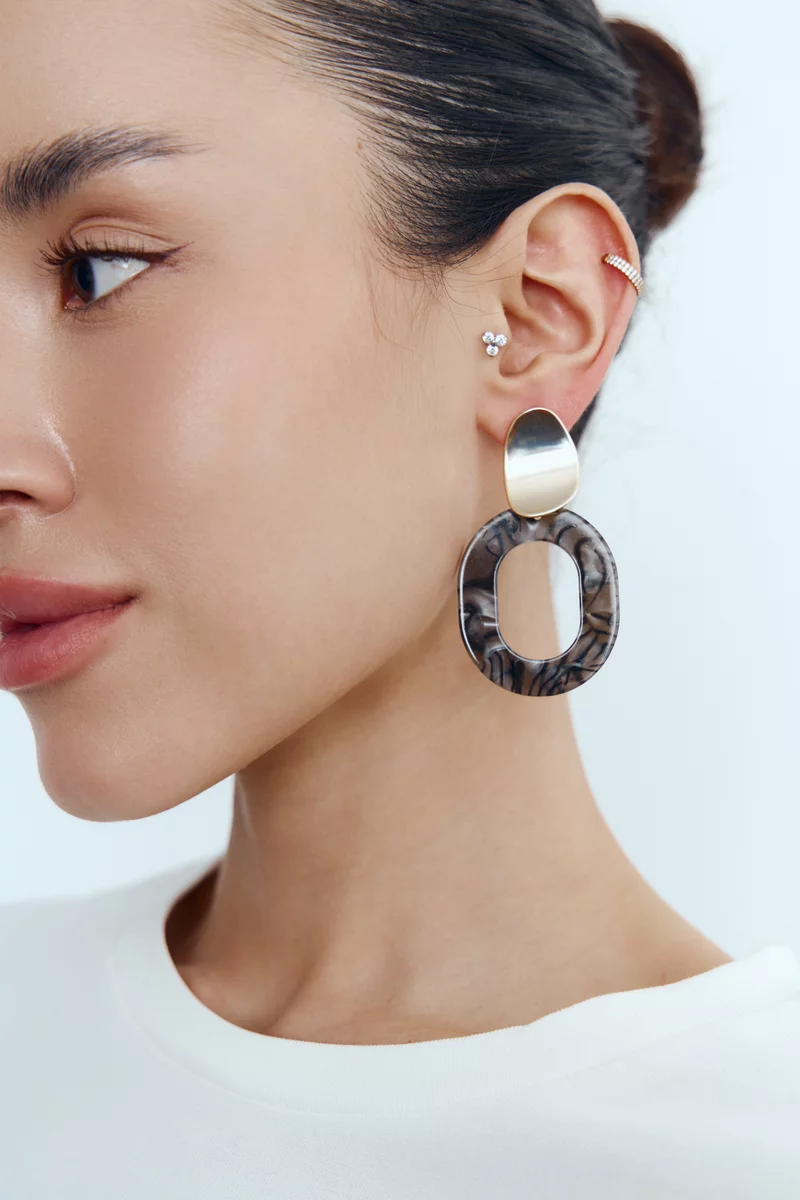
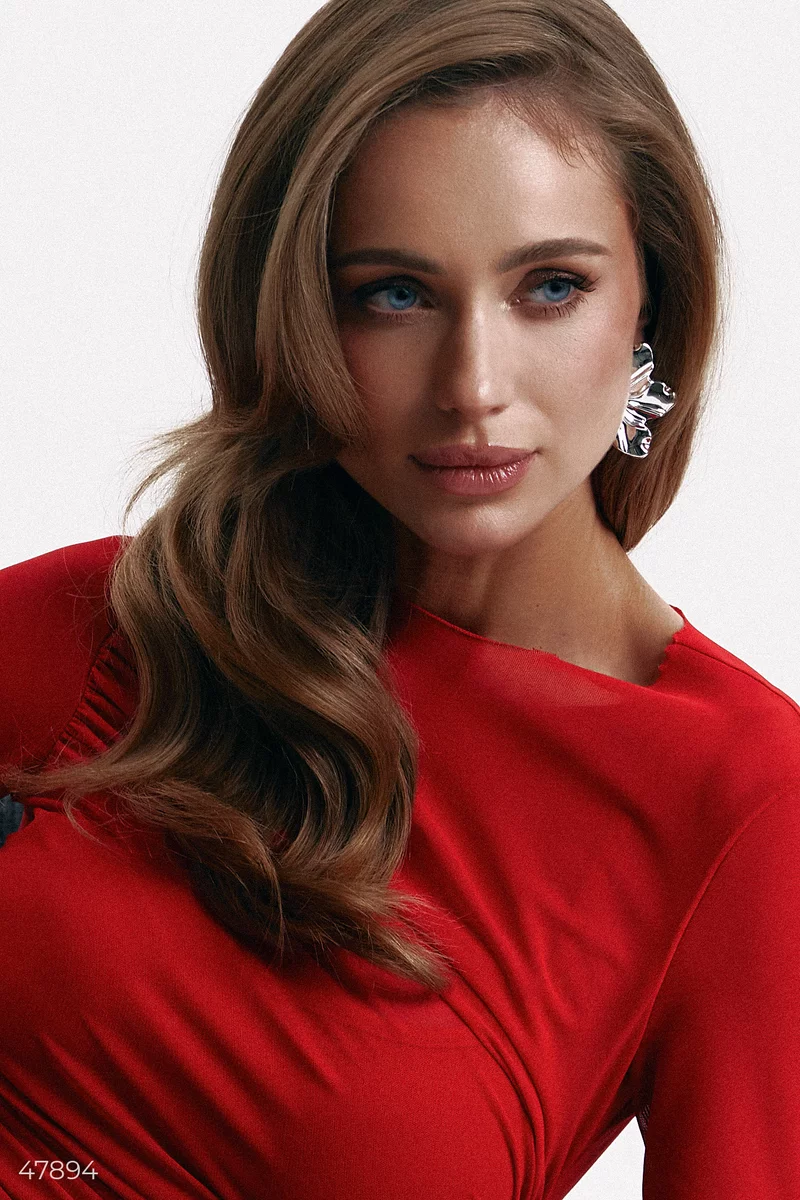
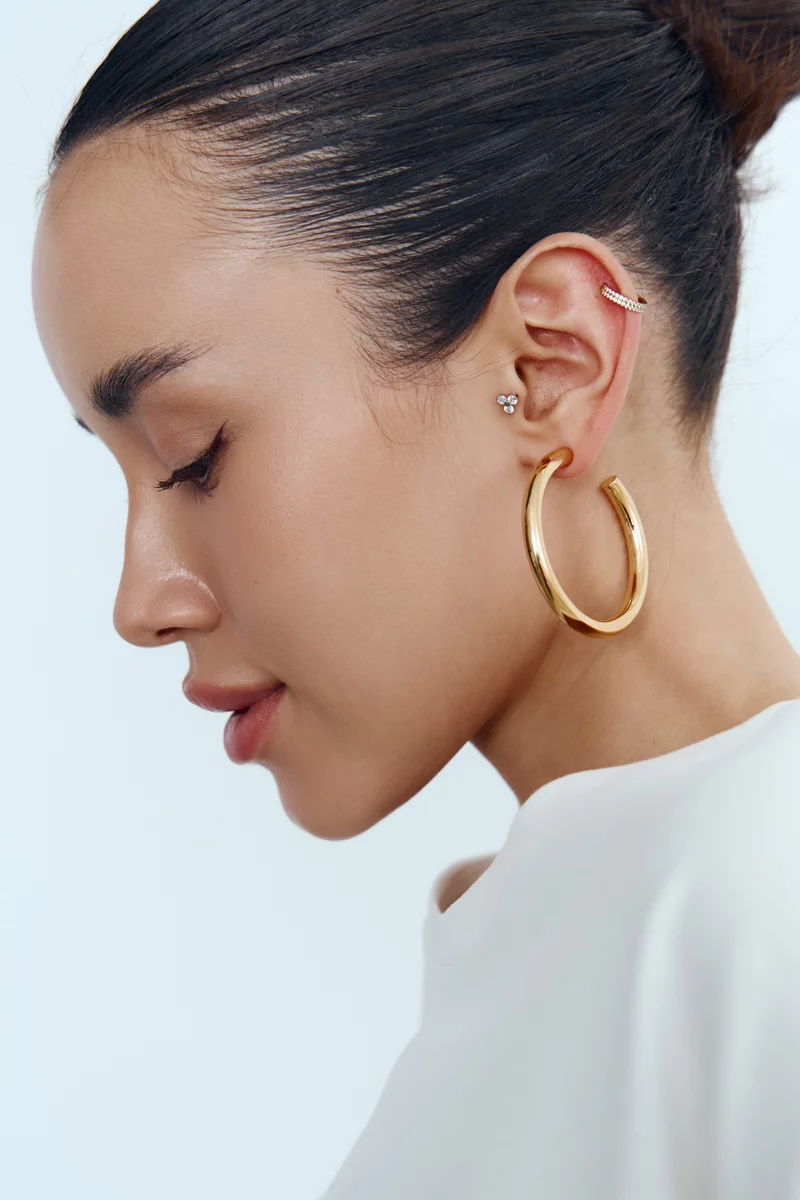
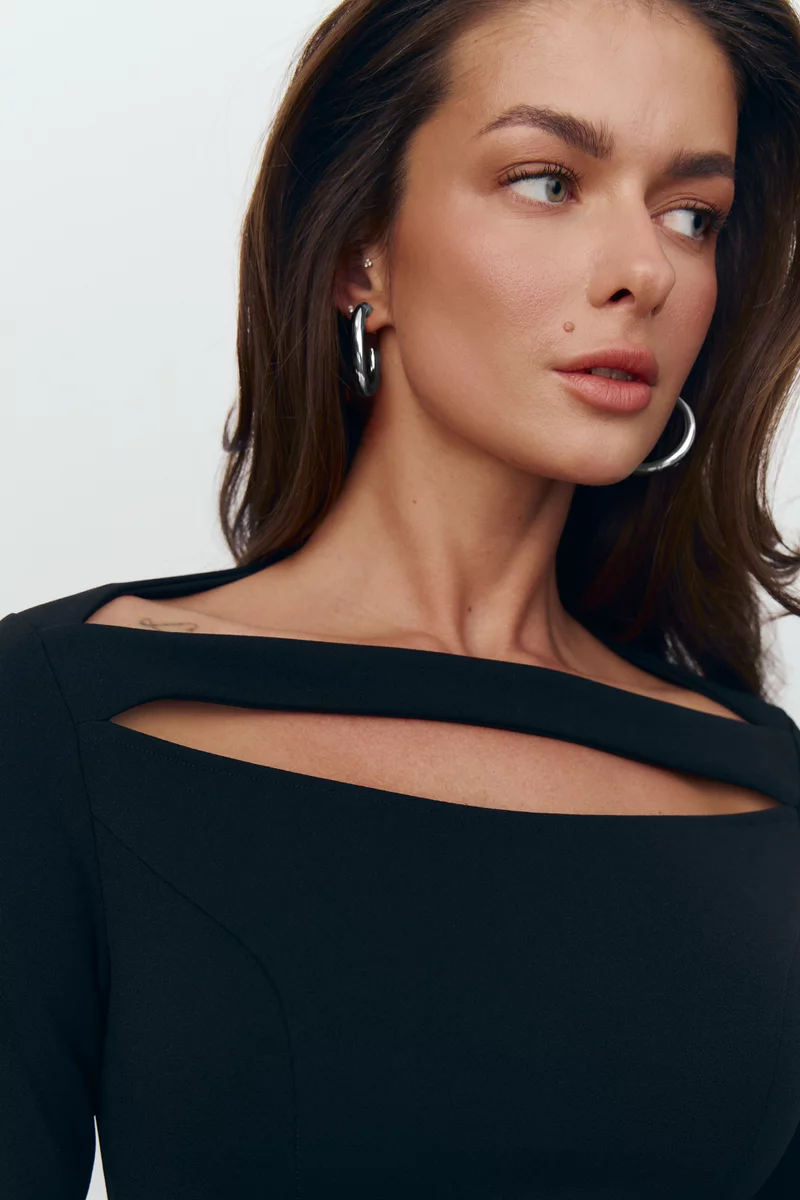
Accessories are the final layer of the look that either completes it or overloads it. In photos, everything appears larger: a big earring becomes dominant in the frame, a small one disappears.
Jewelry: size matters
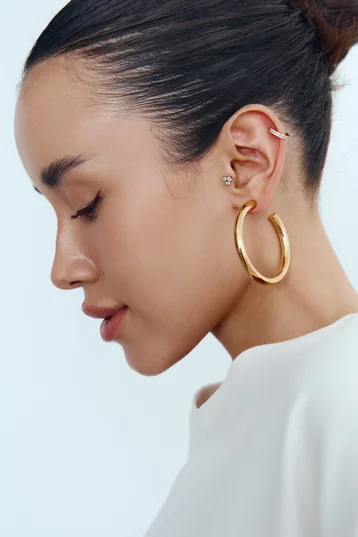
Studio portrait — one expressive element: hoop earrings, a choker, a chunky chain. Full-body shot — neutral jewelry, focus on the overall look. Mixing many pieces with different textures risks visual chaos. Principle: one “star,” the rest are background.
Shoes and bags — when they are part of the frame
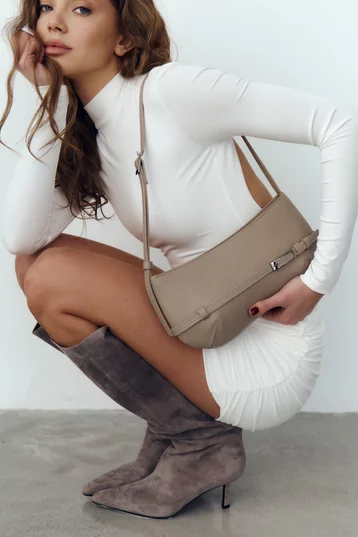
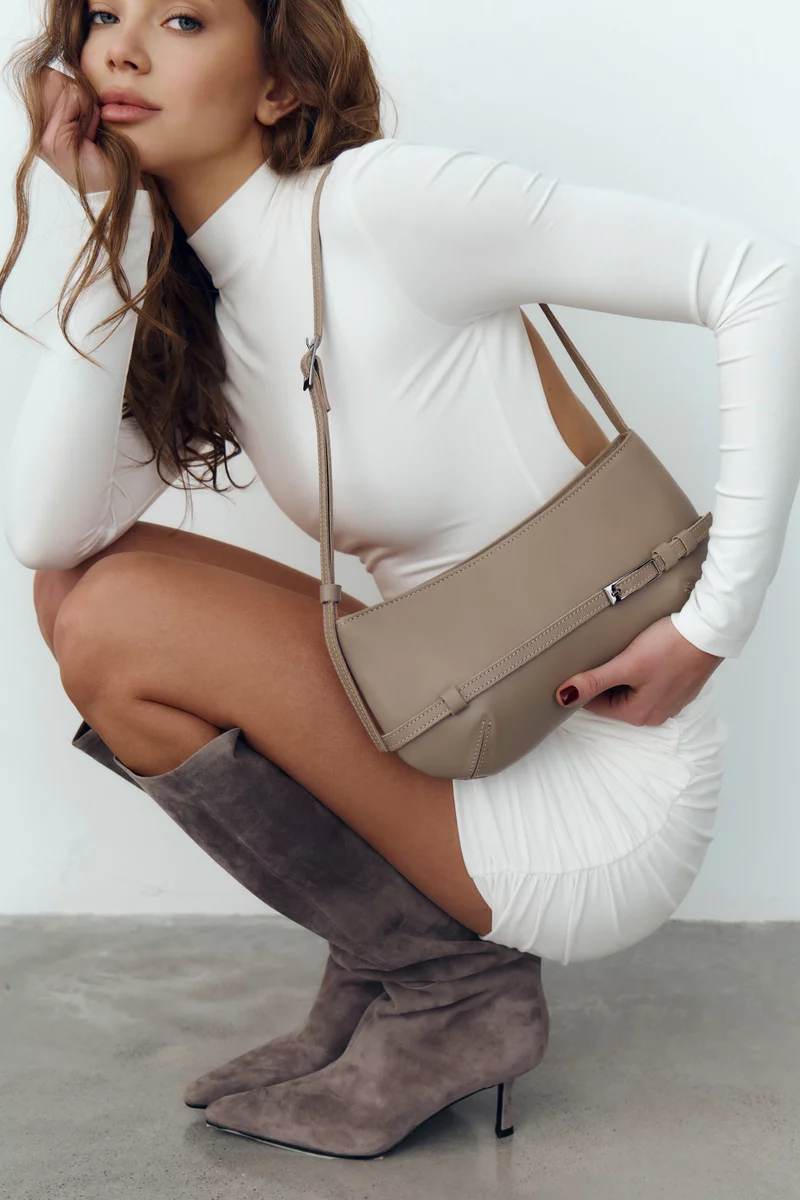
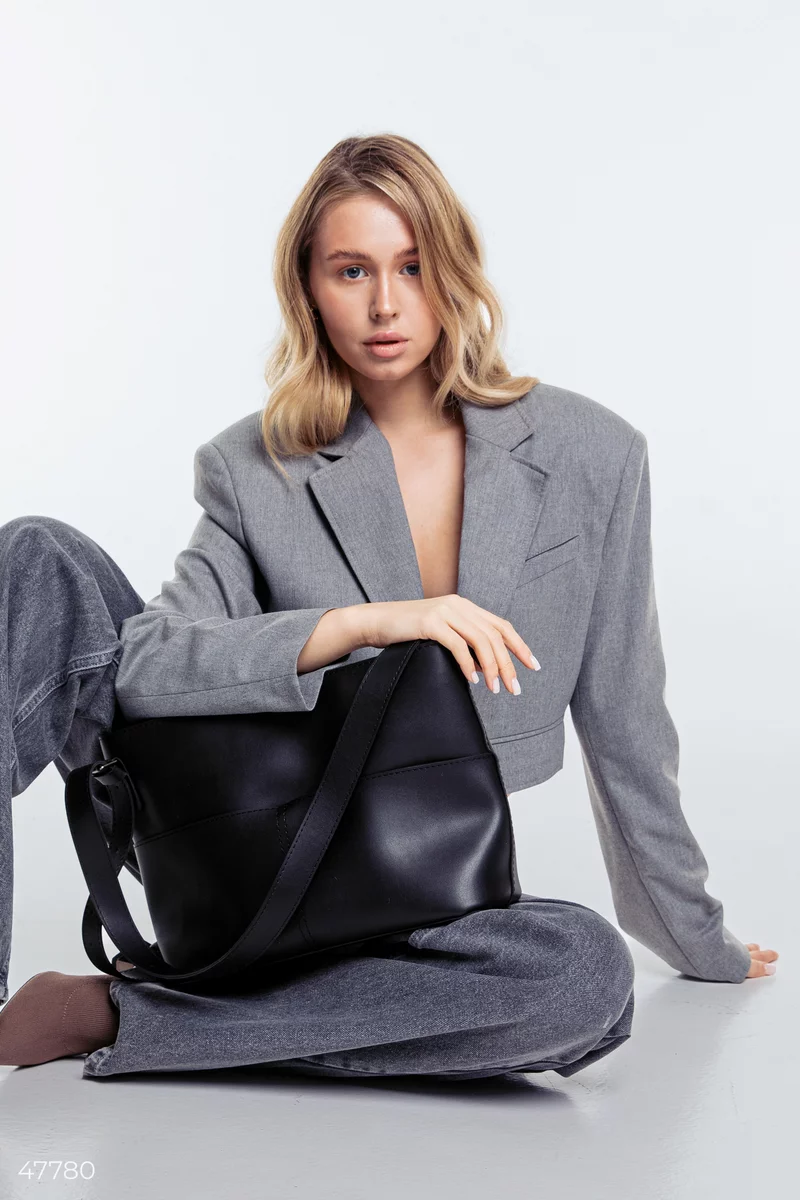
If full-body shots are included, shoes become part of the look. Classic options — pumps, loafers, heeled boots — work in most styles. Sneakers only if they are part of the concept. A bag is appropriate in urban and street shoots; in a studio or outdoors, it often distracts more than it helps.
Hats and headwear
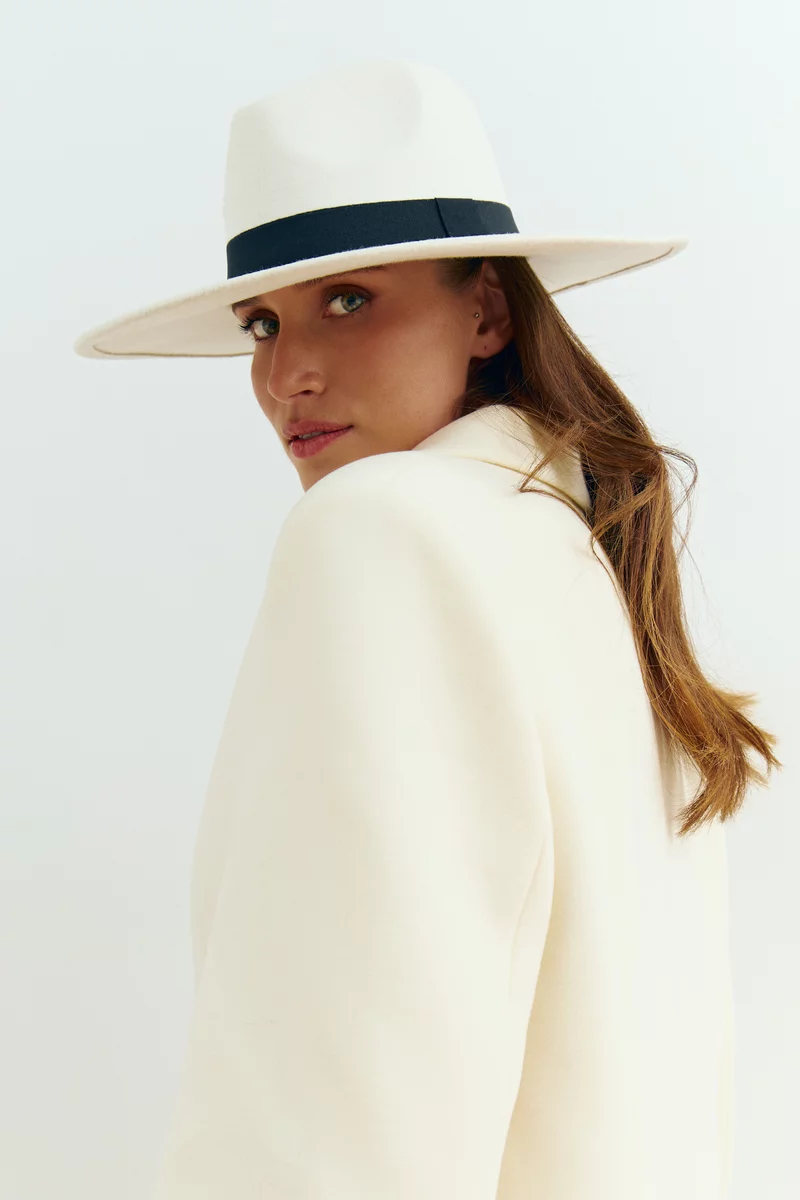
A wide-brim hat is one of the most effective accessories for outdoor shoots. It creates shade on the face (soft diffused light), adds volume to the frame, and allows for dynamic poses. In the studio, berets and interesting hair clips work well — as a detail, not a focal point.
Frequently asked questions
How many looks are needed for a standard photo shoot?
Optimally, 2-3 looks for a 1.5-2 hour session. This allows for each look to be fully captured without rushing or changing outfits every 15 minutes. If the session is shorter (up to 1 hour), 1-2 looks are appropriate. The key principle: fewer looks are better, but each one should be thought out and fully curated.
What colors don't look good in photographs?
Colors that are difficult to photograph include: bright neon and acidic shades (overexposed), small black-and-white prints (moiré effect), and pure white on fair-skinned people against a white background (it blends in). Be careful with rich red—it "burns" in direct light and can create an unwanted cast on the skin. Pastels, neutrals, and muted shades work best.
What to wear for a studio photo shoot with a white background?
A clear silhouette is essential against a white background—it becomes the main visual element. Monochrome looks in neutral tones (beige, gray, coffee), structured silhouettes with interesting cuts, and contrasting dark tones work well. Avoid white clothing—it "dissolves" into the background. The best option is an outfit with a visual accent: a collar, textured fabric, or a striking detail.
How to choose a look for a summer outdoor photo shoot?
Focus on lightweight natural fabrics (linen, cotton, viscose, silk)—they move beautifully and don't shine in the sun. Color palette: earth tones, terracotta, olive, cream, dusty rose—they harmonize with greenery and natural textures. Silhouette: flowing midi dresses and skirts, lightweight blouses. A bright tip: choose something with a long hem or a flared cut—this creates the best shots in the wind.
Can I wear prints to a photo shoot?
Yes, but with some caveats. A large, simple print (stripes, large flowers, geometric patterns) works well. A small, discrete print (small checks, small polka dots, complex patterns) creates a vibrational effect in photos—a moiré effect. A print on a single element (a skirt, scarf, jacket) is safer than a head-to-toe print. Always test: take a photo of the outfit with your phone and resize it—if it starts to shake, discard it.
Do you need to coordinate your looks with the photographer?
Absolutely, at least minimally. It's important for the photographer to know the color scheme of your looks in advance: this will influence the lighting setup, background selection, and editing presets. Send photos of your looks or a mood board 1-2 days before the shoot. A professional photographer will be able to advise if any aspect of the look will be problematic in the specific shooting conditions.
How to dress for a family photo shoot so everyone looks harmonious?
The capsule collection principle: choose a base color and 1-2 accent shades. Everyone wears clothes within this palette, but not identical pieces. The girl sets the tone: her look is the starting point for the overall color scheme. Avoid a situation where one participant is in a smart evening attire, while the others are in casual attire. A consistent style is more important than matching colors.