Types of Corsets: A Guide to Cuts, Materials, and Wearing Scenarios
We analyze the cut, materials, and construction, and suggest what to wear with each model.
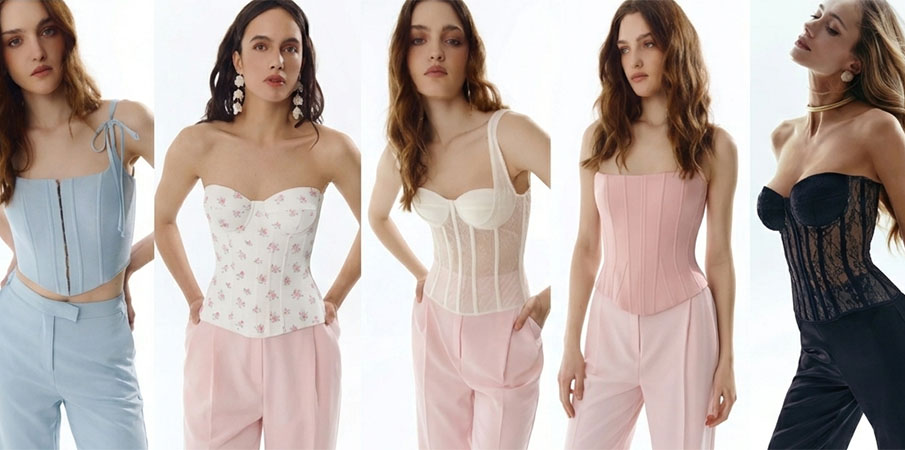
Types of corsets can be classified along four axes: by cut (underbust, overbust, longline, midbust, waist cincher, corset top, peplum corset), by purpose (everyday, evening, bridal, special occasion), by historical silhouette (Renaissance stays, Victorian “hourglass,” Edwardian S-bend, modern revival), and by construction (coutil, satin, leather, steel or plastic boning). In this guide, you’ll find every type, its purpose, and how it fits into the modern DIVA wardrobe.
What a corset is and how it differs from a bodice, bustier, and corset top
A corset is a structured garment with boning that shapes the waist and supports the torso. It is often confused with three related pieces. A bodice is the soft upper part of a dress that follows the shape of a corset but has neither cinching nor a rigid framework. A bustier is a short structured strapless bodice designed primarily to lift the bust. A corset top is a modern softer version with minimal boning, closer to clothing than lingerie. Unlike all of the above, a corset does both jobs at once: it shapes the silhouette and remains a standalone statement piece in the look.
Corset classification by cut
Cut is the main axis of classification. Where the upper and lower lines fall determines the silhouette function of the corset, how it pairs with wardrobe basics, and how it is worn.
Underbust — corset under the bust
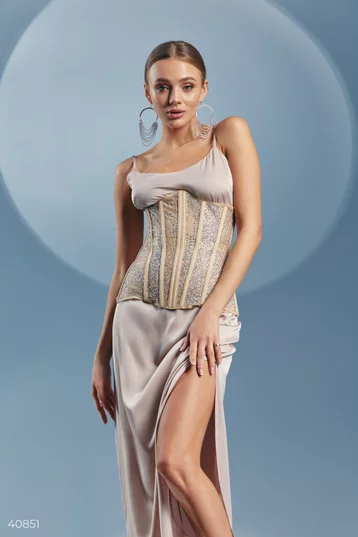
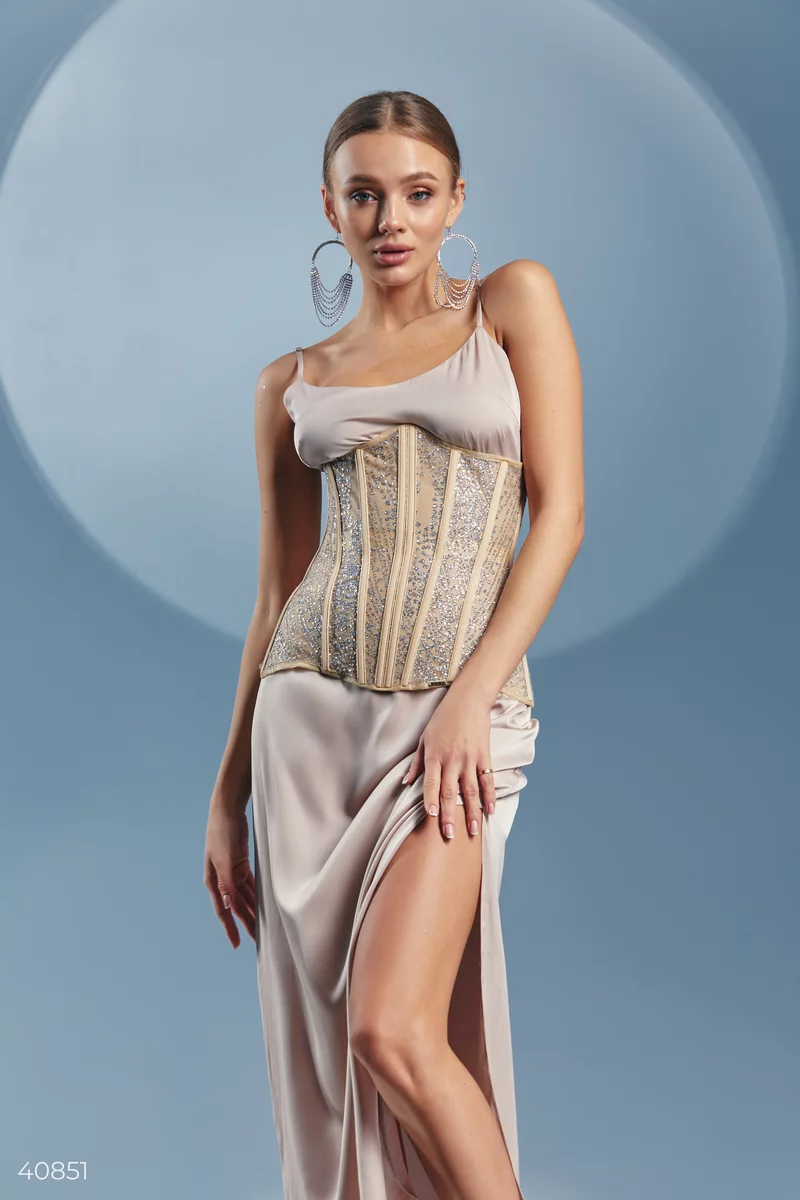
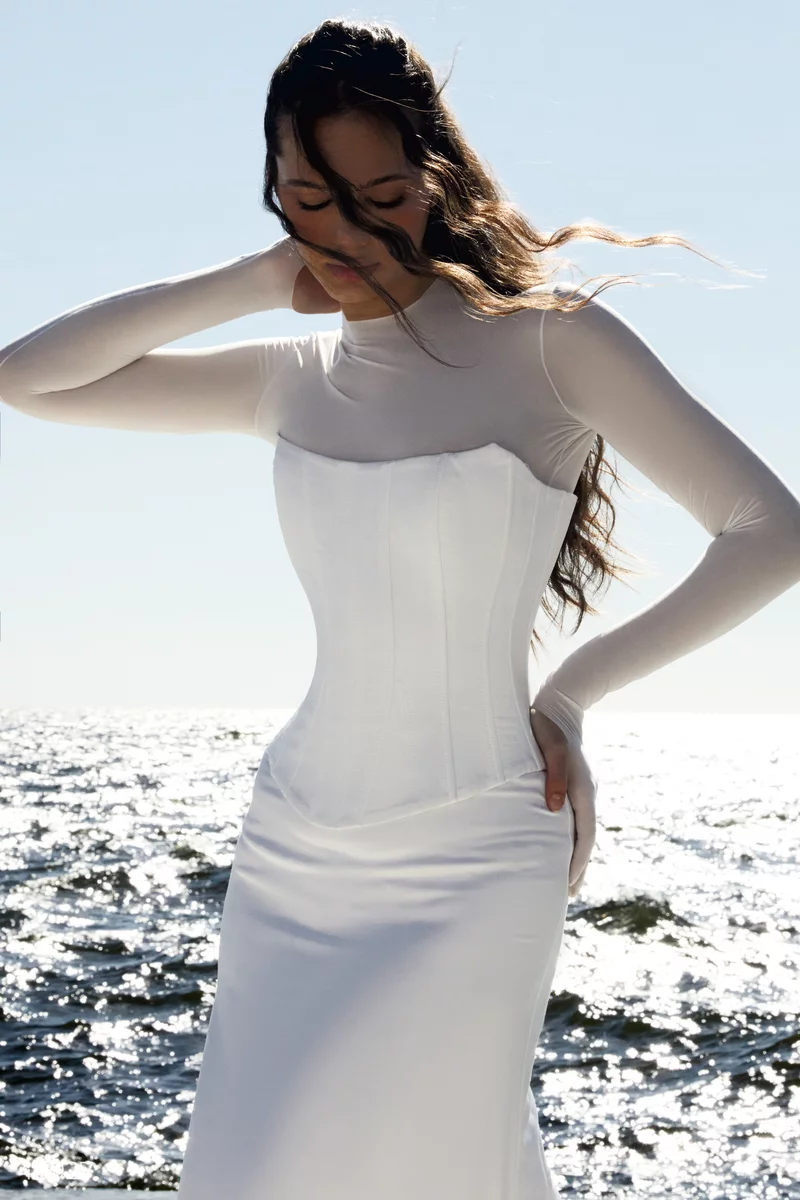
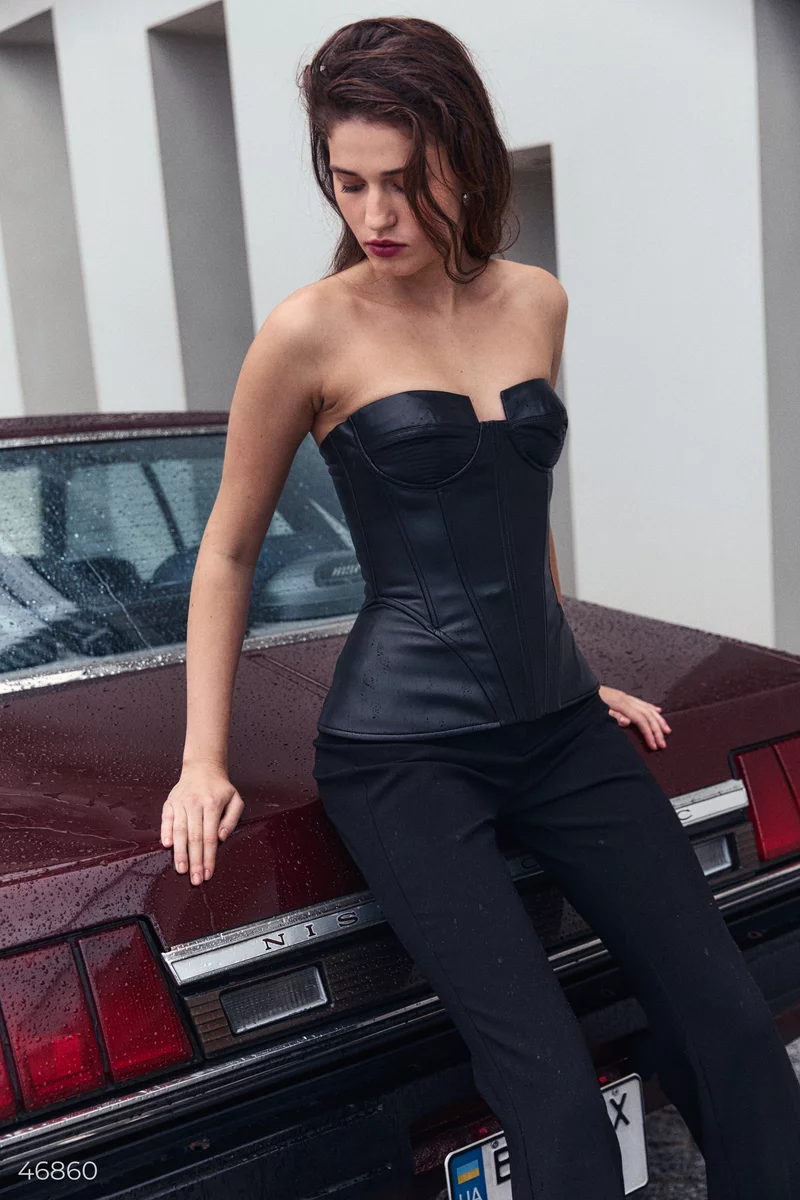
Underbust starts directly below the bust and ends at the waist or slightly lower. It frees the bust area, accentuates the waist, and does not require matching to a cup size. This is the most versatile type: it can be worn over a shirt, a thin turtleneck, a T-shirt, or a strappy dress. It works both in business looks and as an evening accent.
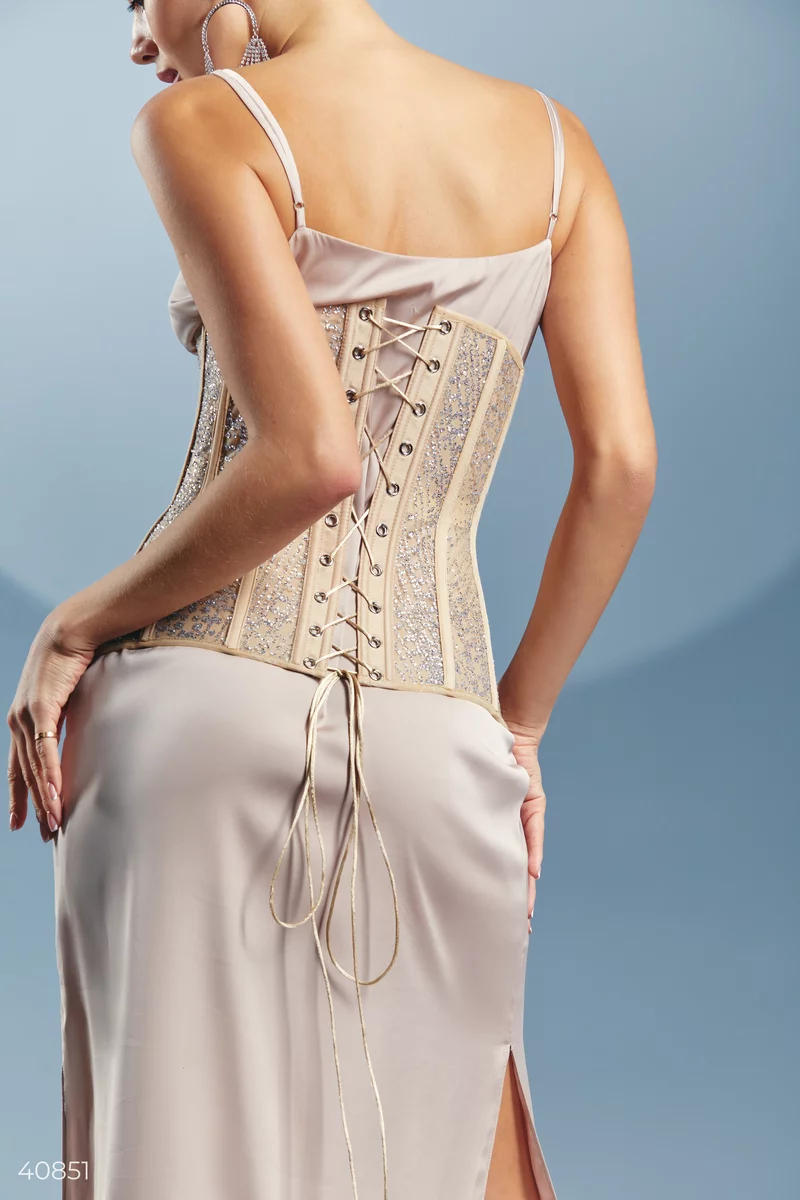
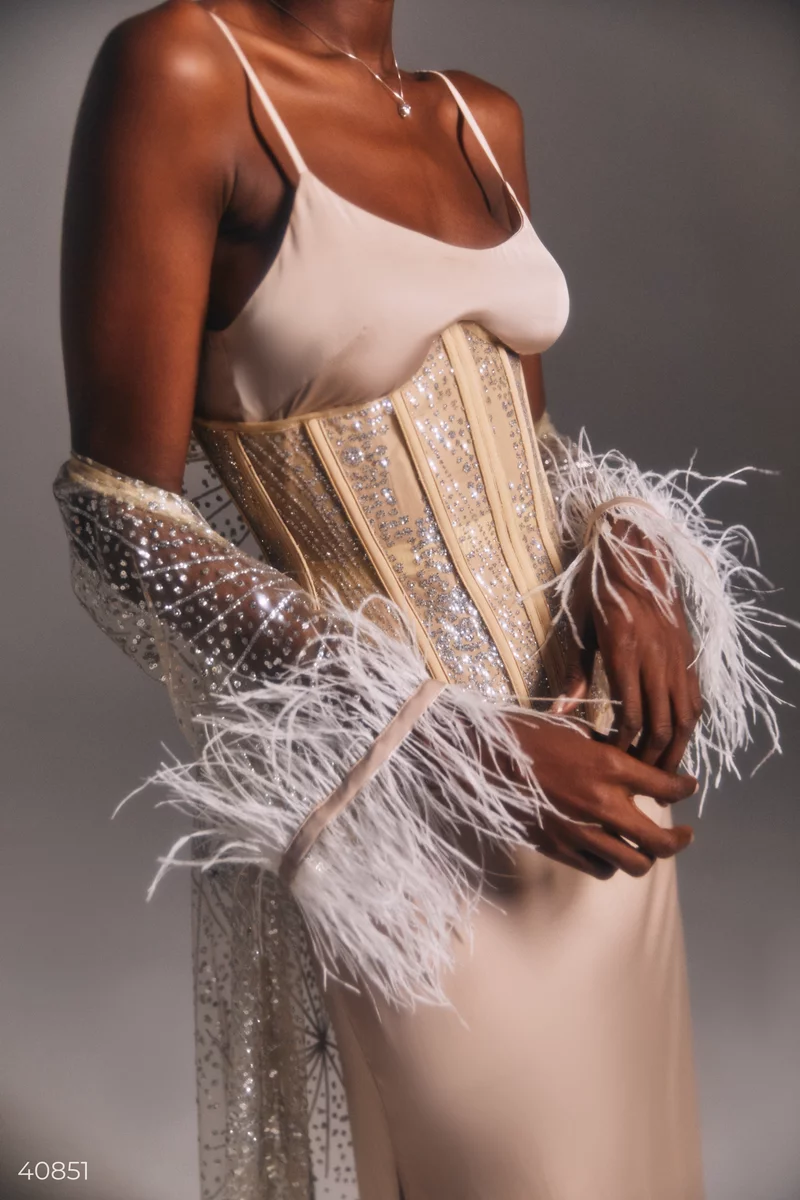
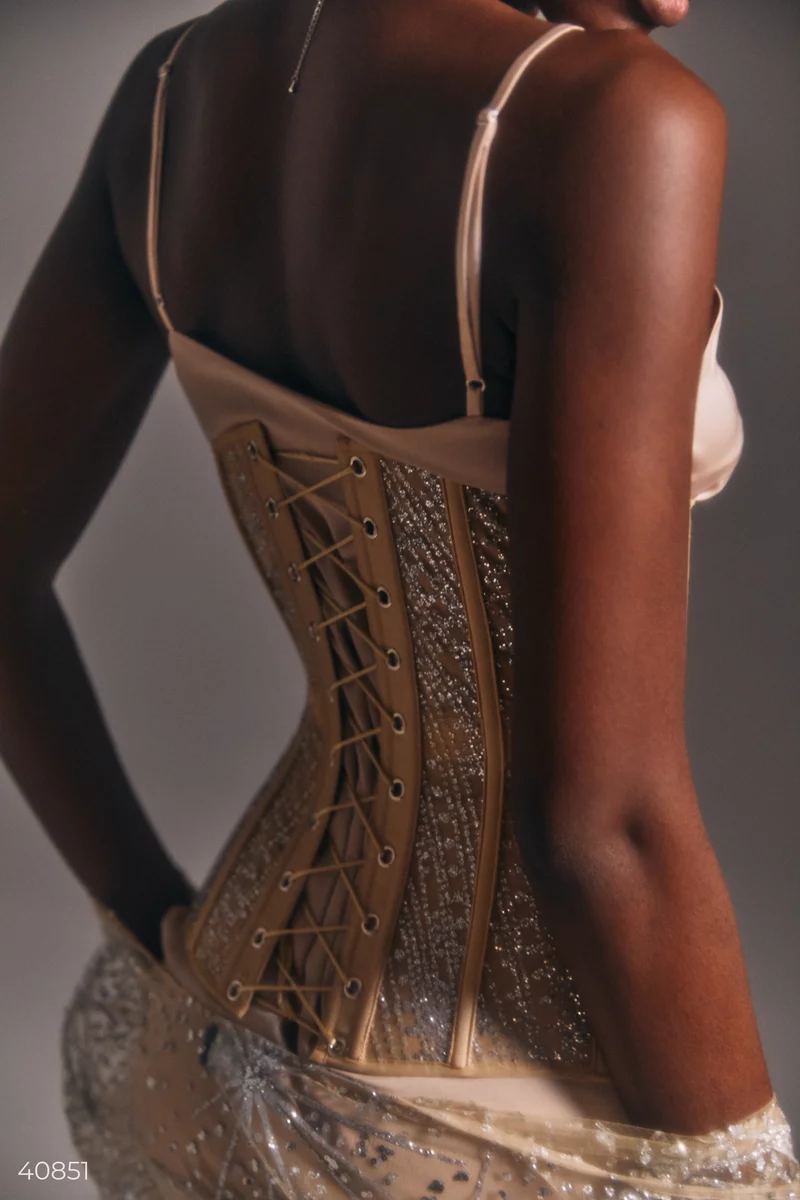
Overbust — corset with cups
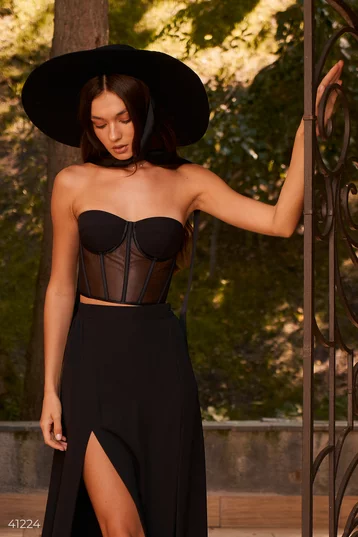
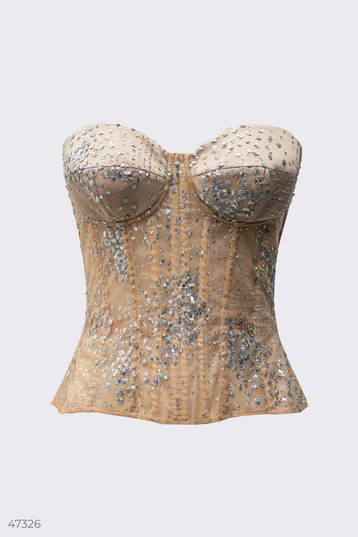
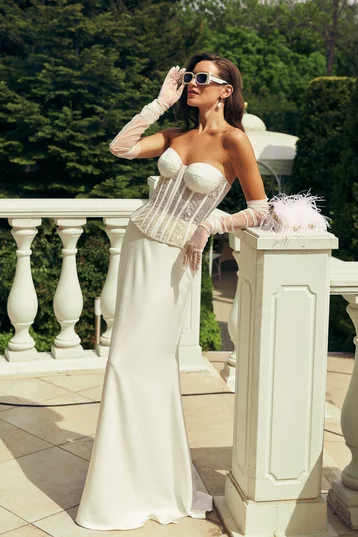
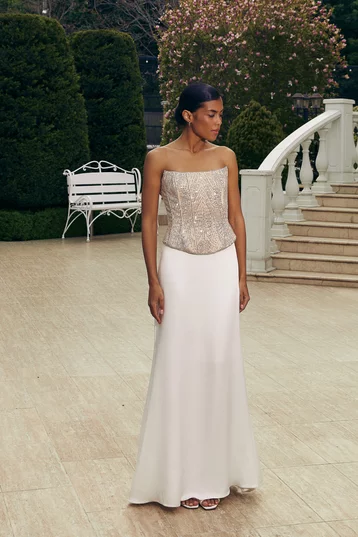
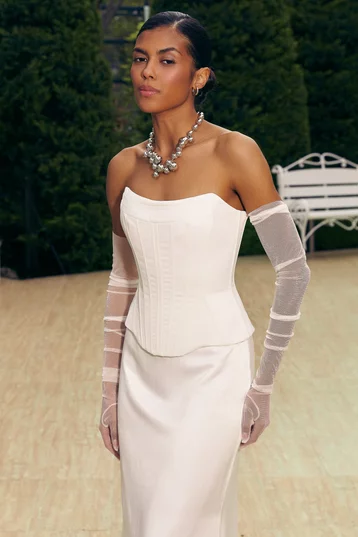
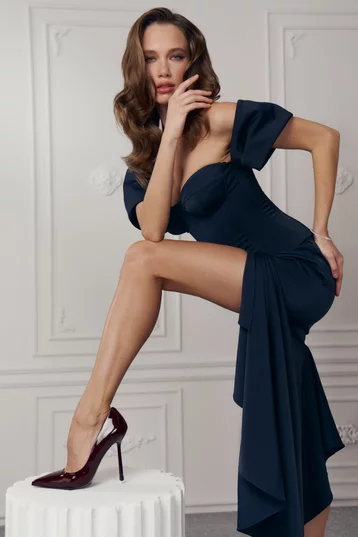
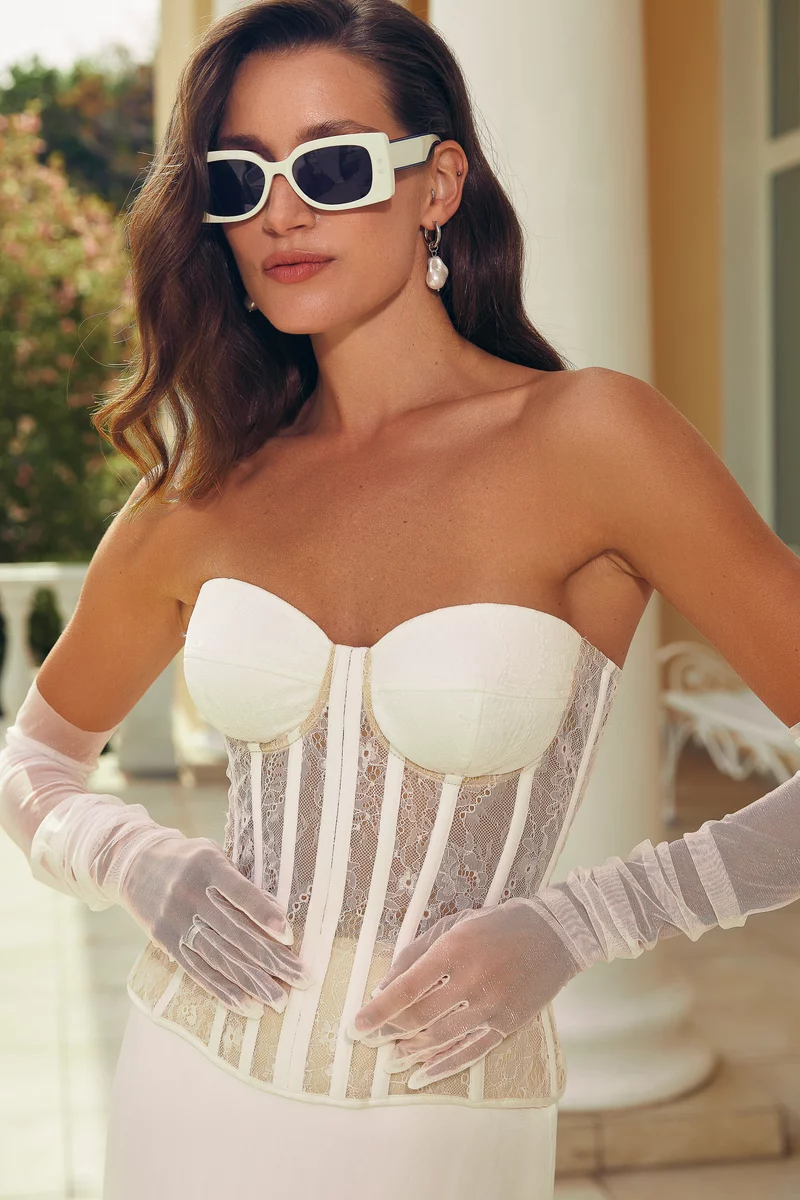
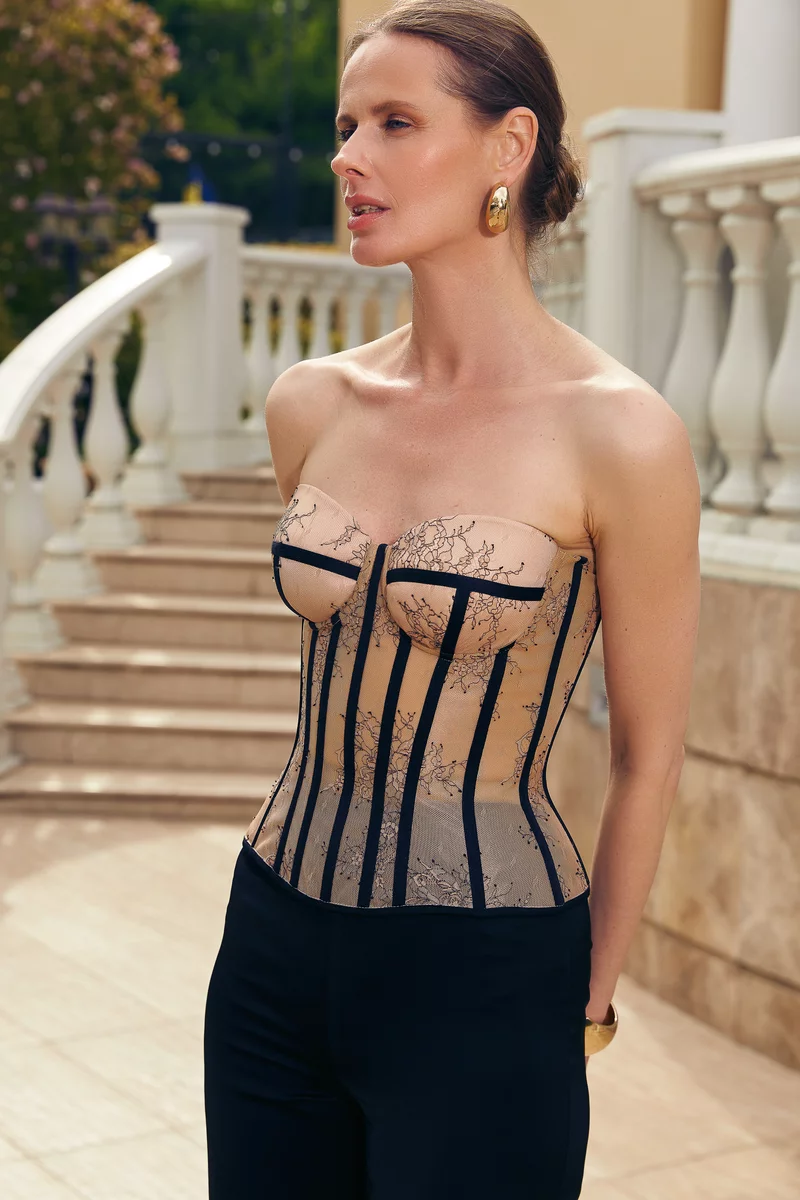
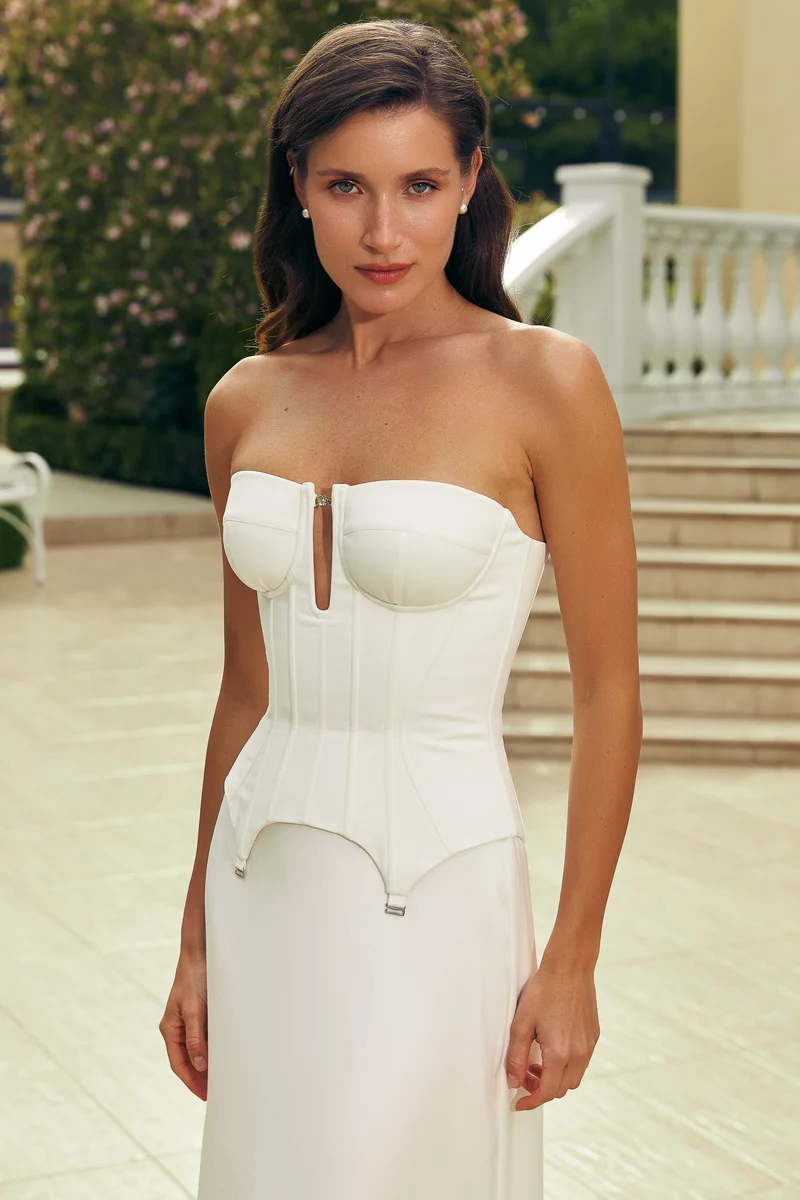
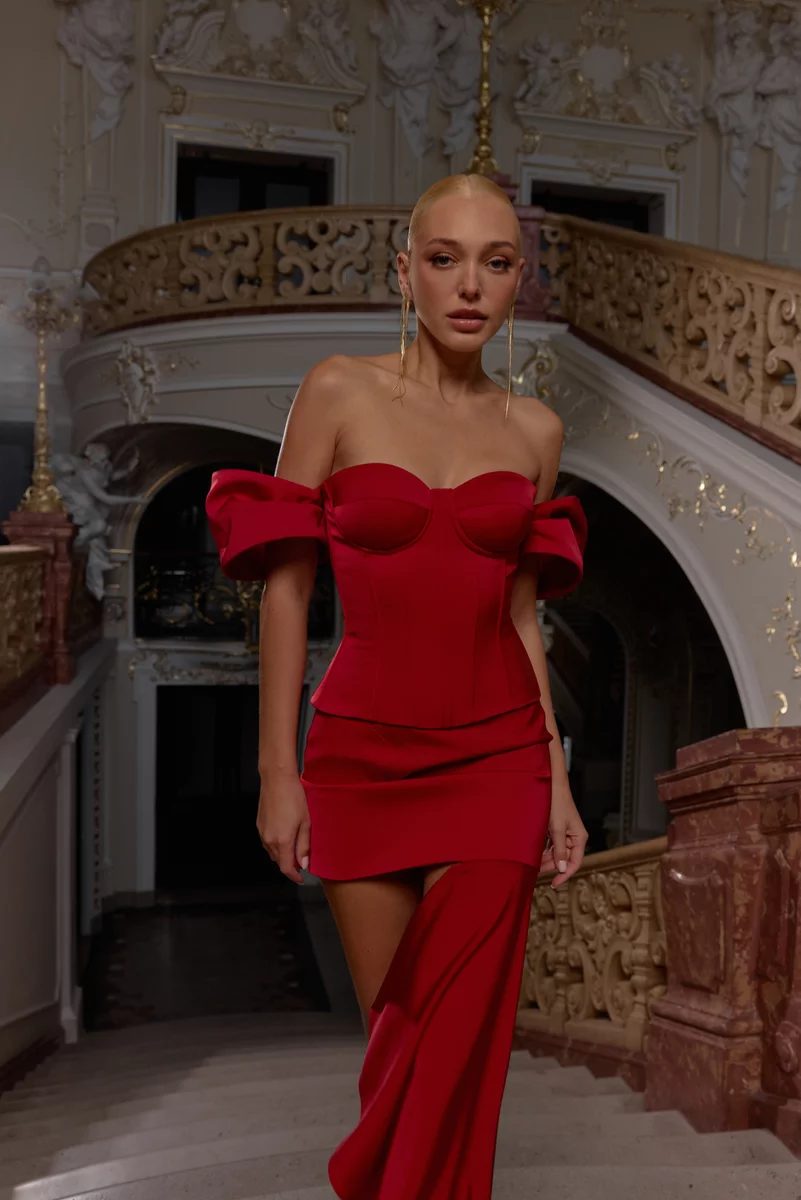
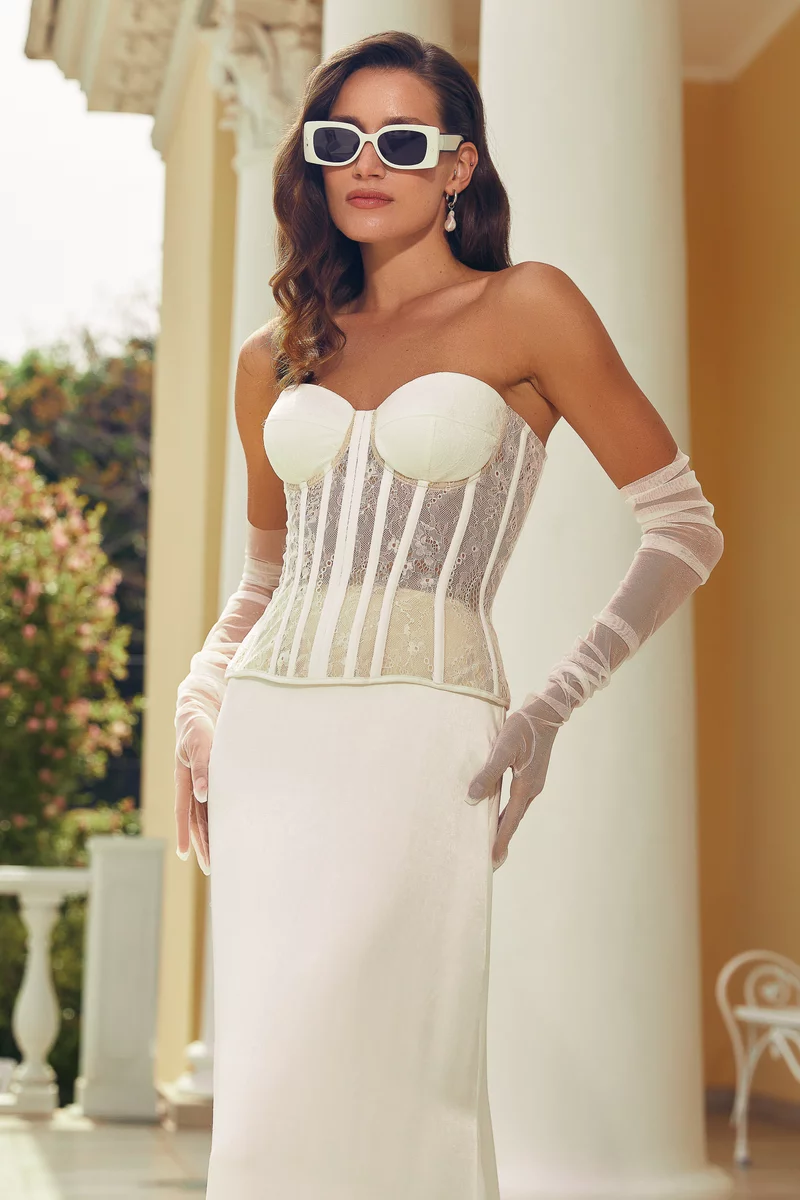
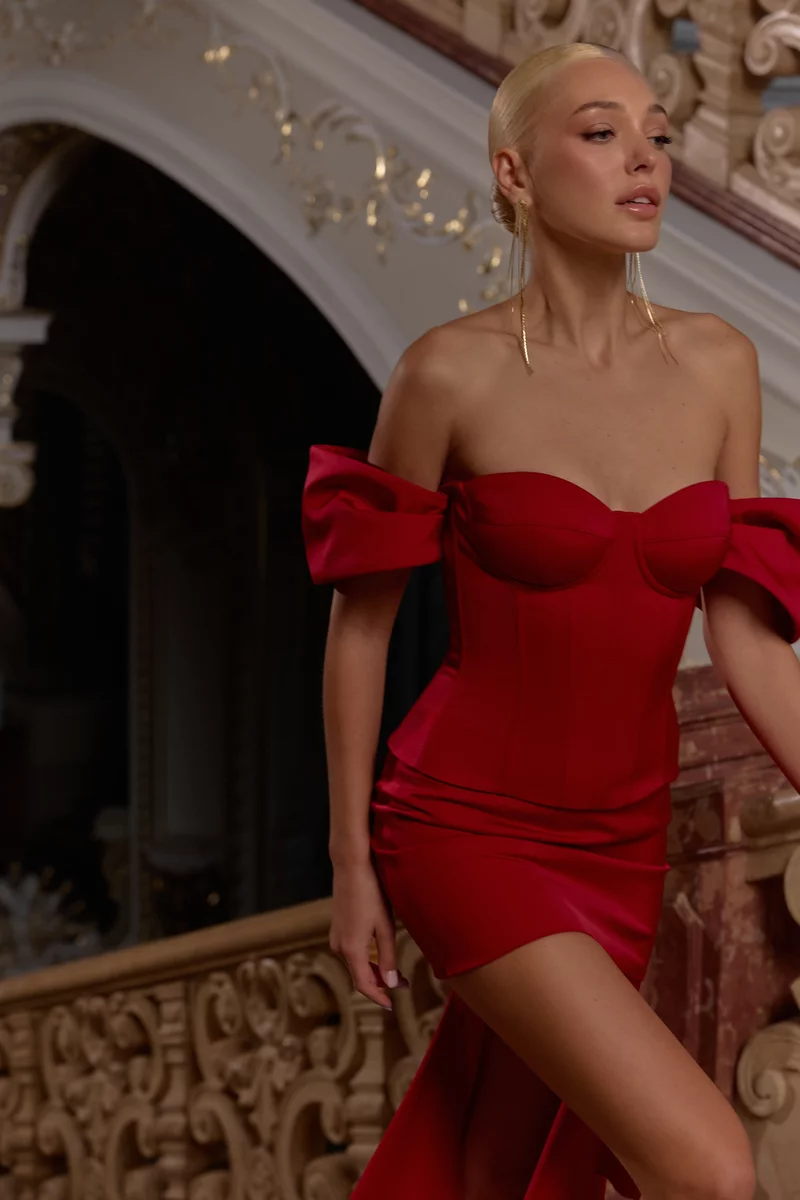
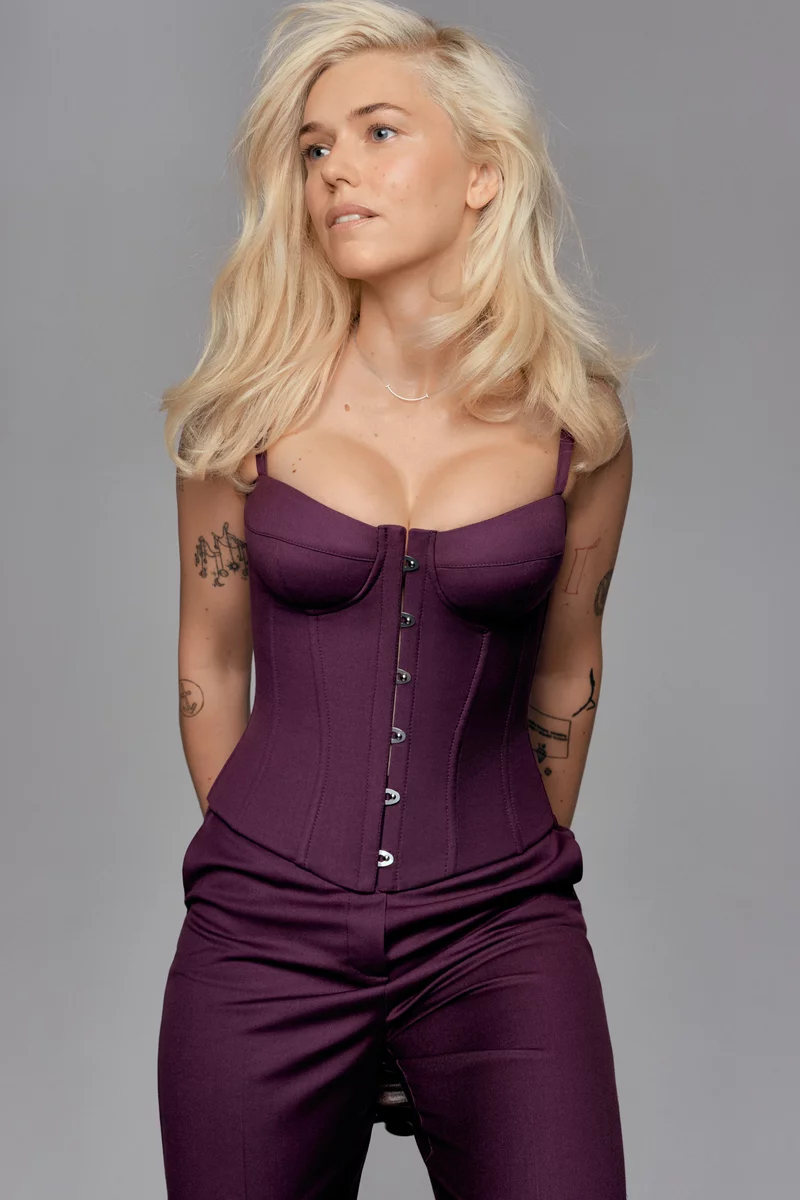
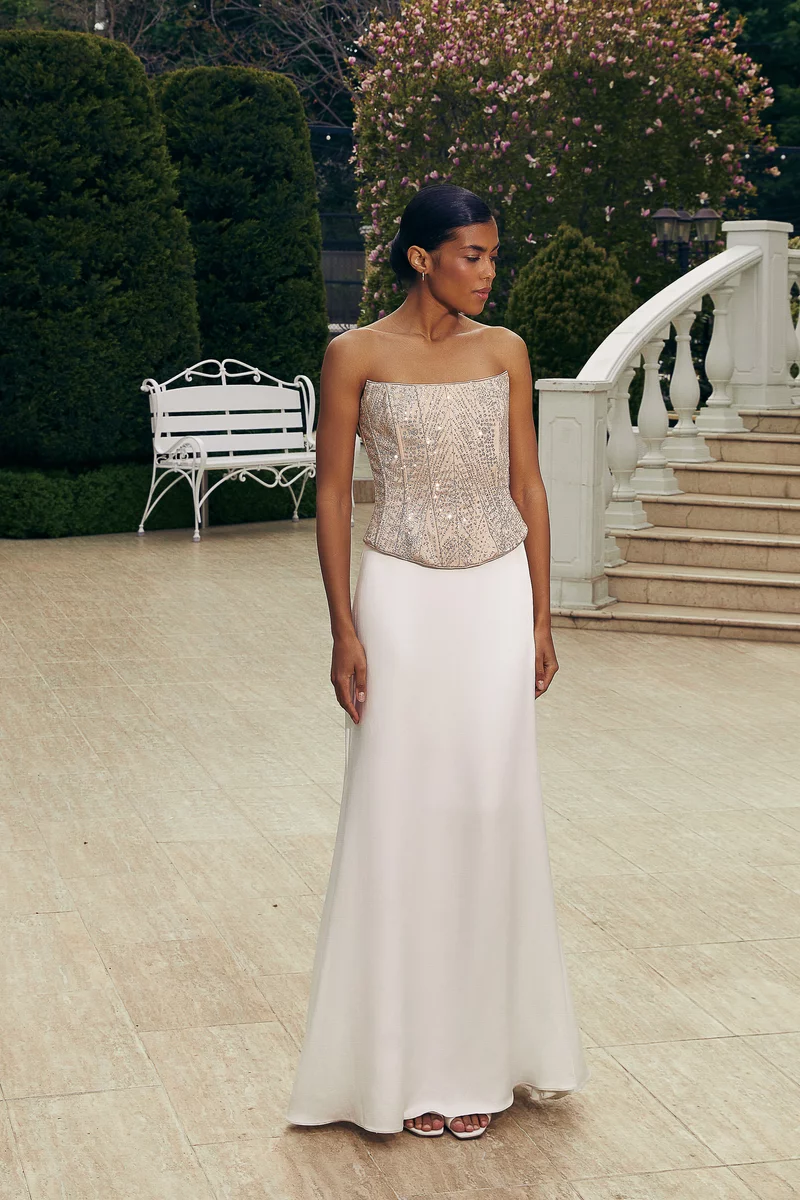
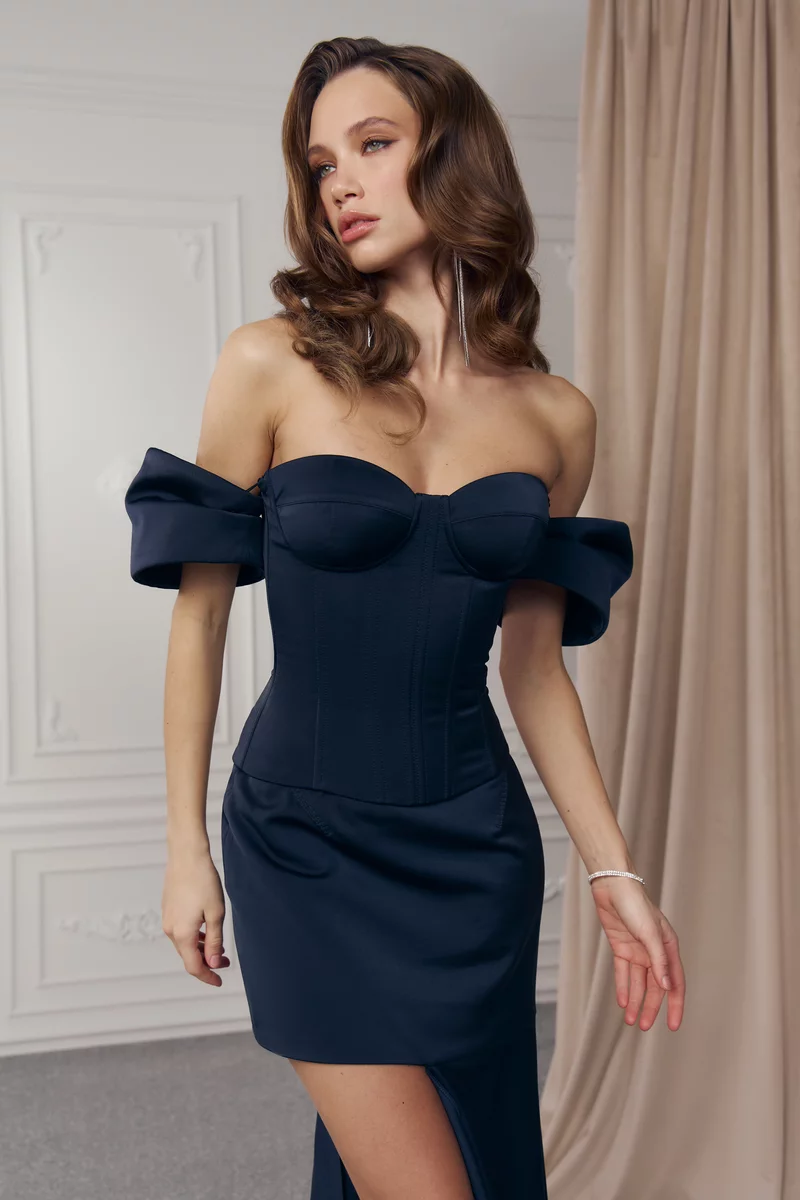
Overbust is a full corset that fully covers the bust and replaces a bra. It shapes the upper part of the look on its own, supports the neckline, and requires no extra layers. Overbust is the choice for an evening out, a premiere, or a bridal silhouette.
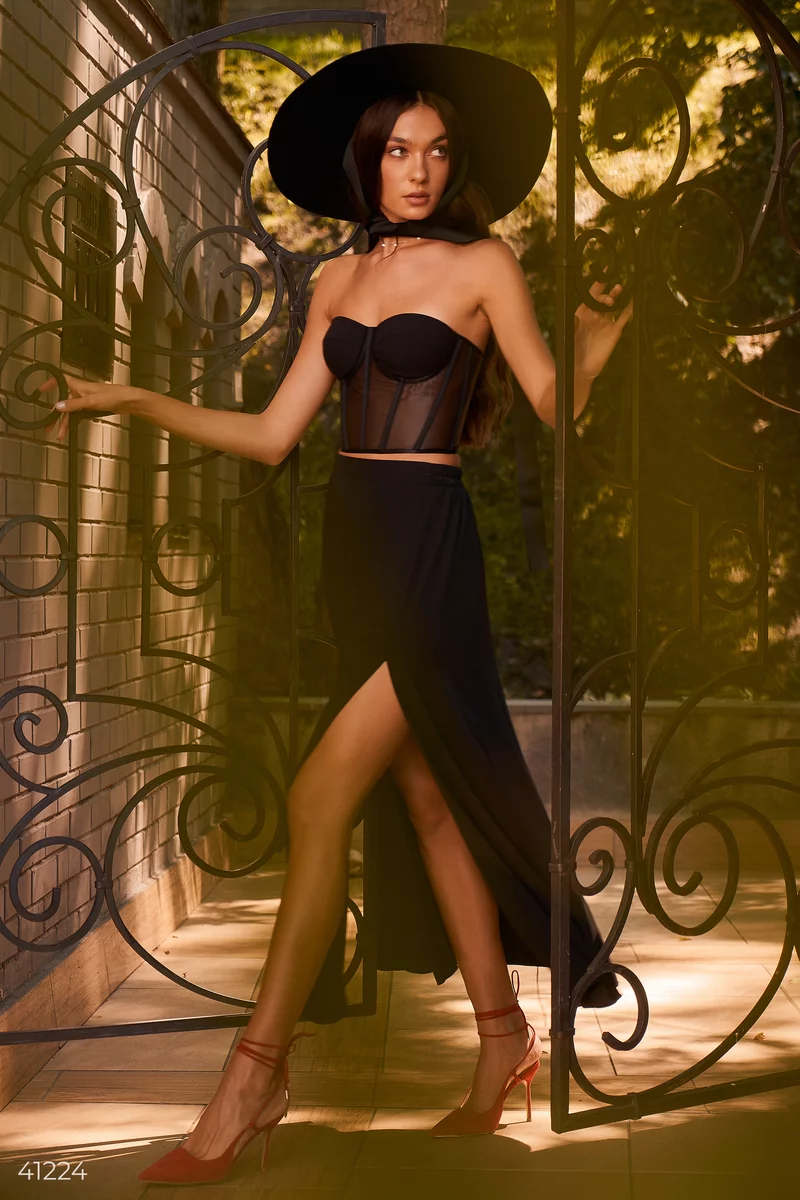
Longline — extended corset
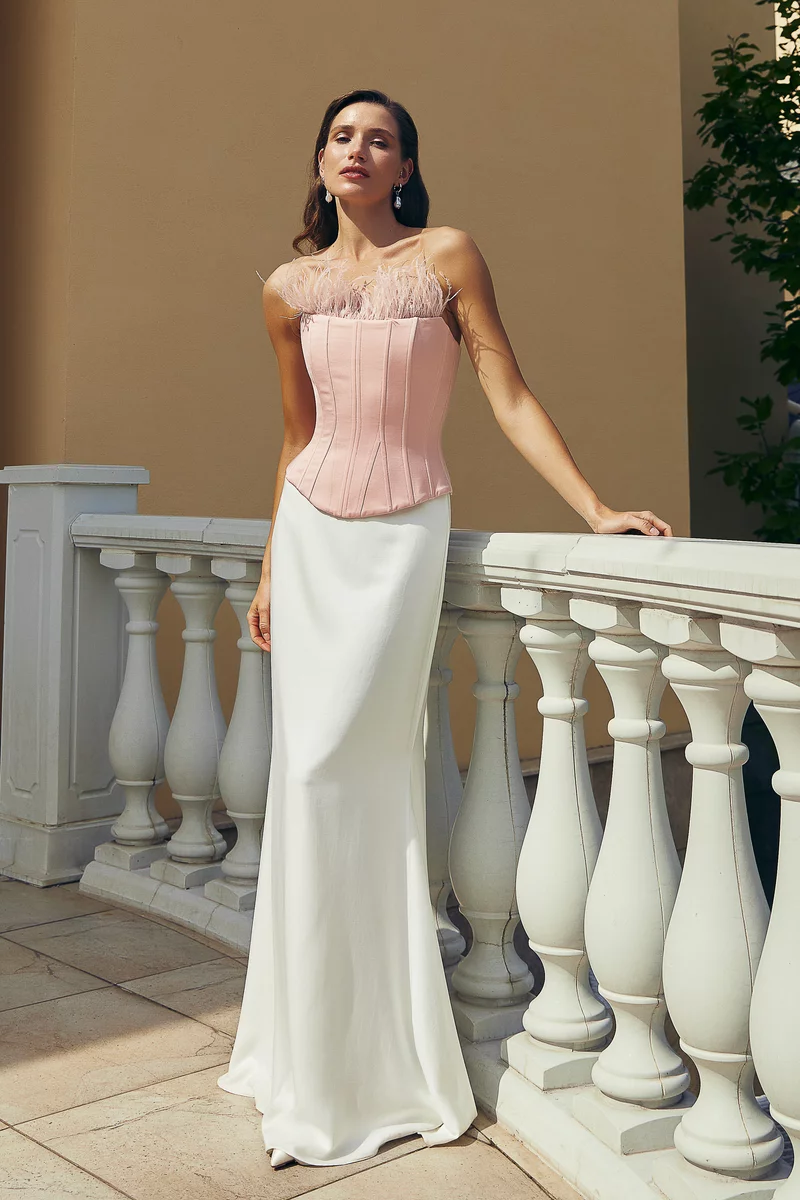
Longline is an elongated version whose lower edge extends onto the hips. This cut shapes the entire torso, visually lengthens the silhouette, and builds one continuous architectural line from the bust to the hips. Longline is worn as an evening top under a suit or as part of a two-piece set with a train skirt.
Waist cincher
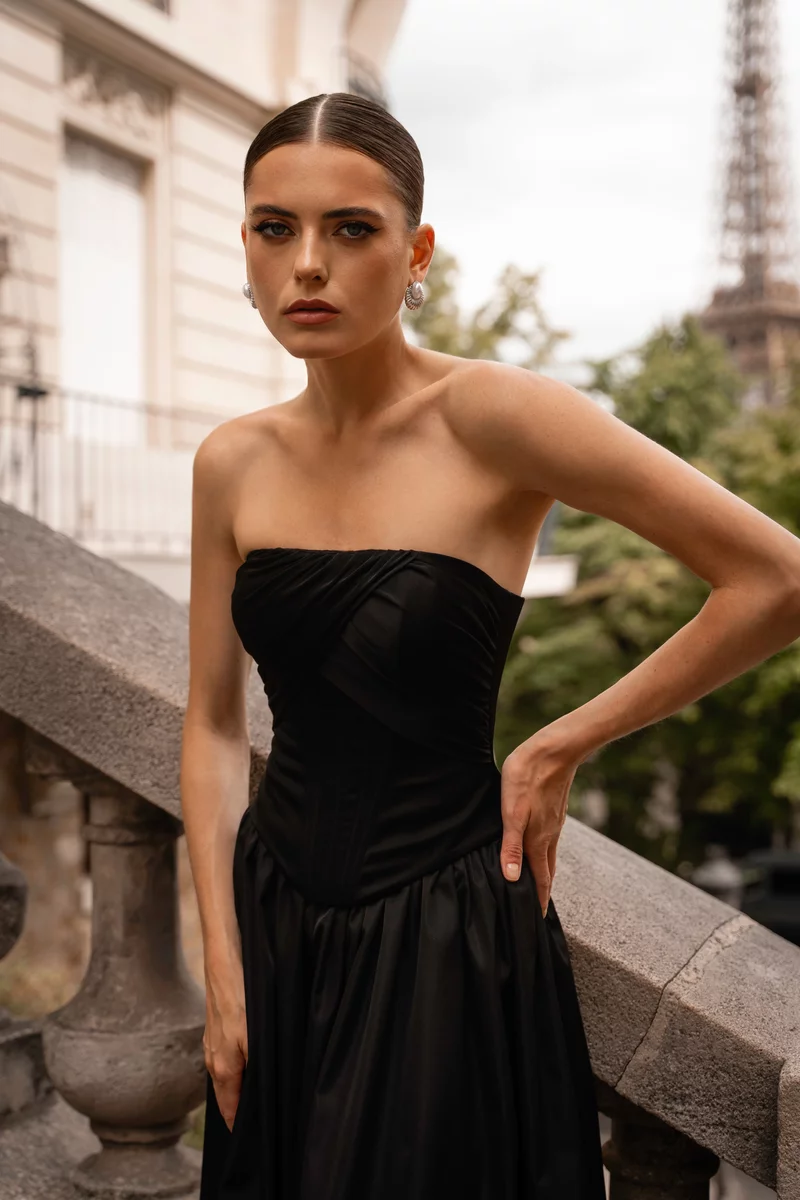
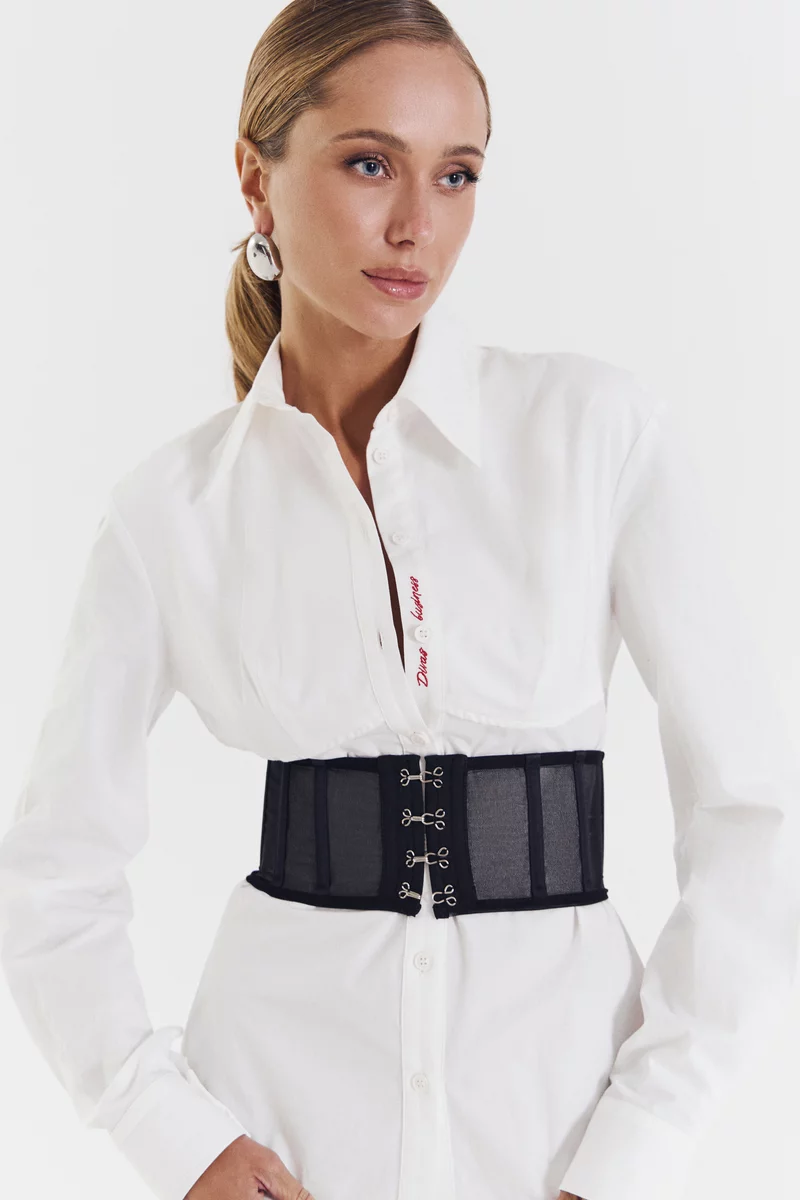
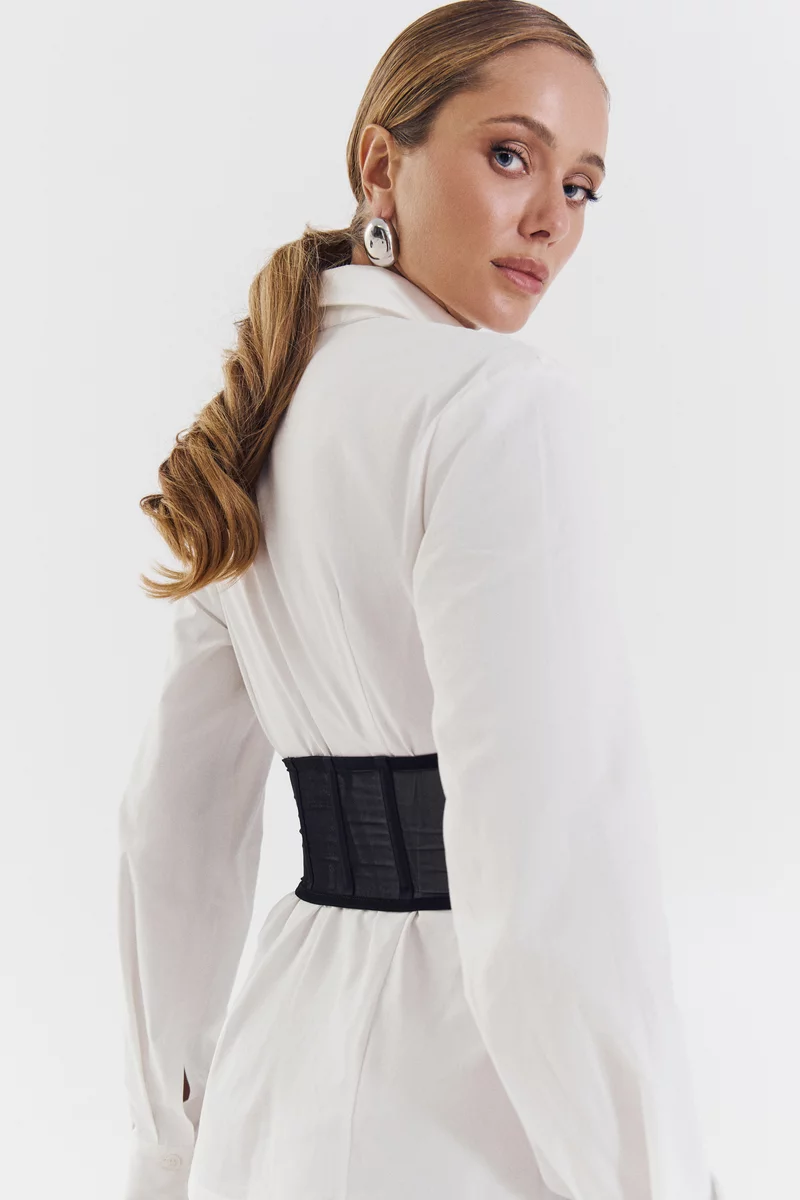
A waist cincher is a short variation of the underbust that covers only the waistline. It is the gentlest entry point into corset aesthetics, adding an accent over any look — a dress, a shirt, or a fine knit sweater. It does not require bust fitting and is easy to travel with.
Corset top — a softer version
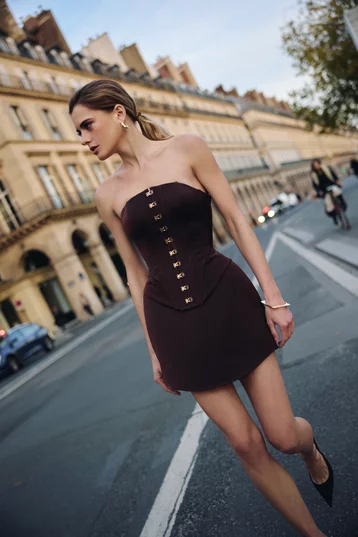
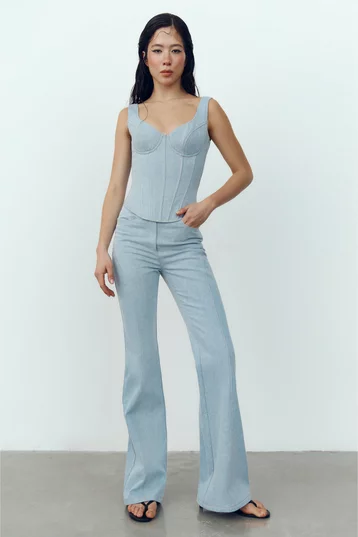
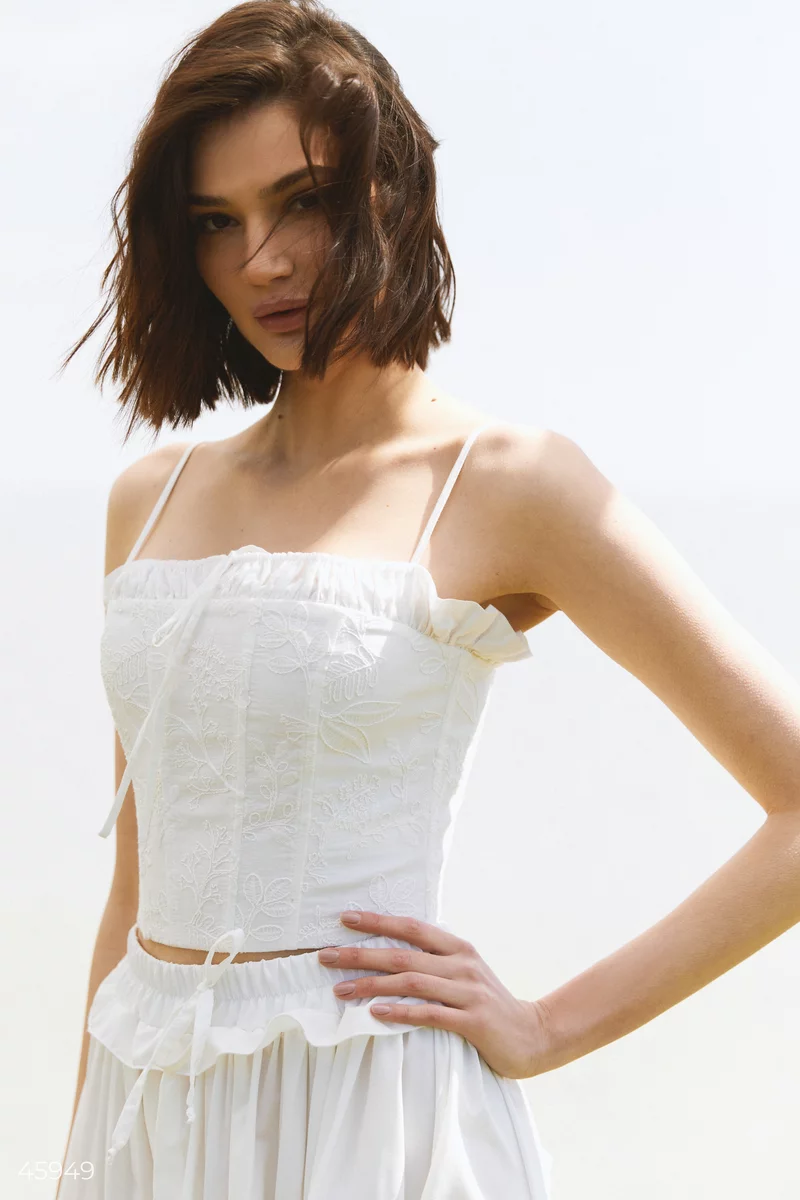
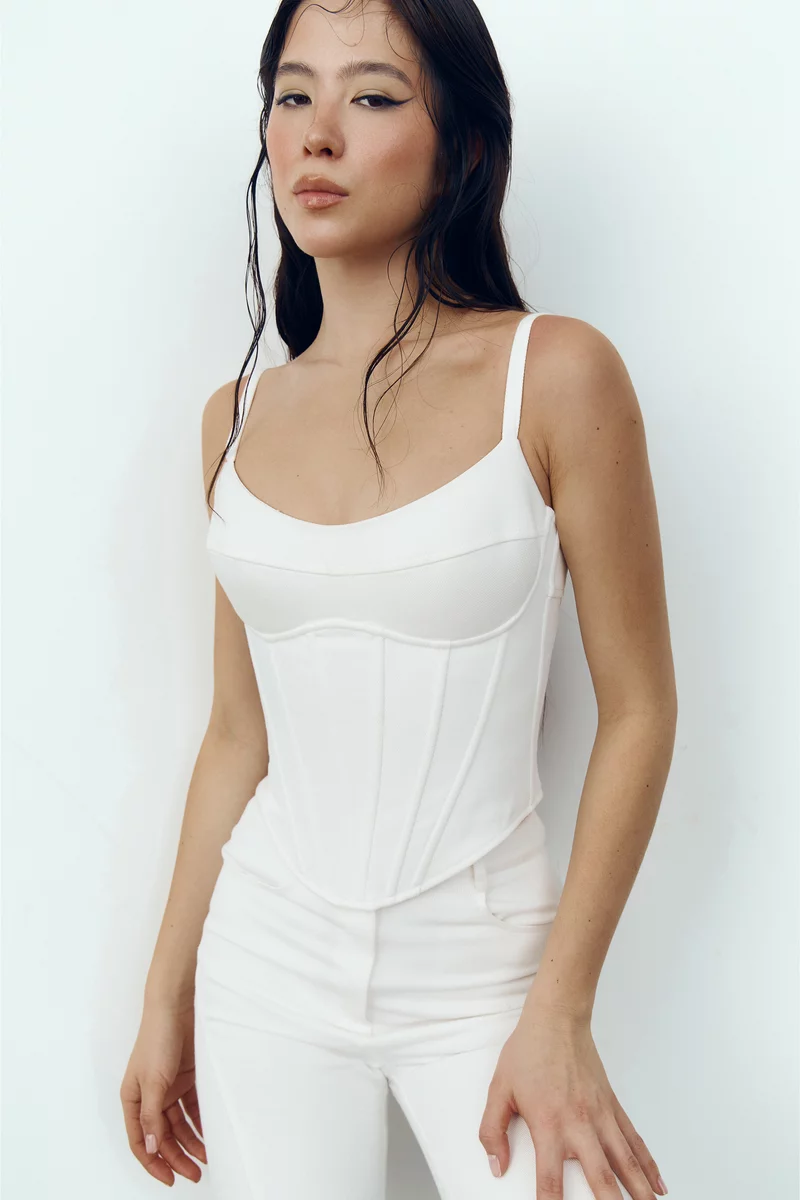
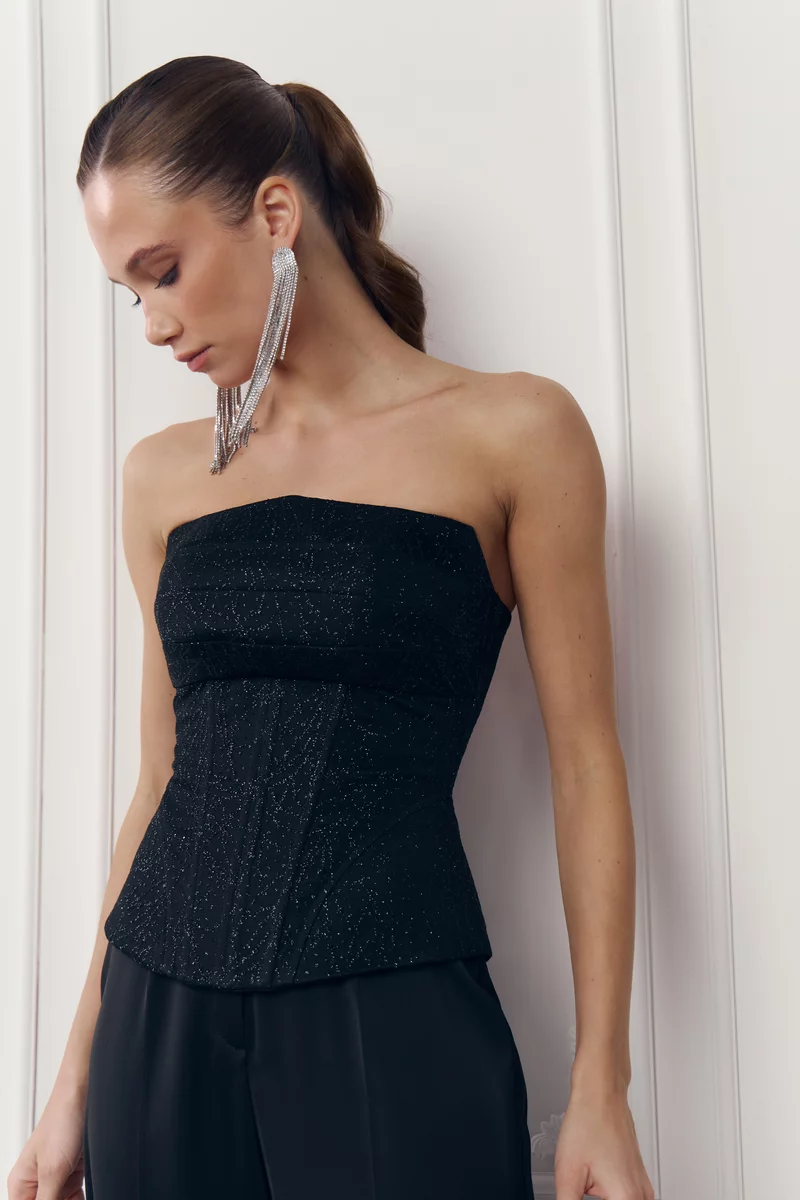
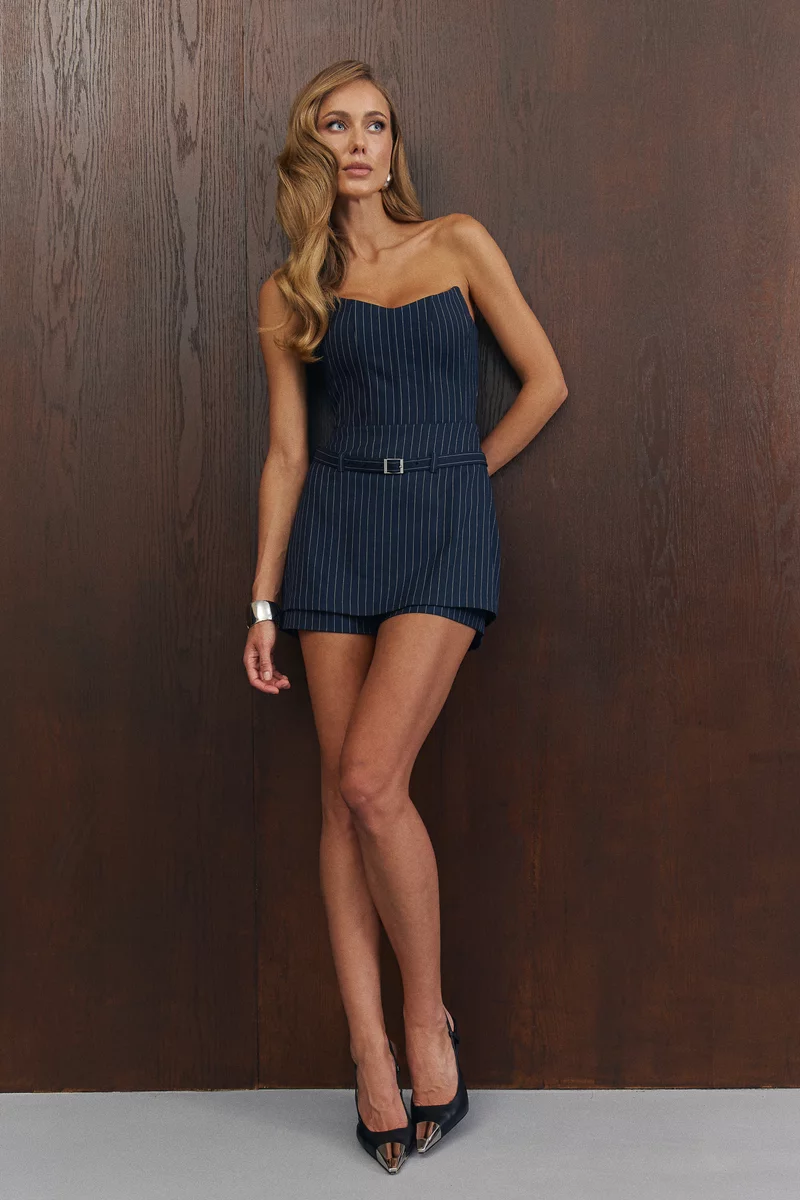
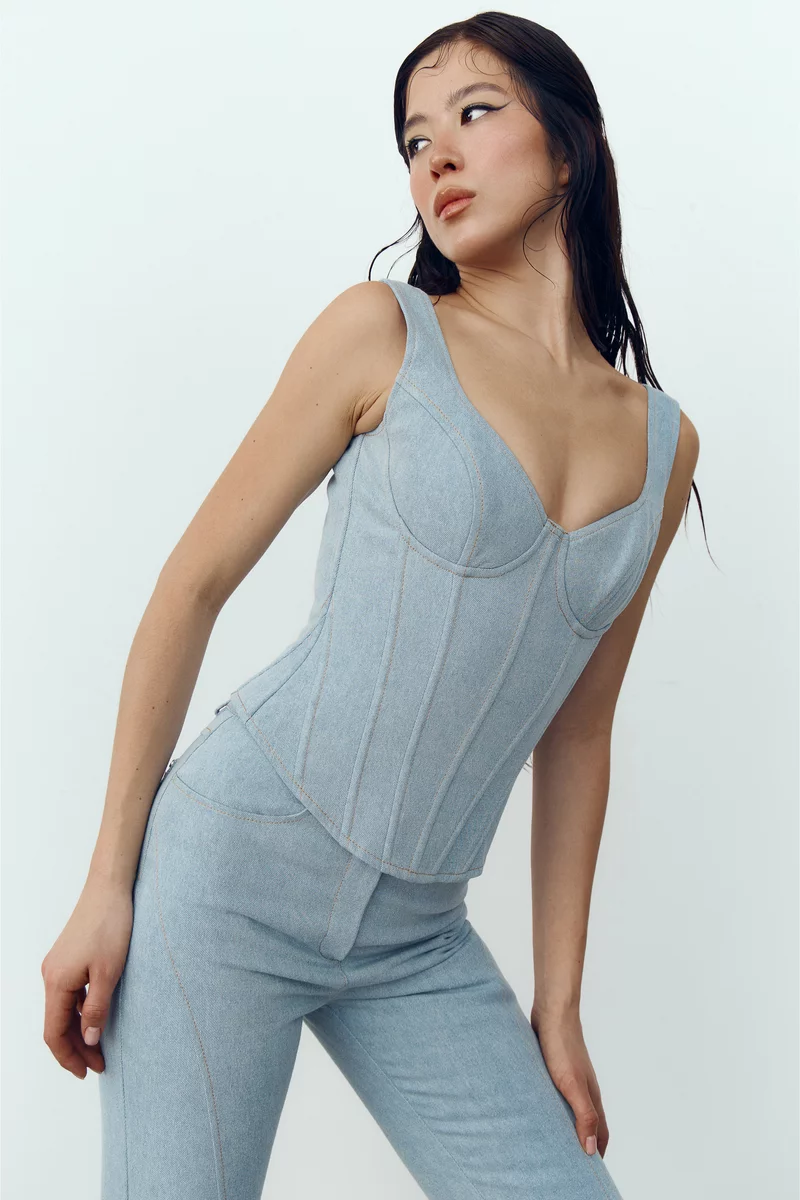
A corset top is the corset shape without a full internal frame: minimal boning, usually rigilene, dense knitwear, or bonded cotton. The silhouette is recognizable but without strong cinching. It is ideal for everyday looks when you want structure without a lingerie layer.
Peplum corset
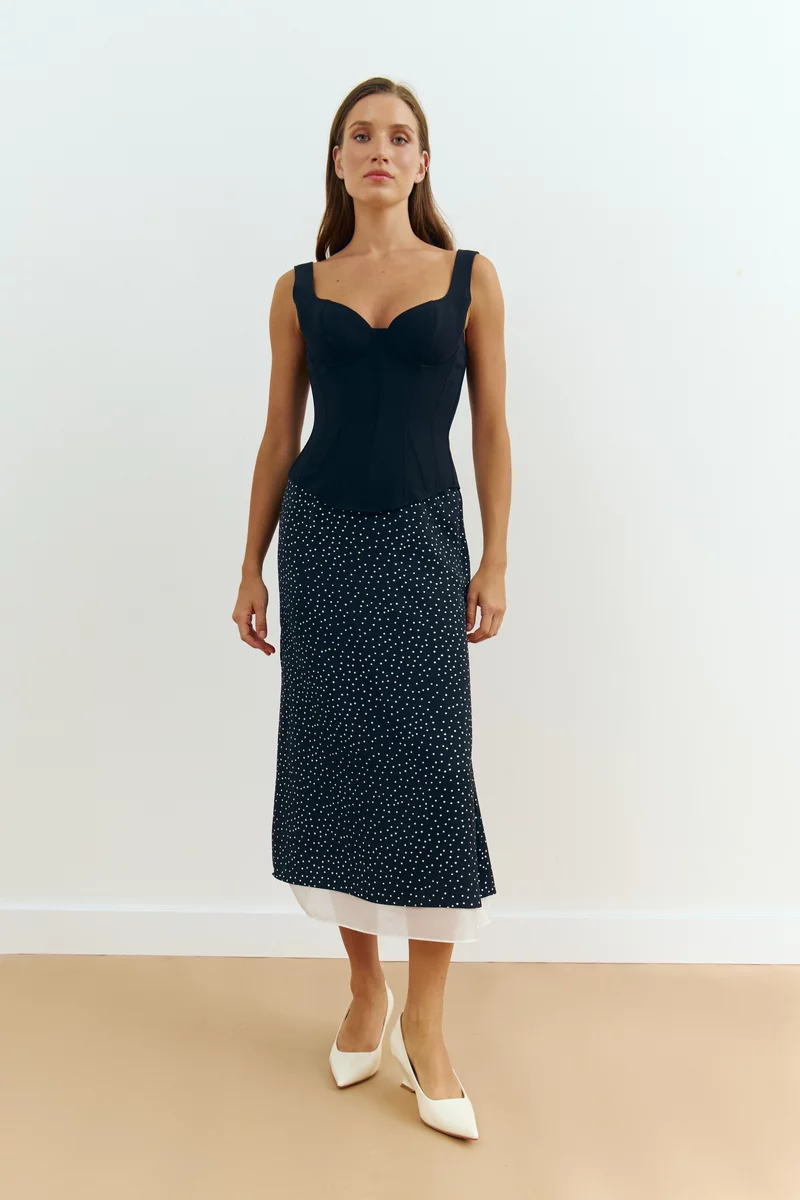
A peplum is a small “wing” of fabric along the lower edge of the corset that softly flares away from the hips. It visually lengthens the waist through contrast, adds movement, and makes the look dressier without extra embellishment — which is why it often appears in styles for prom and formal outings.
Midbust — half corset
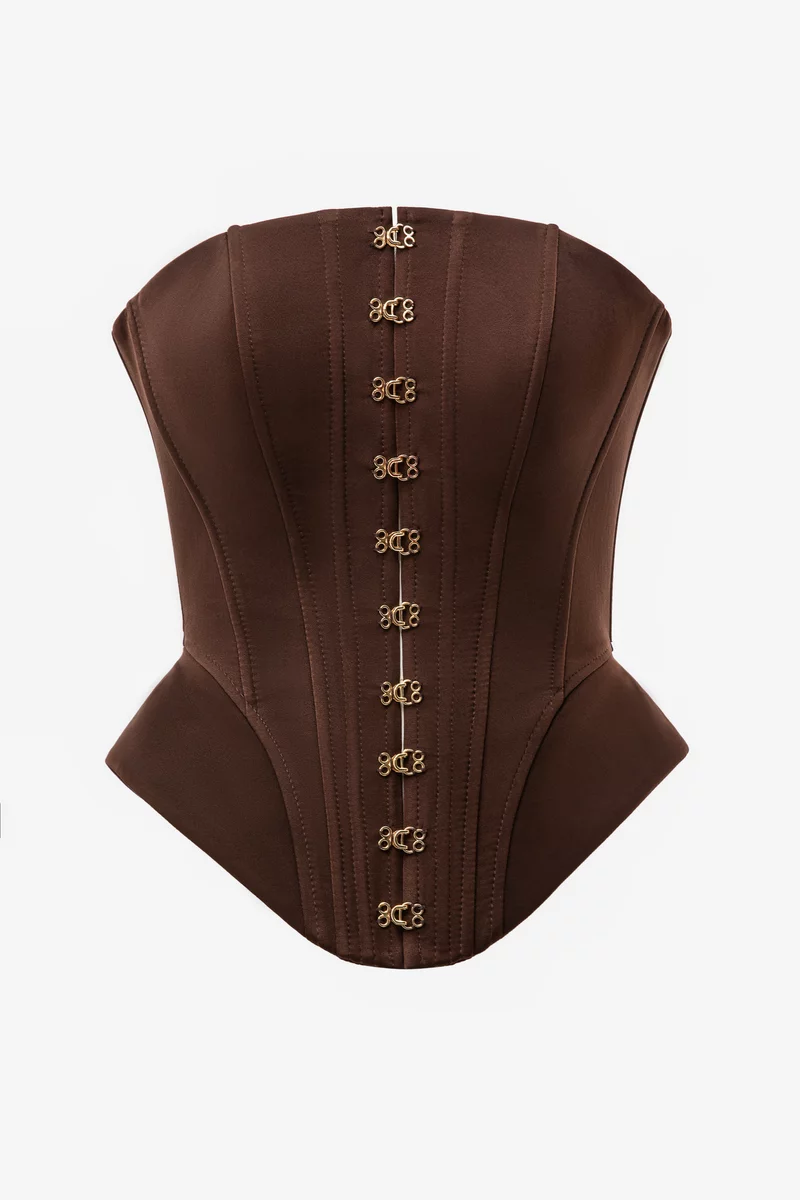
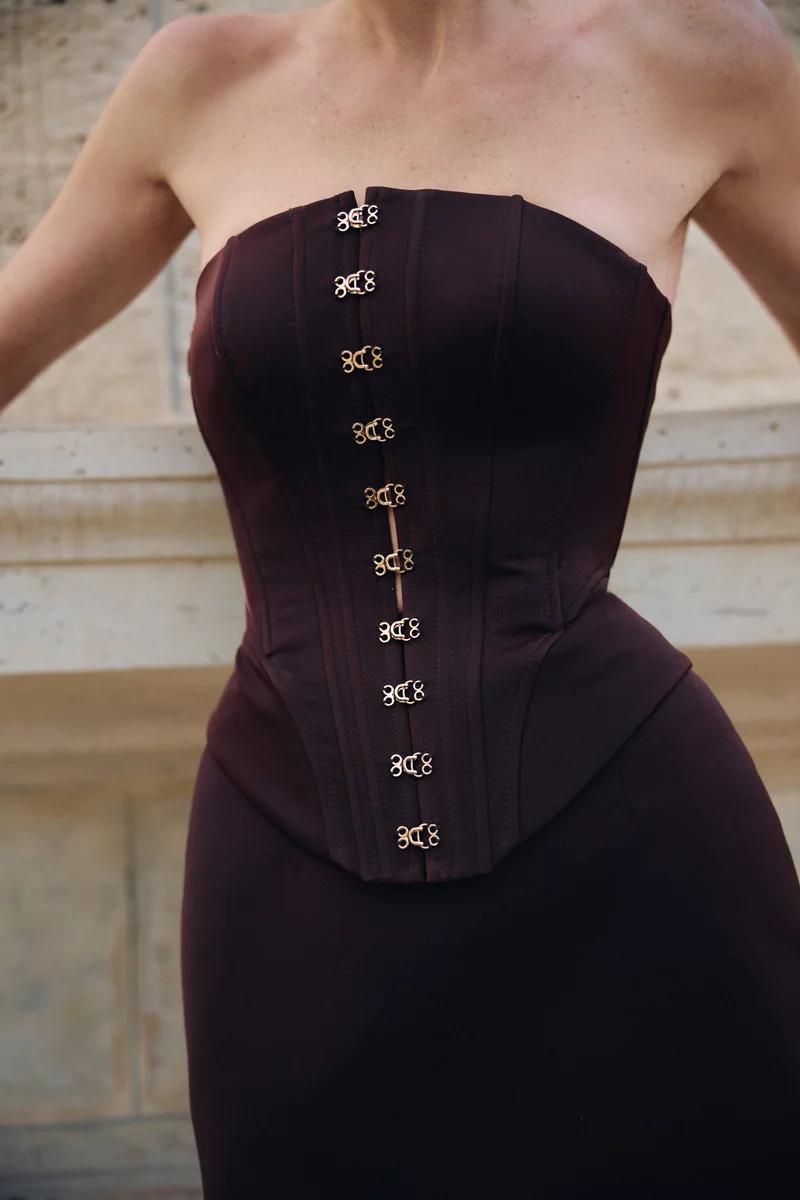
Midbust is an intermediate model between underbust and overbust. The upper line runs across the middle of the bust, leaving part of it exposed. It works in column-like looks and wherever you want a semi-structured neckline accent without a full cup.
Corset models by purpose
The same construction can serve different scenarios. Every occasion calls for its own model, fabric, and degree of cinching.
Everyday fashion corsets
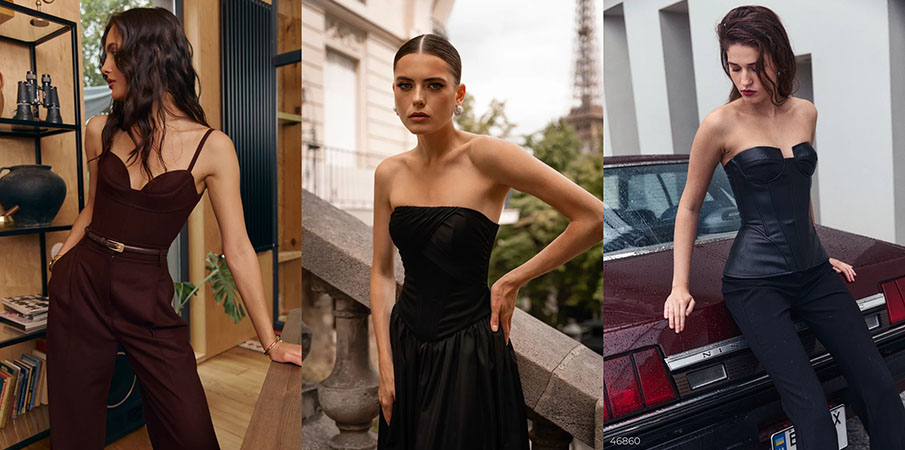
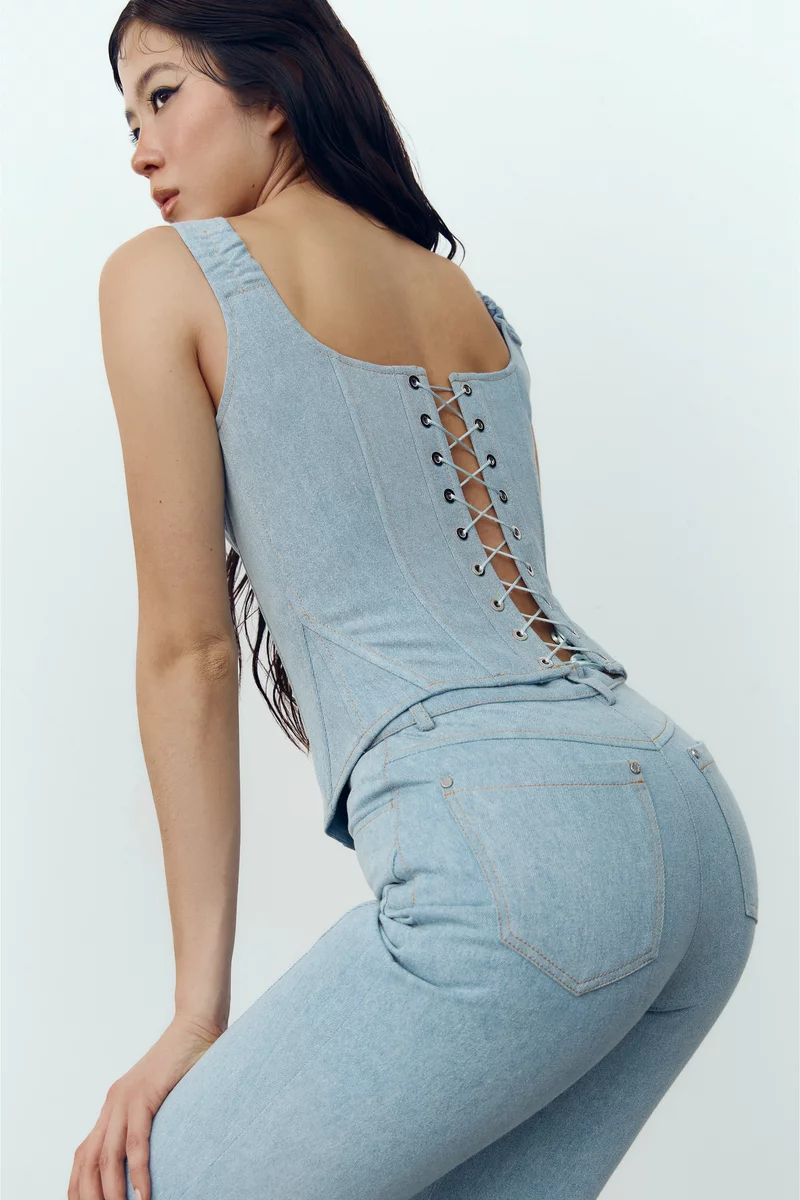
The foundation of a stylish everyday corset is denim, dense cotton with coutil, leather, and structured knitwear. The cut is underbust or corset top. The DIVA setting is a business lunch, a presentation, a shoot, or a meeting where you need to be noticed without explanation.
Bridal corsets
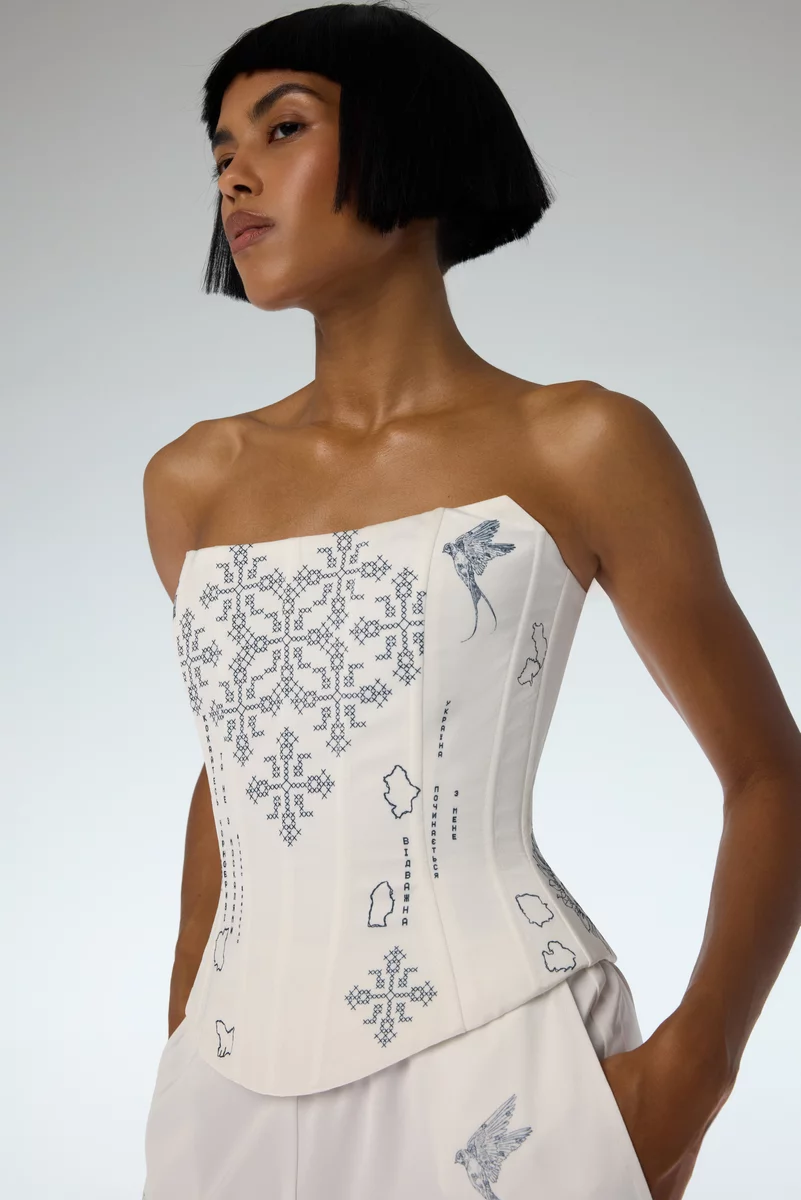
Always overbust or longline. The task is to build an impeccable bridal silhouette under a full skirt or a straight dress. Materials include silk, satin, lace, and hand embroidery. The construction almost always features a front busk and steel boning — otherwise the fit will not hold all day.
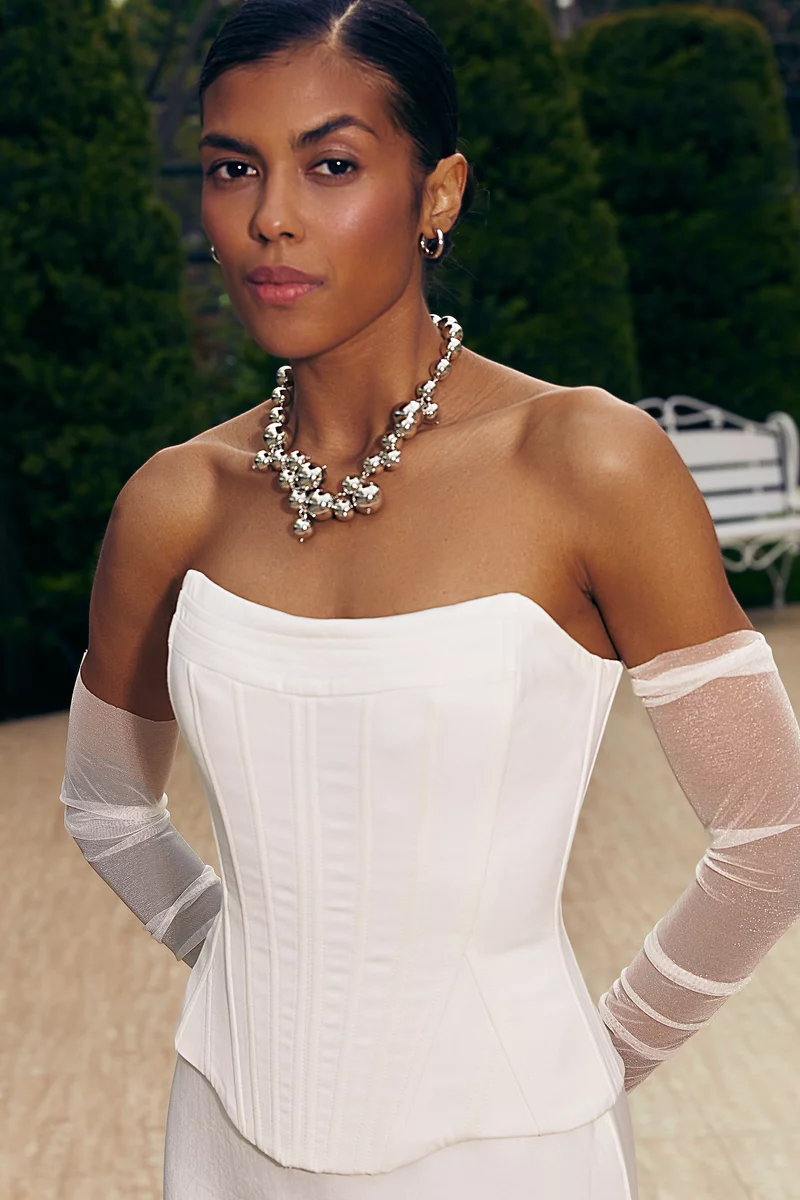
Evening corsets
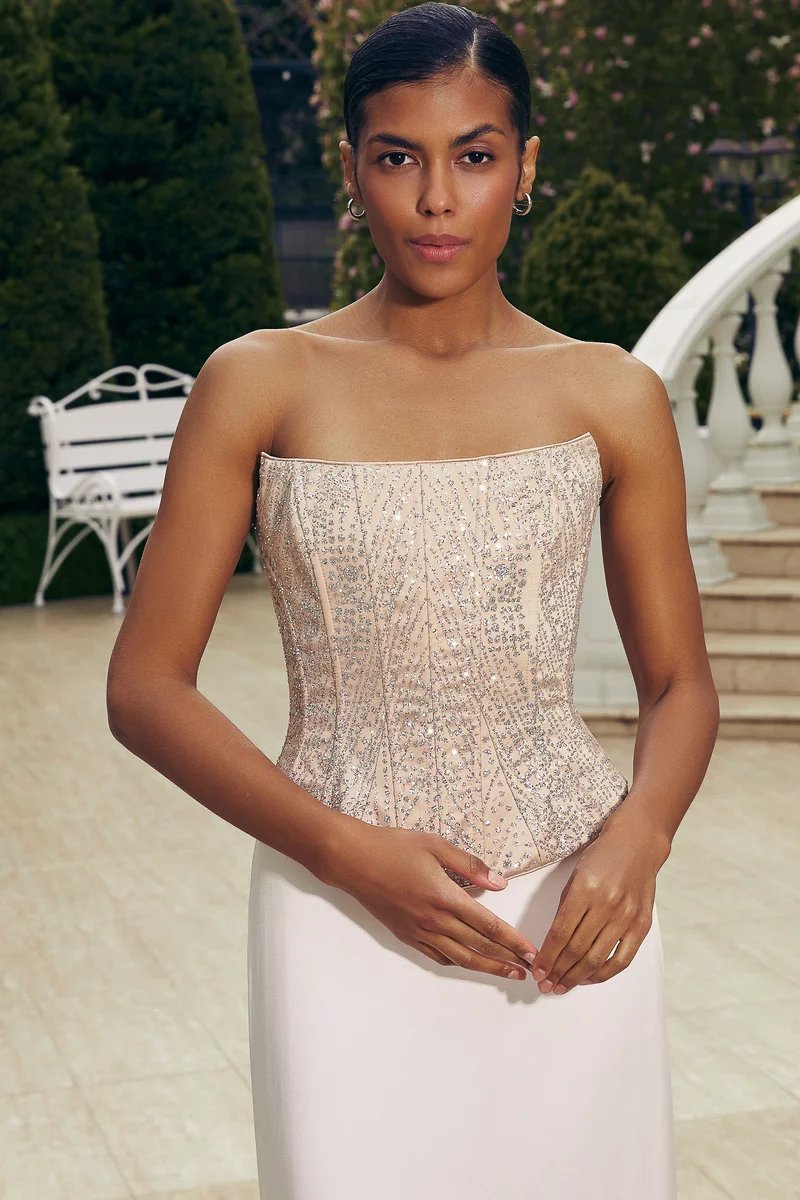
Overbust, longline, or underbust in black satin, velvet, leather, or brocade. This is the corset for a gala, a premiere, or a private dinner. In GEPUR collections, this is exactly where the corset becomes an independent manifesto of presence.
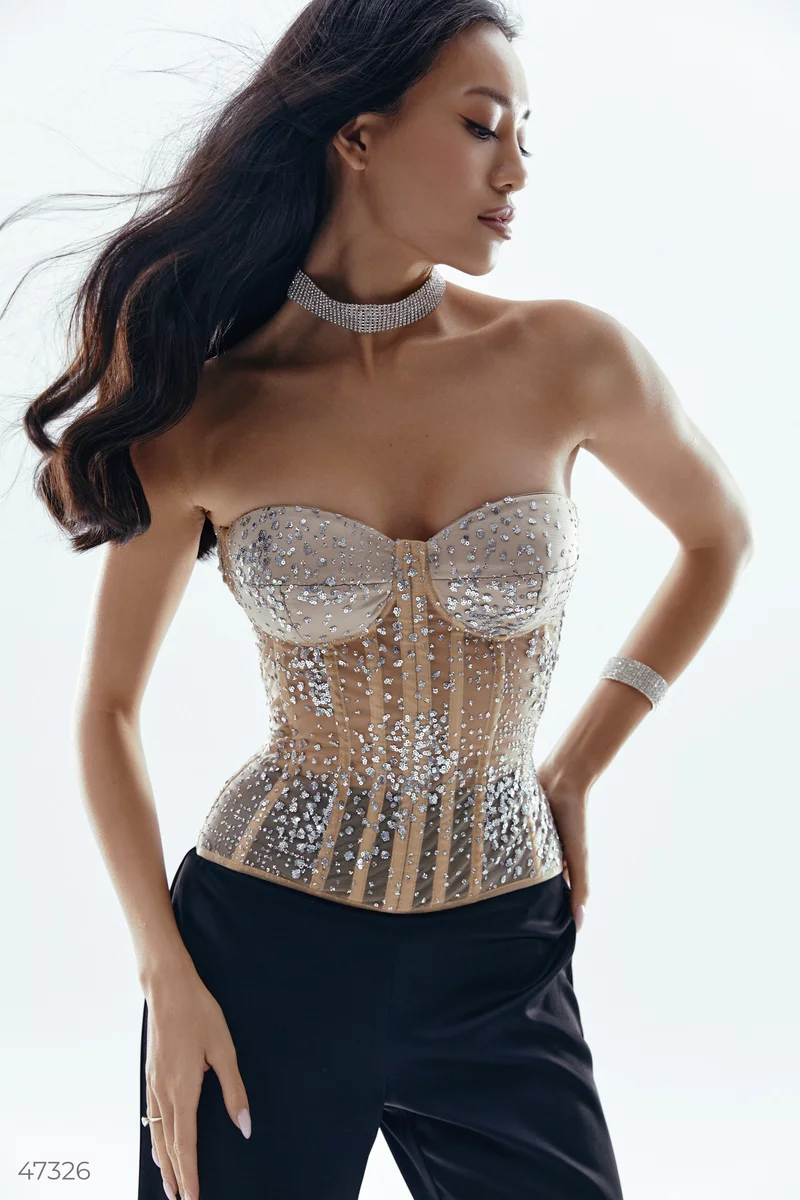
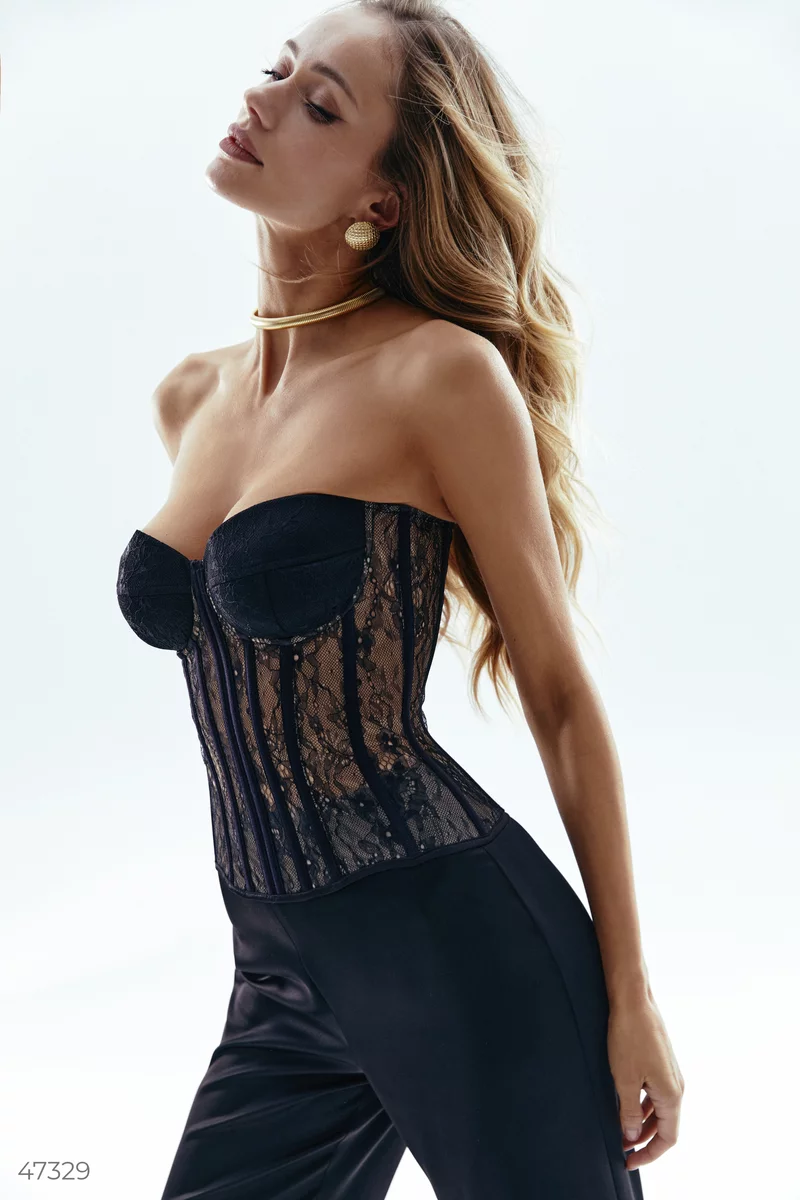
Corsets for special occasions
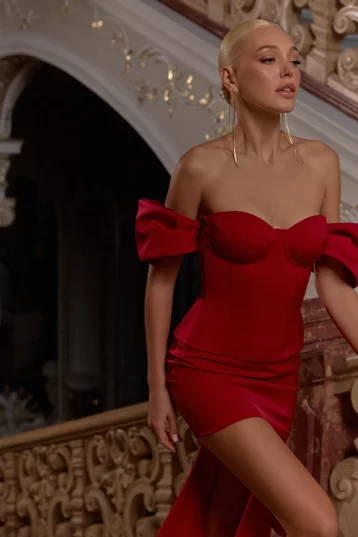
Prom, a corporate event, a birthday, an anniversary — the level between “everyday” and “wedding.” Most often these are overbust or midbust styles in an accent color and with texture — jacquard, brocade, or metallic satin.
What corsets are made of: materials and construction
Outer fabrics
Satin is an evening classic that holds sheen and shape. Brocade and jacquard work for dressy, historically charged looks. Leather is a status daytime accent. Mesh and lace bring lingerie aesthetics and sheer underbust designs. Coutil is a dense corset fabric with a diagonal weave, developed in the 19th century specifically for corsets: it barely stretches, which is why it is still used today as the inner layer in professional construction. Bonded cotton forms the basis of everyday models.
Types of fastenings: lacing, hooks, zipper, busk
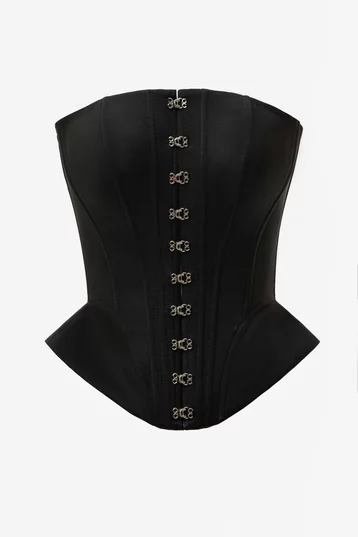
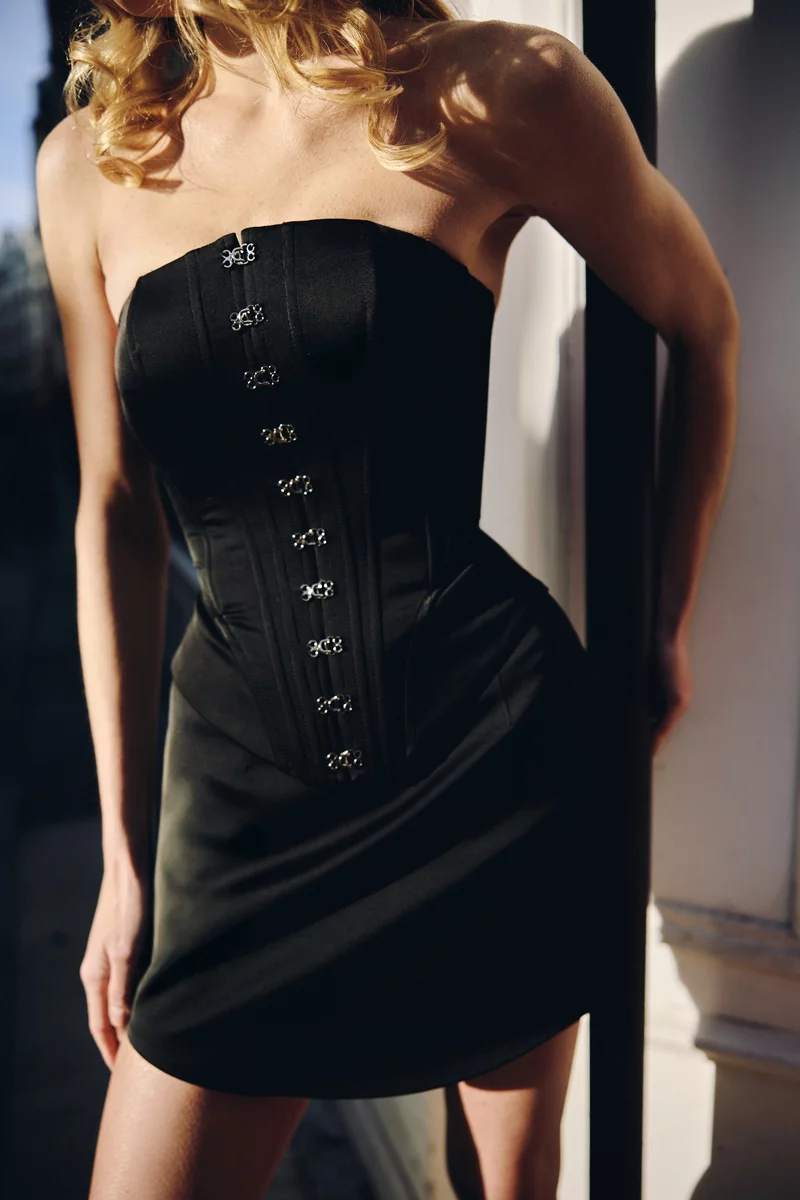
At the front of a classic corset is a busk: two metal strips with hooks and loops built into the fabric. It allows you to put the corset on and take it off in seconds. At the back is lacing through eyelets, which regulates the degree of fit. Corset tops more often feature a zipper (at the side or back) or a row of hooks. Lacing remains the most elevated option — it is what creates that unmistakable “corset” visual code.
Boning: steel and plastic
Spiral steel bones are flexible in several planes, withstand cinching, and hold the silhouette for years. Flat steel bones are placed along the central seams for a vertical framework. Plastic ones (rigilene, polyester boning) are lightweight and suit corset tops and decorative models without serious cinching. In this system, the busk serves two functions at once — fastening and central support. Its historical predecessor was a wooden or whalebone busk.
What to wear a corset with: ready-made looks
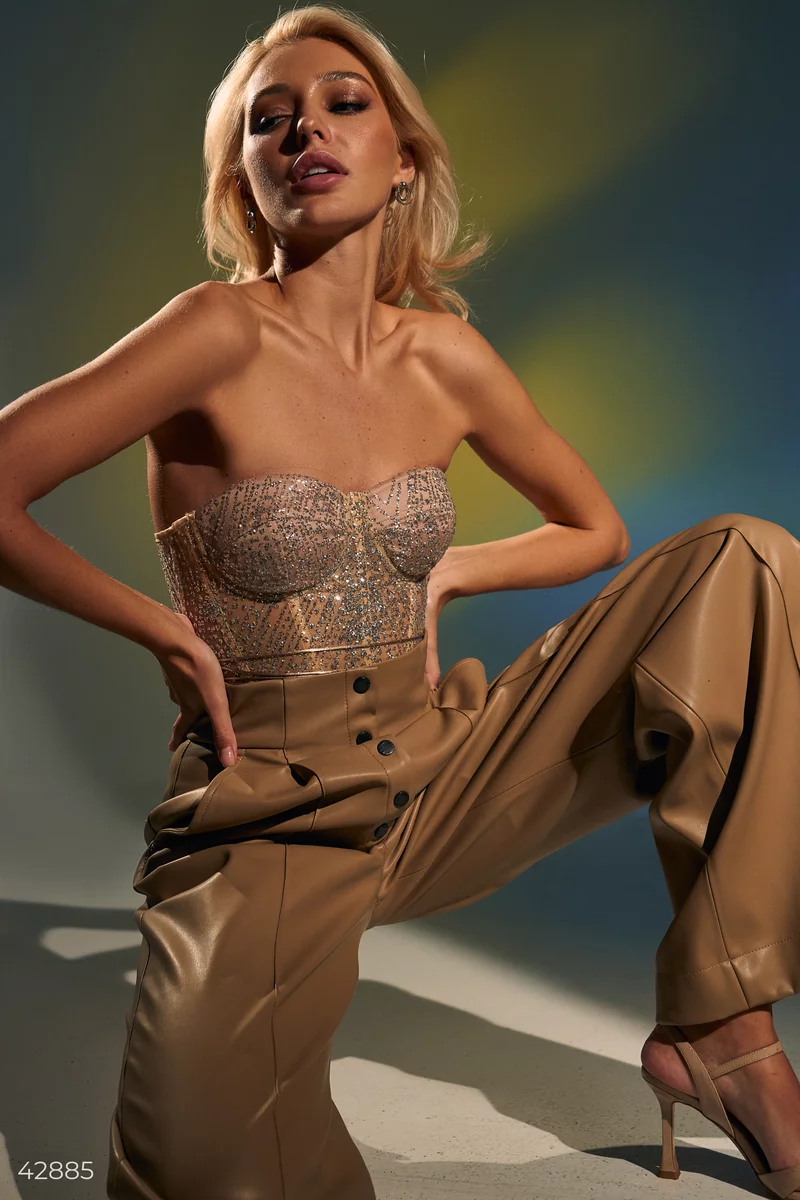
A corset is the detail that draws all the attention. The remaining layers should work as a neutral background: a white shirt, black cigarette trousers, straight jeans, a midi skirt, a solid dress. The basic formulas are: underbust over a white shirt with jeans; a waist cincher over a solid-color dress; overbust with wide floor-length trousers; longline as the only top under an unbuttoned blazer. There is only one rule — do not overload the bottom if the top is already defined by a corset.
Myths about corsets
There are more myths around corsets than around almost any other wardrobe detail. Modern fashion corsets are not tight-lacing (the practice of maximally cinching the waist with lacing, typical of the Victorian era). They do not break ribs, shift internal organs, or require the body to be “trained.” With the right fit, a corset supports the torso and posture — and that is all. For GEPUR collections, this is a basic standard: the corset works for shape, not sacrifice.
“You can read a corset’s fit on the body in three seconds. If the fabric doesn’t bunch underneath, the upper edge lies flat and doesn’t press, and the lacing closes evenly, the fit is perfect. A modern corset no longer demands any ‘female sacrifice’: the right type is chosen to match the shape of the ribcage and the length of the torso, not the other way around.”
— Natali Bakaeva, GEPUR stylist
The history of the corset
The corset has come a long way from the rigid framework of the Renaissance to the accent detail of modern runways. Its shape changed along with the ideal female silhouette — and every era left behind its own type of corset.
Renaissance corsets (16th century)
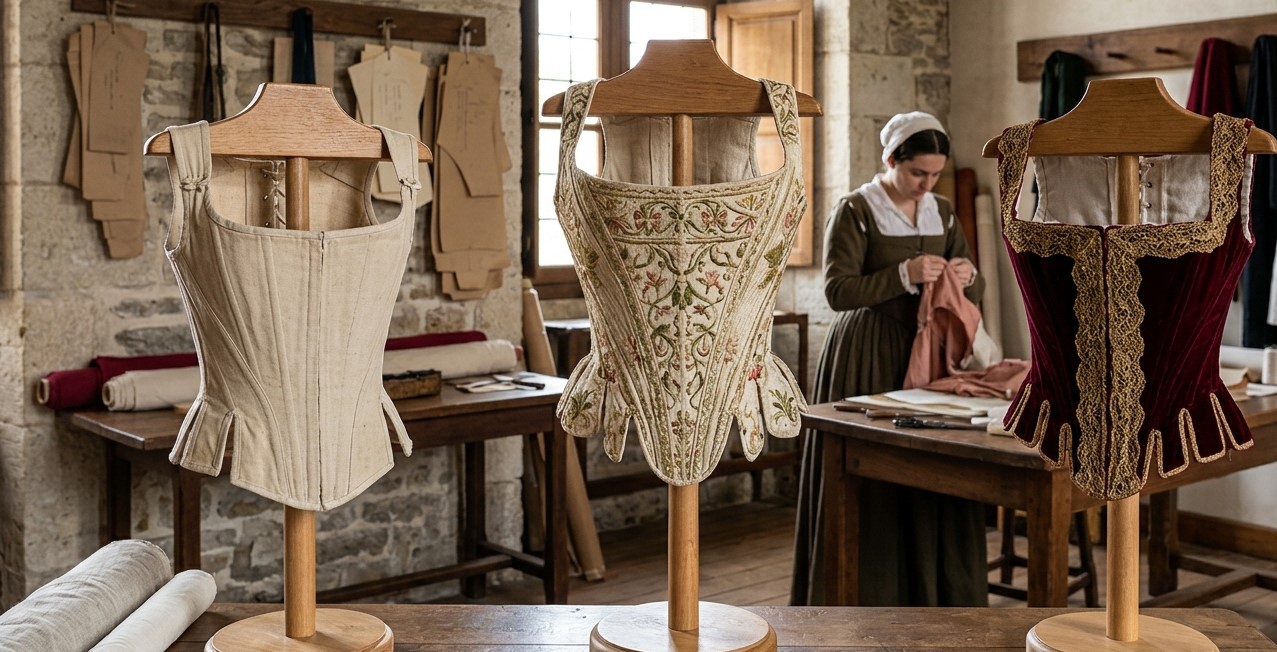
The first rigid corsets appear in the 16th century — the Italian and Spanish busti and stays. Their base consisted of wooden or metal plates forming a conical torso. The spread of the corset in France is often linked to Catherine de’ Medici, who brought Italian fashion to the royal court.
Baroque and Rococo corsets (17th–18th centuries)
The stays of this era were rigid constructions with back lacing, whalebone inside, and a pannier skirt. The torso shape was conical, and the bust was highly lifted. The corset became a ceremonial court attribute and a sign of social status.
Empire and Regency corsets (late 18th — early 19th century)
Classical aesthetics introduced a short corset with a raised waistline under the bust. The silhouette became softer — a column instead of an hourglass. The rigid framework temporarily gave way to light support.
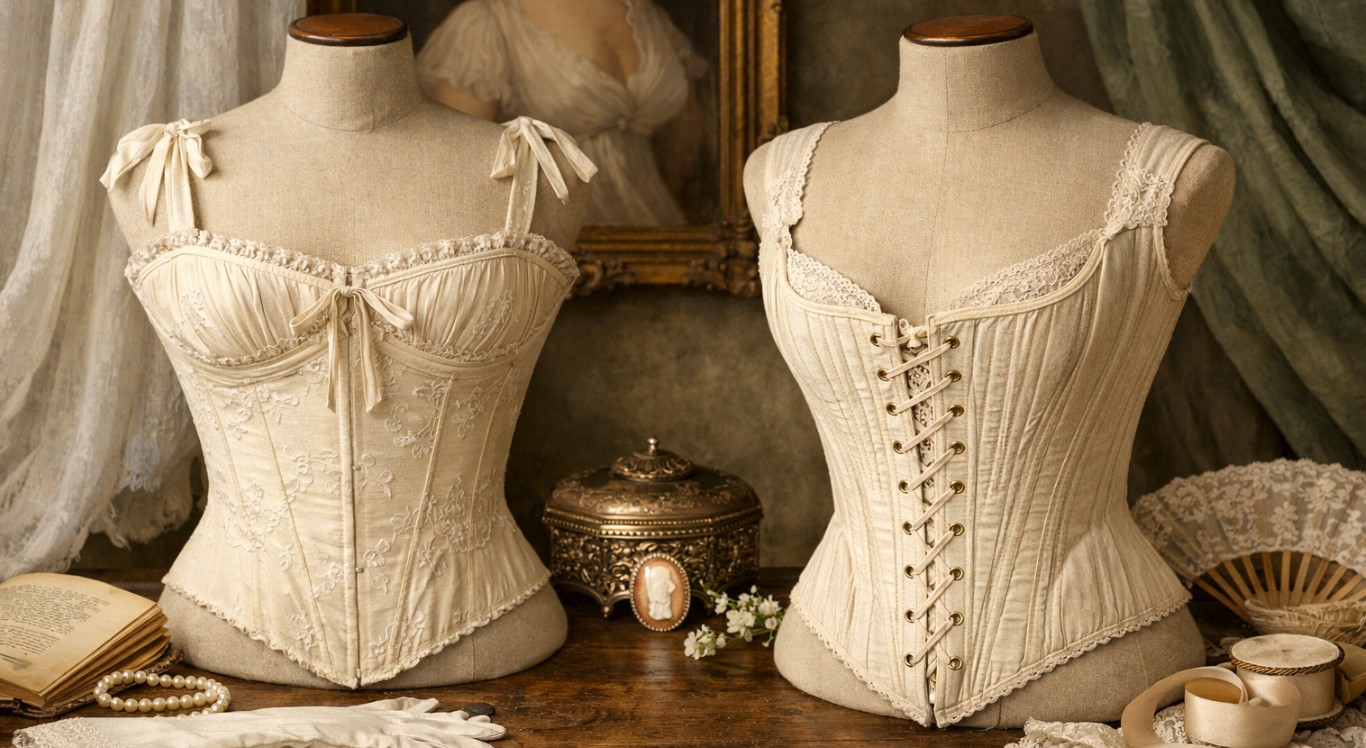
Victorian corset and the “hourglass” silhouette (second half of the 19th century)
This is the silhouette that became fixed in the popular imagination as the “real” corset. Steel boning, a front busk, steam-shaped panels, and the wasp waist achieved through tight-lacing all belong here. This is also where all the myths discussed above come from.
Edwardian S-bend corset (1900s–1910s)
The Edwardian straight-front corset created an S-shaped silhouette: bust forward, hips back. It was positioned as a “healthy” alternative to the Victorian corset — though in reality it placed even more strain on the spine.
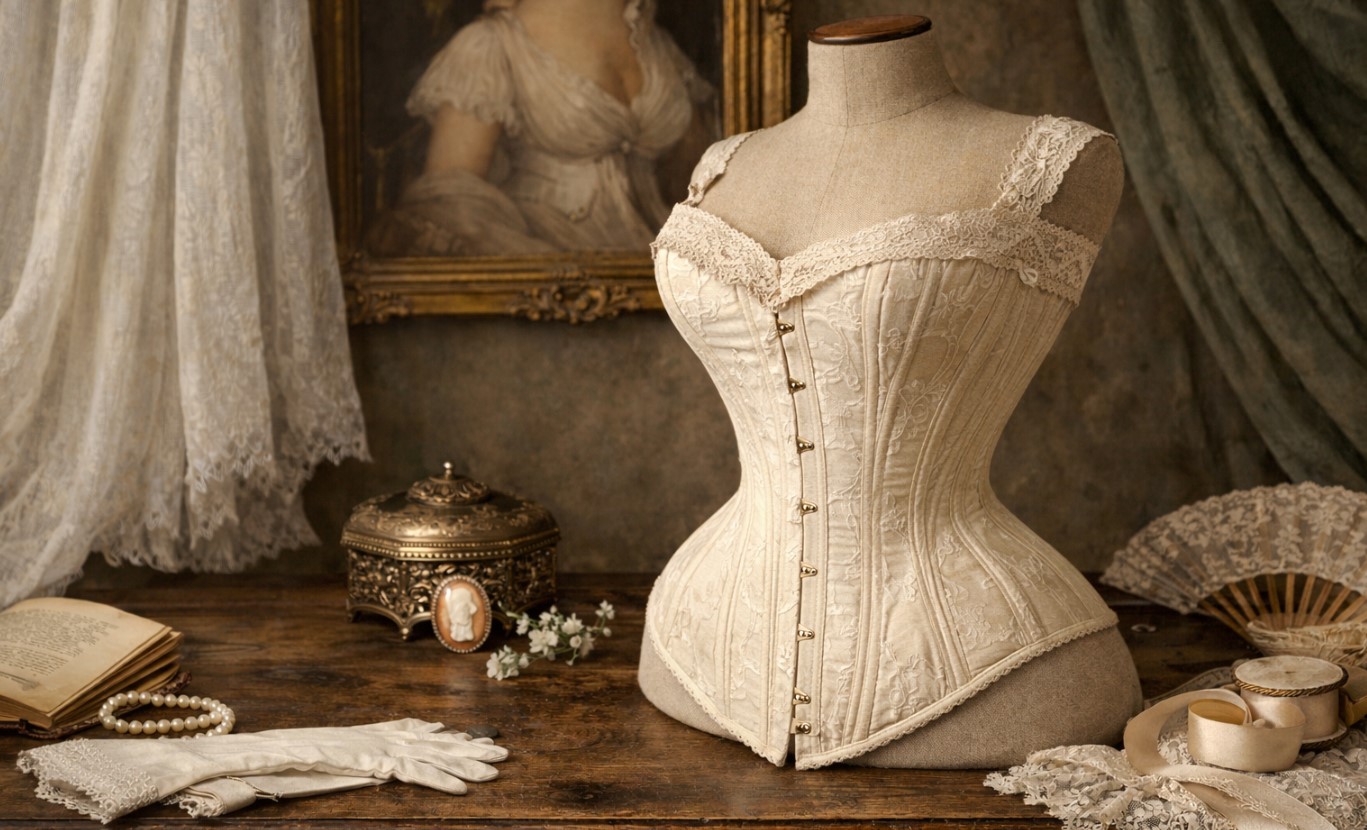
The revival of the corset in modern fashion
Christian Dior brought back the corseted silhouette in his New Look (1947). Vivienne Westwood reimagined the corset as outerwear in the 1980s. Jean Paul Gaultier created the legendary conical bustier for Madonna’s 1990 tour — and the corset definitively moved out of lingerie into the status of outerwear. Thierry Mugler cemented the corset as an architectural detail. On today’s runways — Mugler, Schiaparelli, Dior, Miu Miu — the corset has become a statement piece in both evening and daytime wardrobes. This is exactly the version of the corset that lives in GEPUR collections — a tool of self-expression, not a lingerie layer from the past.
GEPUR corset: your form for self-realization
Types of corsets are the language your silhouette speaks. Underbust is about the waist as a business accent. Overbust and longline are about evening and making a statement. The waist cincher is about shape in seconds. The corset top is about everyday femininity without compromise. This is your time to show up — and a corset is one of the most precise tools for it. Explore the current GEPUR corset collection and choose the model that speaks in your voice.
FAQ: frequently asked questions about types of corsets
How many hours a day can you wear a corset?
A modern fashion corset with plastic or spiral steel boning, when properly fitted, can be worn all day without the need to loosen the lacing. There is only one condition — the corset must fit the body correctly, without aggressive cinching. Tight lacing in the Victorian style has nothing to do with modern fashion models and is not built into their construction.
Does a corset stretch over time?
A quality corset does not stretch out — it molds to the body over the first few wears. This is called “breaking in”: the coutil fabric, inner structure, and lacing adapt to your torso, after which the fit only becomes more precise. Noticeable stretching is only possible in corsets made from elastic fabrics without an inner non-stretch layer — GEPUR does not carry this kind of construction.
How should you store a corset so it does not lose its shape?
A corset should be stored flat on a horizontal surface — in a wardrobe, drawer, or box. It should not be hung on a hanger: the weight of the construction stretches the fabric along the lacing line and disrupts the fit. The lacing should be loosened during storage. Busk-front models should be stored opened flat to avoid a central crease. Satin and silk should be additionally protected with a thin cotton cloth or garment cover.
What is the difference between an underbust corset and a waist cincher?
An underbust is longer and covers the torso from the underbust line to the waist or upper hips — it creates a pronounced waist emphasis and shapes the sides. A waist cincher is two to three times shorter: it works only at the waistline without affecting the ribcage or ribs. Underbust is a structured garment with its own silhouette, while a waist cincher is a decorative accent layered over a finished look without rebuilding the entire composition.
Are there corsets without boning?
Yes — these are corset tops and soft decorative models. Their purpose is to reproduce the corset silhouette without cinching or a rigid internal frame. They are made from dense knitwear, denim, and bonded cotton with minimal rigilene along the central seams. Such corsets are suitable for everyday looks when you want a recognizable shape without a lingerie layer under your clothing.