
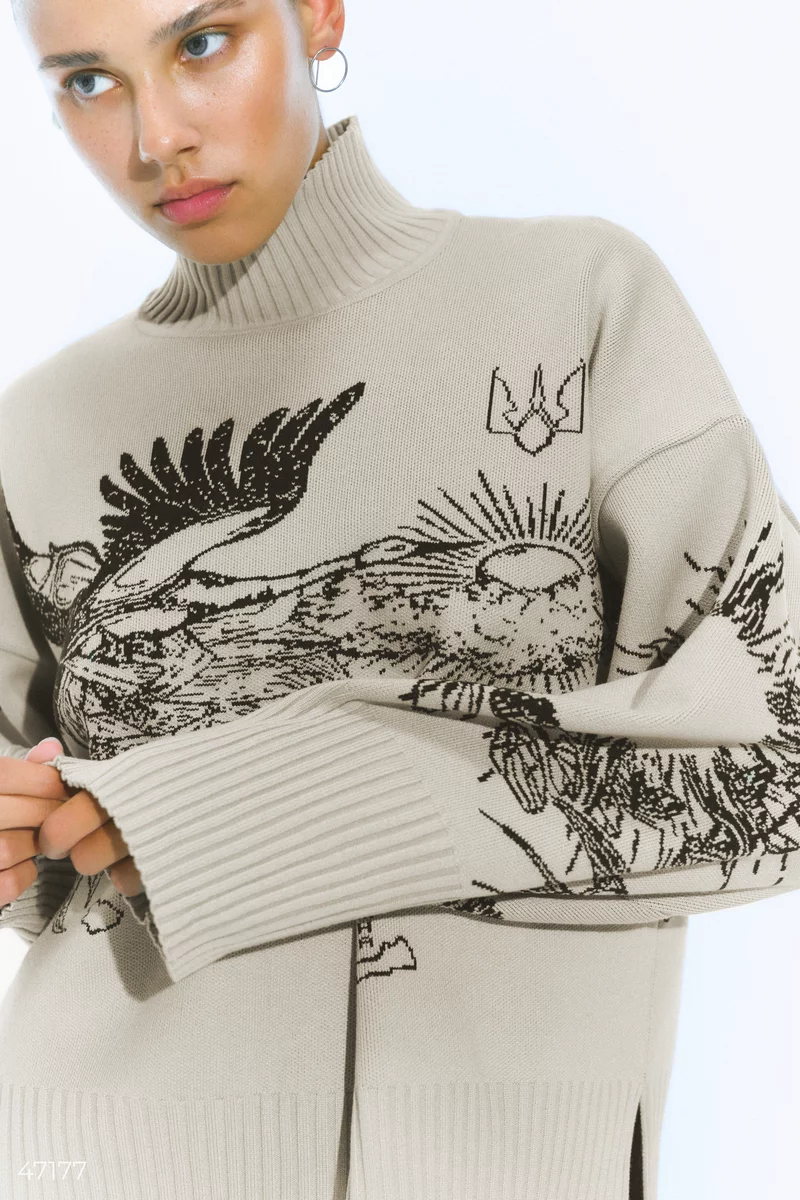
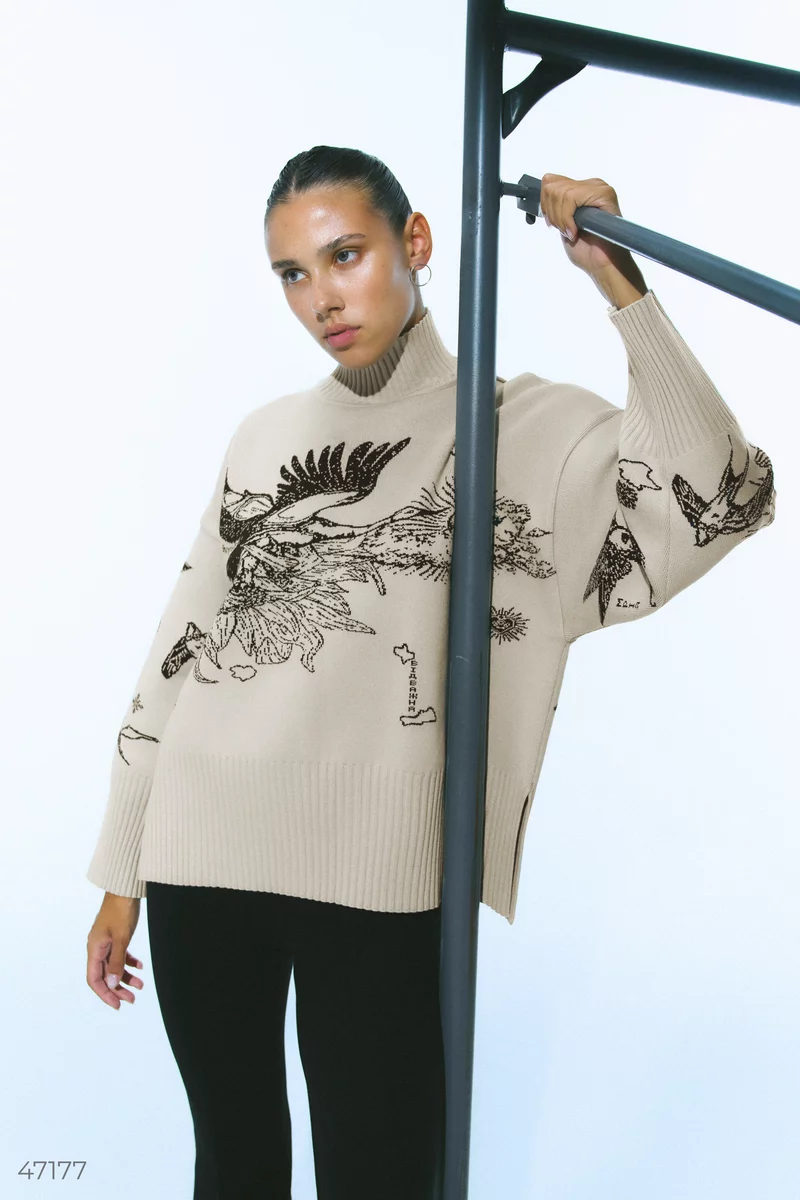
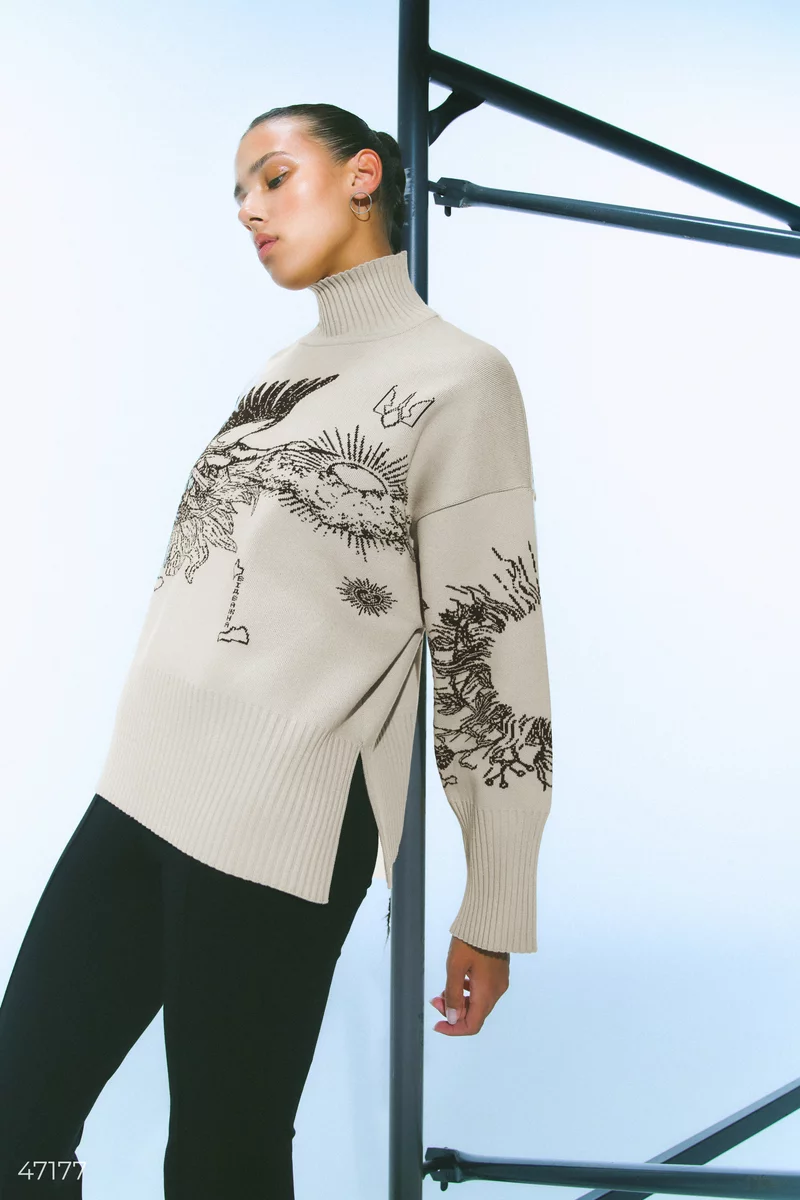
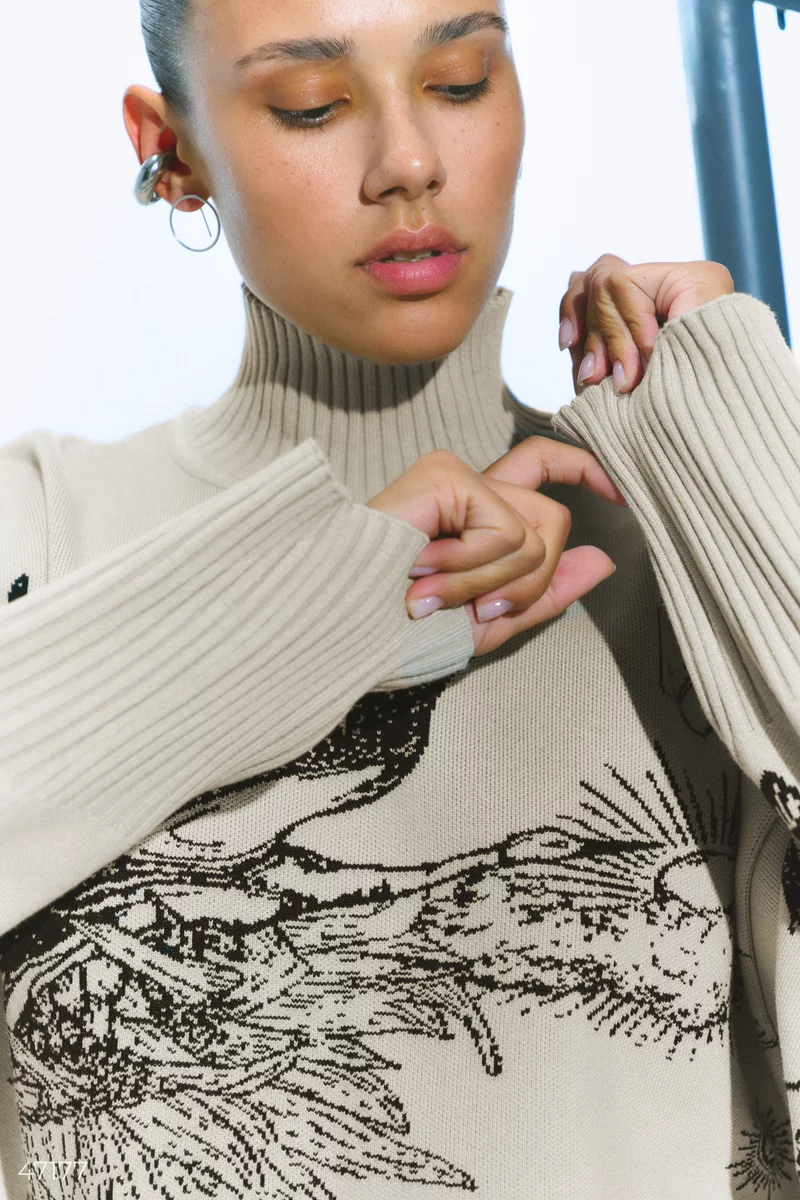
Gepur women's sweaters – warmth you'll want to wear
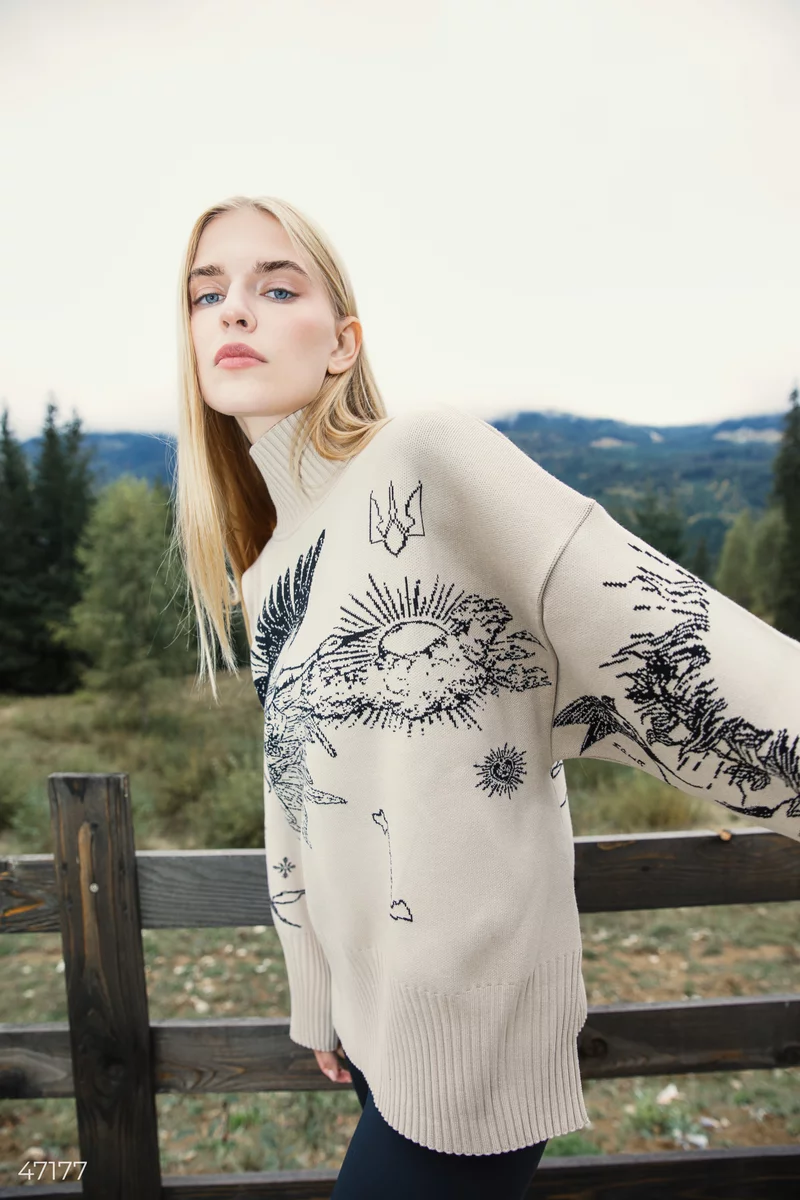
A sweater is a thick knitted garment without fastenings that keeps you warm without an additional layer. This is what distinguishes it from lightweight jumpers: a jumper is more often worn under a blazer, while a sweater works as a standalone top or as a mid-layer under a coat. The Gepur sweaters and knitwear section includes oversized styles, basic sweaters with stand collars, V-neck designs, openwork knits, stripes, and styles with lace cuffs. Women's sweaters at Gepur are available in XS-S, M-L, and universal UN sizing.
Yarn and knit: kid mohair, alpaca, merino
The fiber composition determines what weather the garment will be comfortable in and how it will behave after washing.
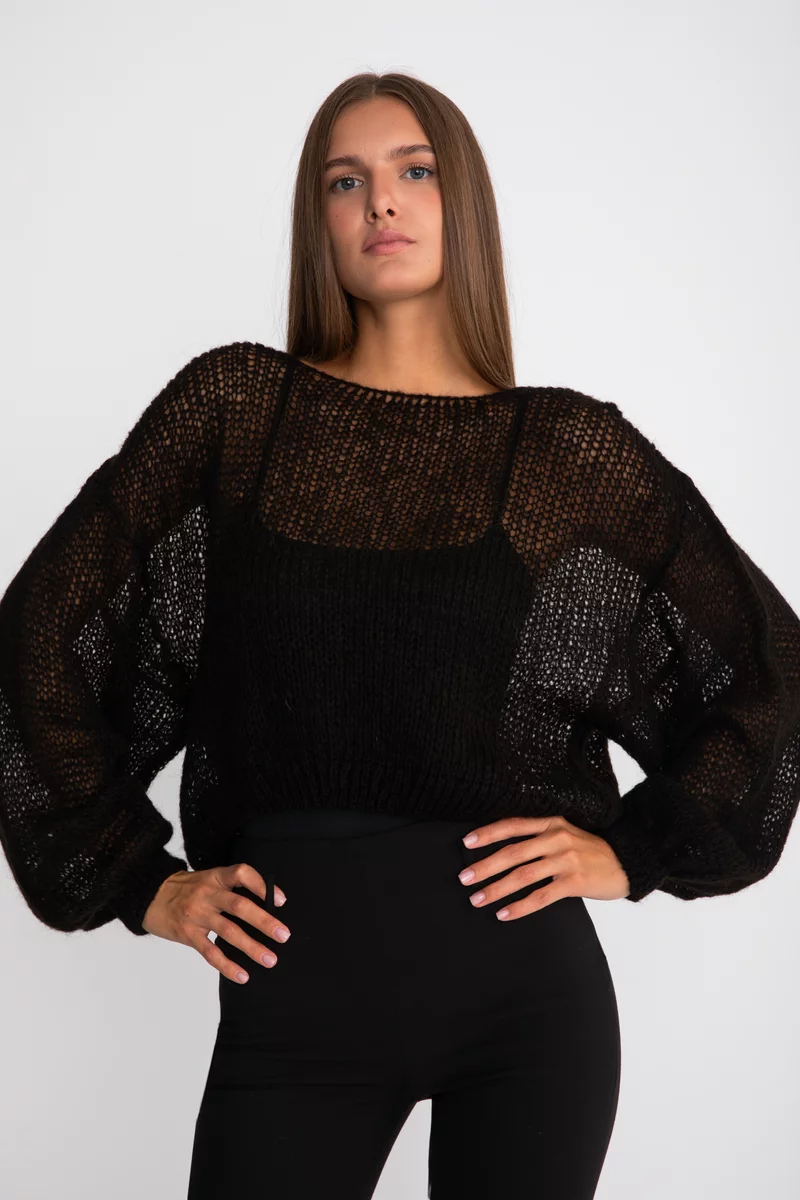
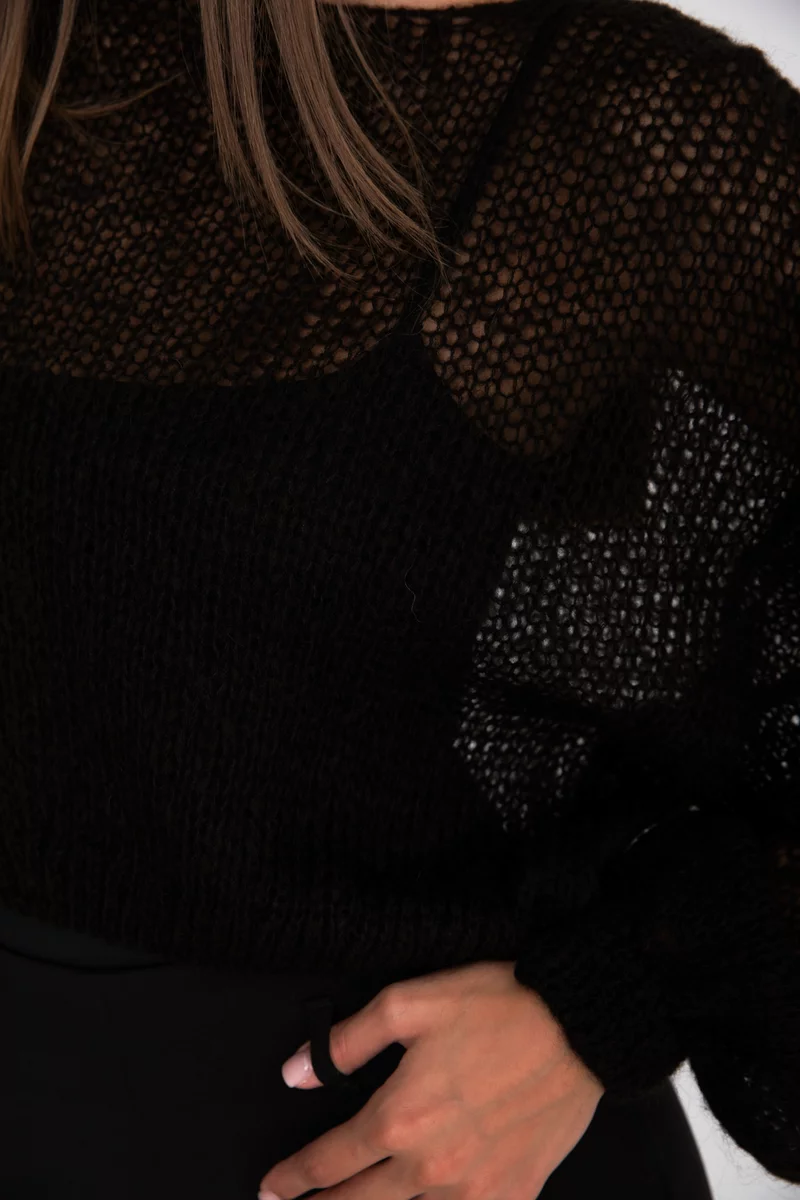
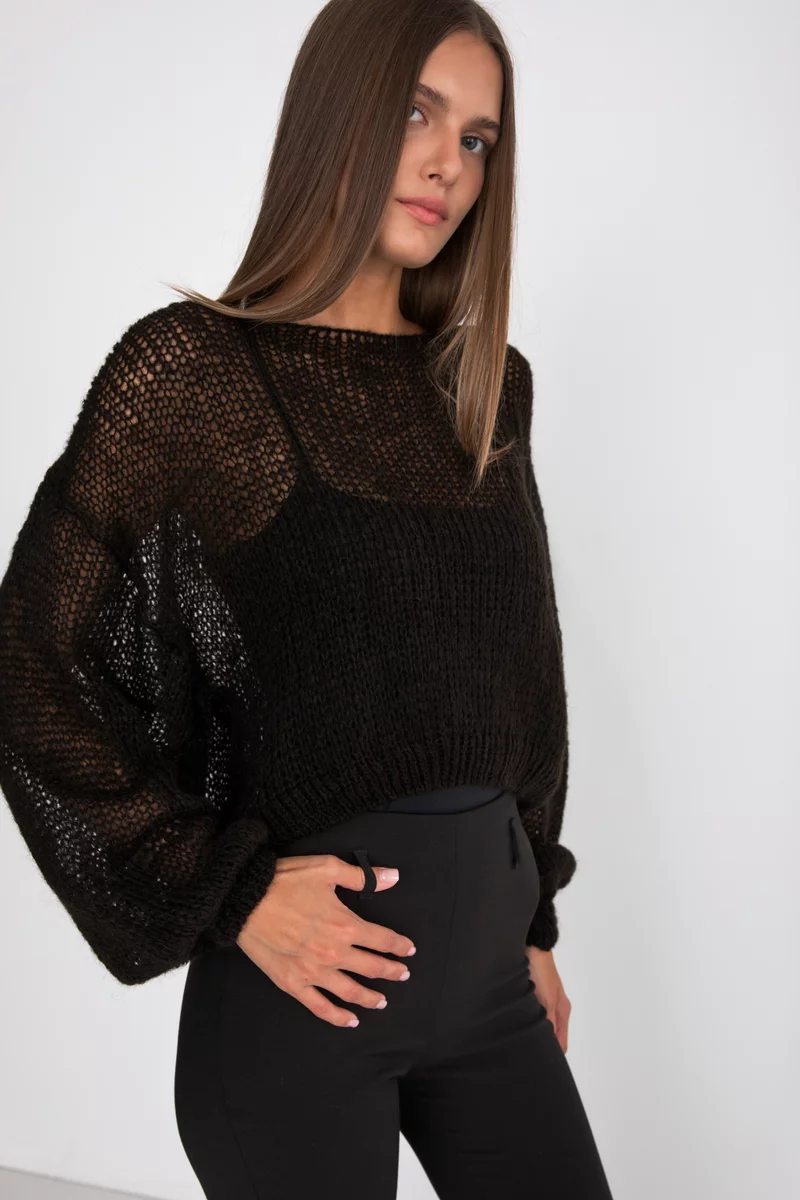
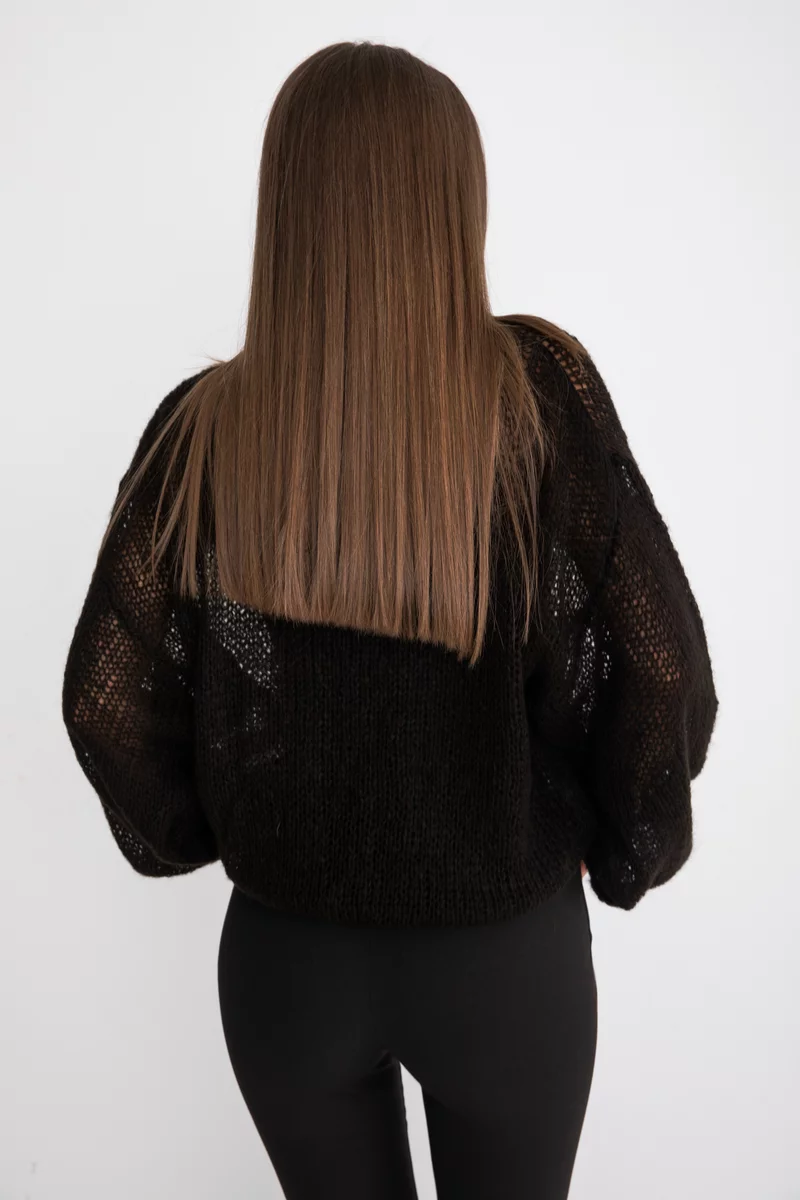
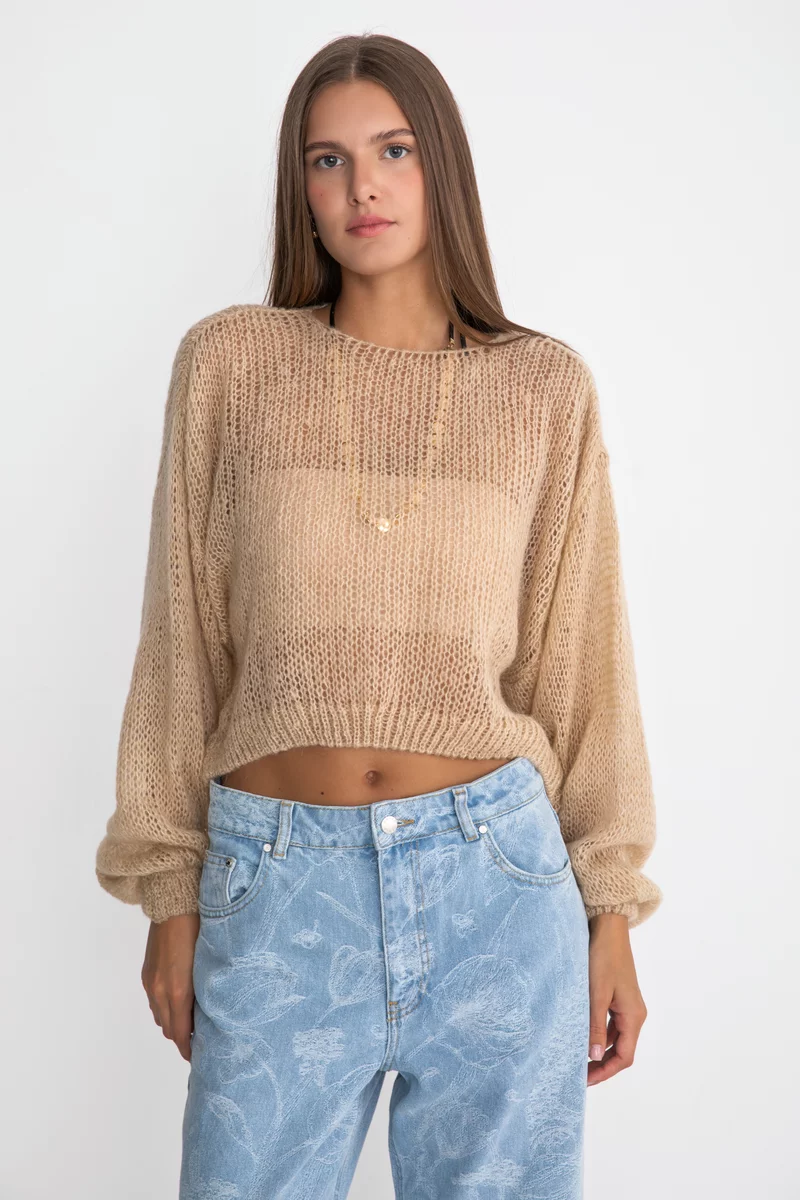
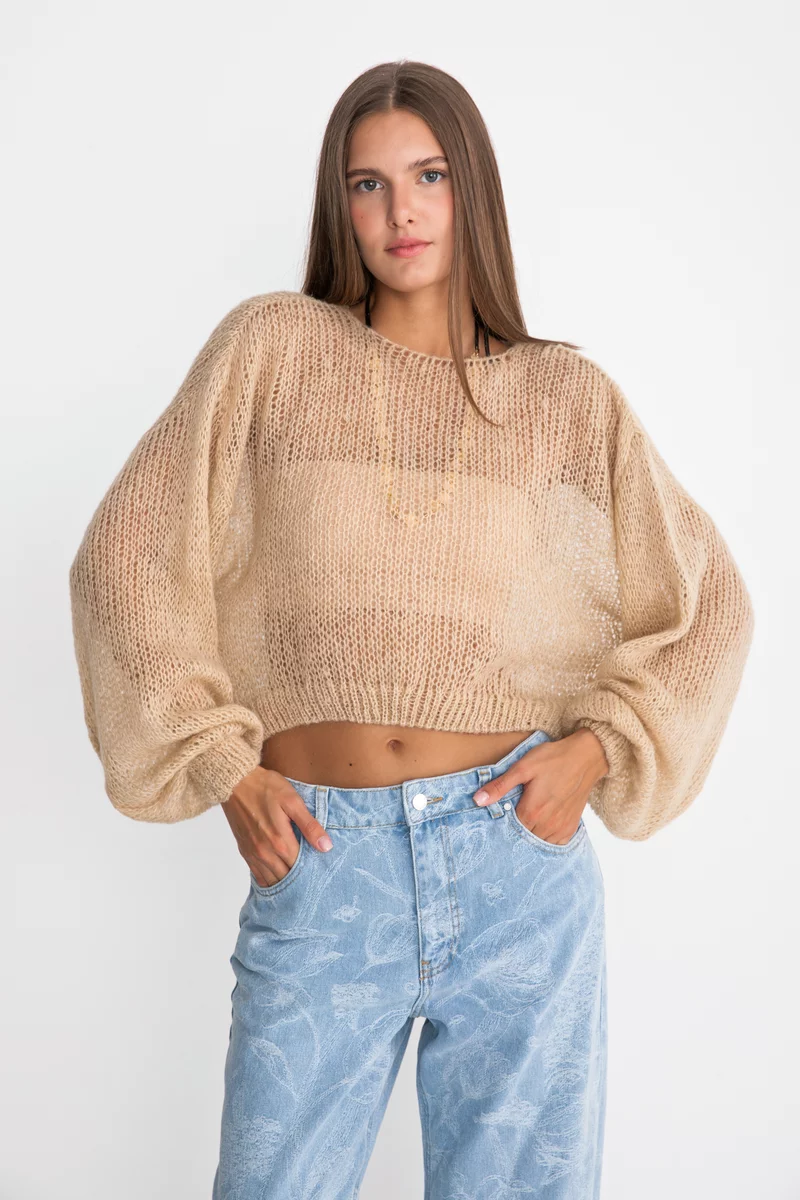
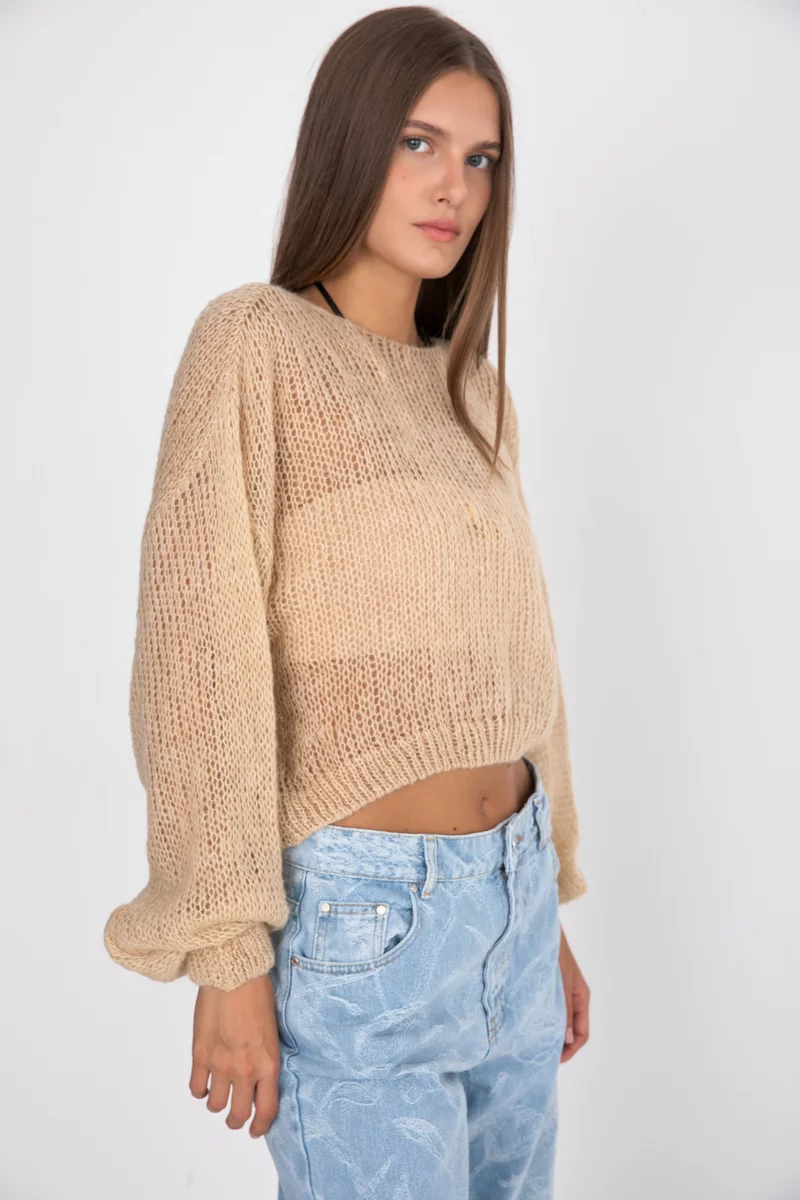
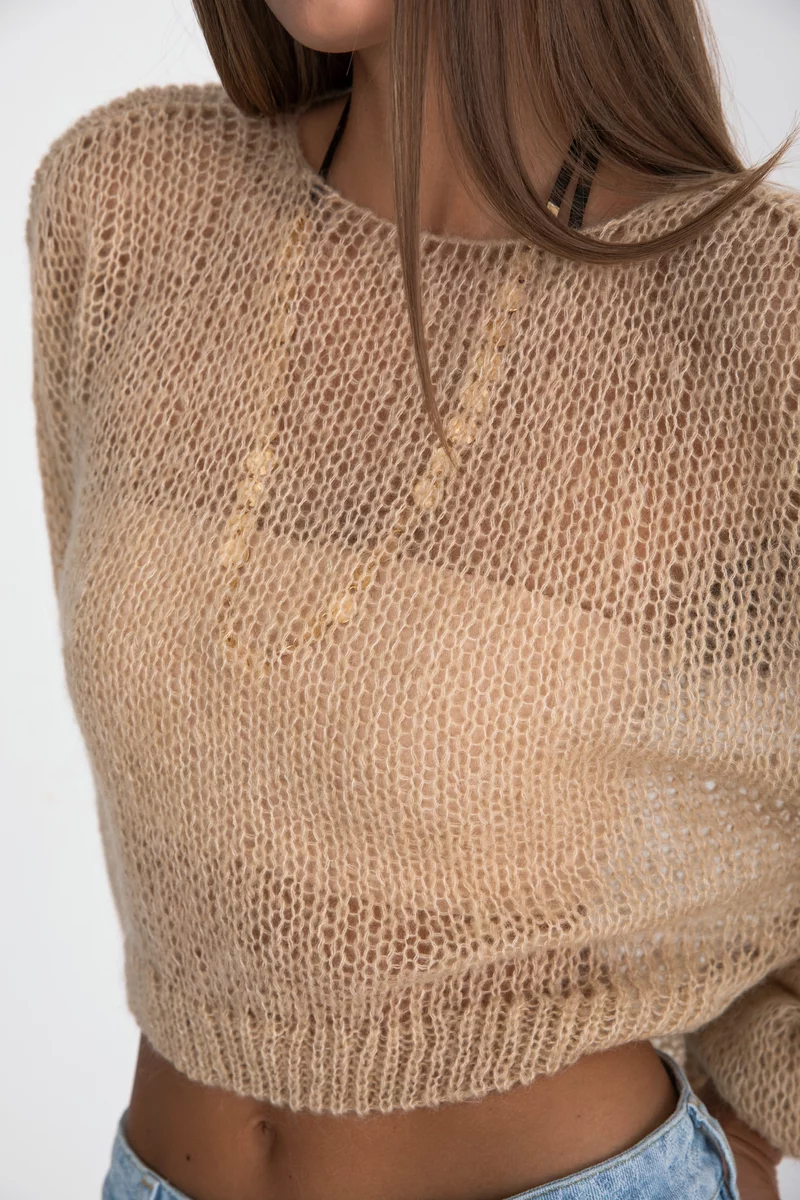
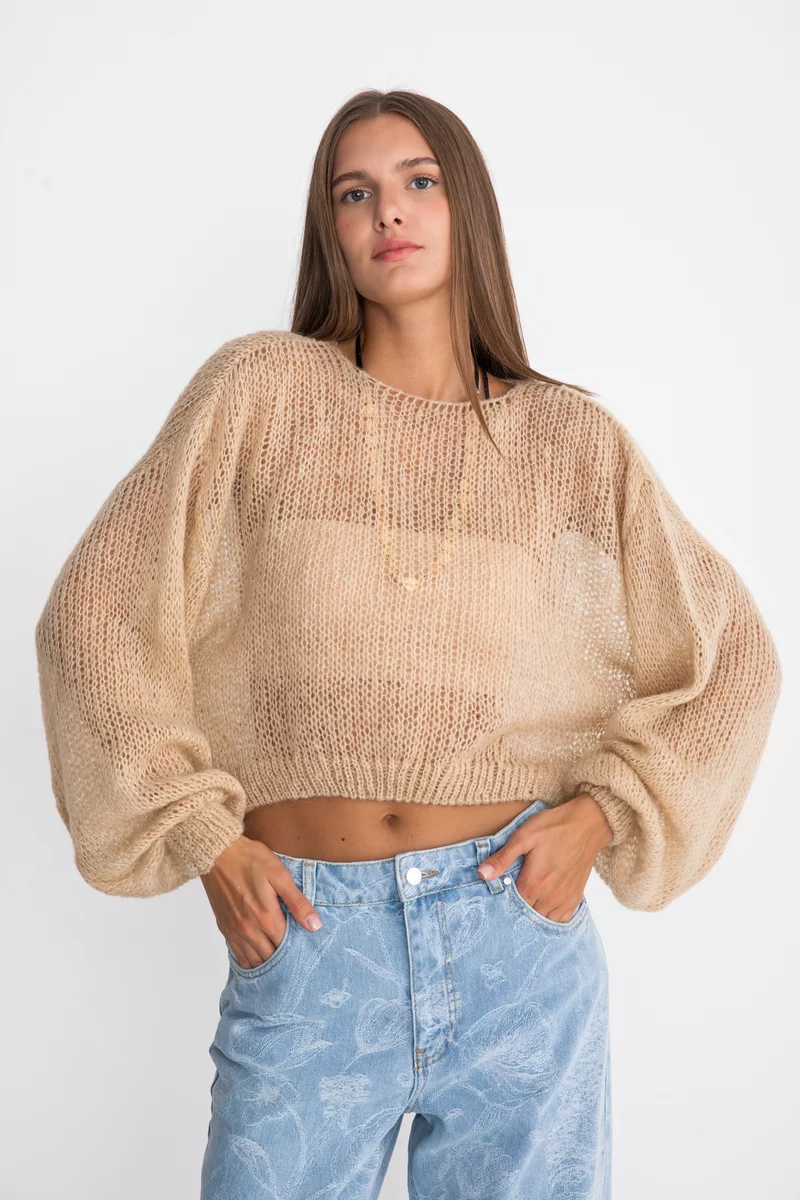
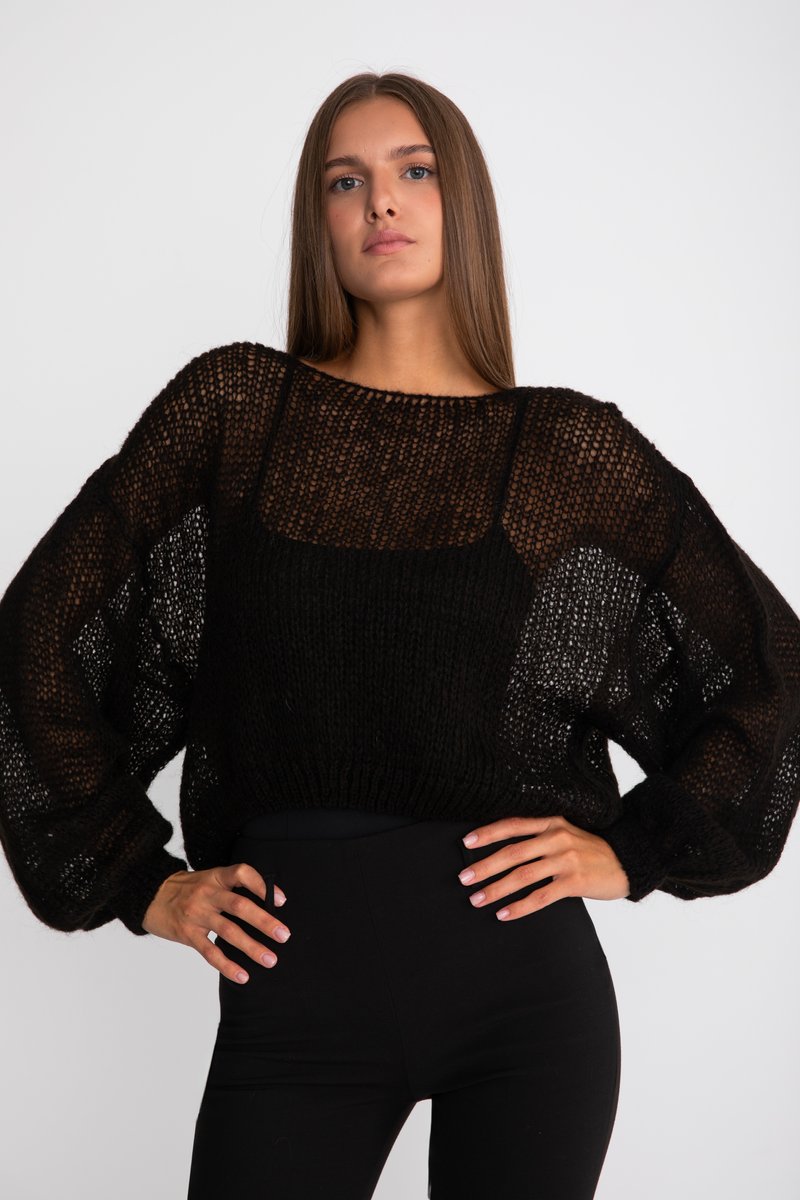
- Kid mohair — wool from young Angora goats. The fine, fluffy fiber provides warmth while remaining lightweight. Gepur uses it for openwork oversized sweaters with dropped shoulders and cuffs with elastic inserts, available in milk, gray, pink, beige, and chocolate shades. Openwork knits need a base layer — a turtleneck or long-sleeve top that matches the yarn.
- Alpaca — a hollow fiber that provides more warmth than sheep's wool and is barely prickly. Oversized alpaca sweaters are designed for winter and can be worn under a coat or puffer jacket.
- Merino wool blend — a smooth, fine knit without unnecessary bulk. This type of sweater fits comfortably under a blazer and works well for the office.
- Knit fabric — a fabric with added synthetic fibers that holds its shape, is easy to wash, and is suitable for transitional weather.
How to choose the right cut and fit
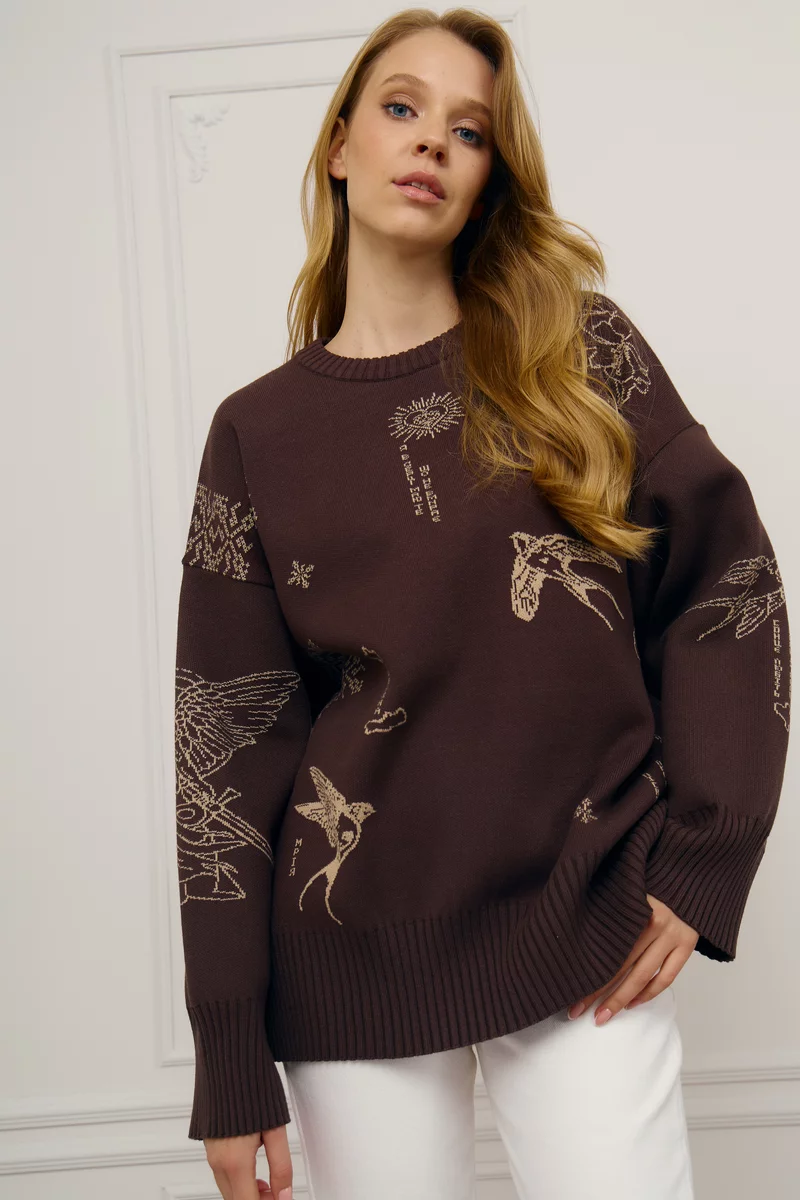
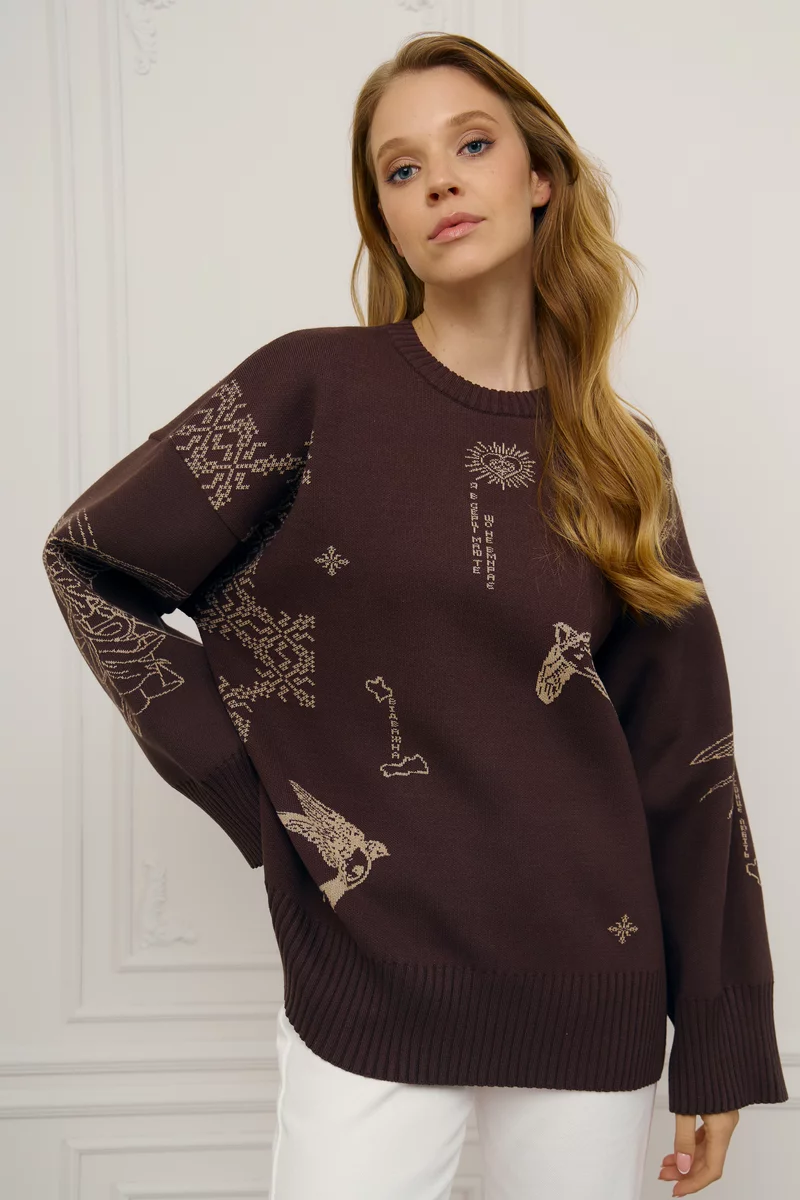
On an oversized style, the shoulder seam sits 5–10 cm below the shoulder bone, and the sleeve covers the wrist. If the seam sits directly on the shoulder and the knit stretches across the bust, the style is too small. A basic sweater should fit without pulling: visible gaps between the stitches are a sign that you need a larger size. A mid-thigh length is versatile, while a cropped sweater that ends at the waist is best worn with high-rise trousers and skirts. Chunky knits add volume, so wider hips can be balanced with straight or slim-fitting bottoms. A V-neck visually elongates the silhouette and opens up the neckline, while a stand collar covers the neck and can replace a scarf in transitional weather.
“The main mistake with an oversized sweater is pairing it with equally voluminous bottoms. Keep the volume in one area: a relaxed top works with slim trousers, a pencil skirt, or close-fitting boots. The check is simple: you should still be able to see the waistline or at least the outline of the hips in the mirror.”
— Natali Bakaeva, GEPUR stylist
What to wear with a sweater: practical combinations
- With a midi skirt. Tuck the front 3–5 cm of an oversized sweater into the skirt or belt it directly along the waistband so the waist remains visible. A satin or pleated midi skirt with block-heel ankle boots creates a complete city look.
- With leather. Openwork kid mohair and a leather skirt create a contrast of textures. Keep the colors within one palette: pair a chocolate sweater with black or brown leather, and a milk-colored sweater with beige.
- With denim. Wear an oversized alpaca sweater untucked with straight or wide-leg jeans if the sweater reaches mid-thigh. If it is shorter, tuck it in. Footwear: loafers, Chelsea boots, or sneakers.
- For the office. Wear a merino V-neck sweater over a shirt: leave the collar visible and let the cuffs extend 1–2 cm beyond the sweater sleeves. Pair it with crease-front trousers.
- Under outerwear. A voluminous sweater works well with a coat with dropped shoulders or raglan sleeves — a coat with a structured shoulder line can crush the knit.
- For the evening. Pair a sweater with lace cuffs with a satin skirt and long earrings. Avoid wearing necklaces and chains over openwork knits, as they can catch on the stitches.
- Emphasizing the waist. A wide belt worn over a relaxed sweater controls the volume and restores definition at the waist.
FAQ: women's sweaters — common questions
What is the difference between a sweater, jumper, and pullover?
A sweater is knitted from thicker yarn. It is denser and warmer and often has a high collar or stand collar. A jumper is lighter, has a round neckline, and is worn as a second layer. A pullover is a lightweight style with a V-neck. All three are pulled on over the head and have no fastenings.
Which sweater is warmest for winter?
The warmest options are alpaca and densely knitted wool sweaters. Alpaca fibers are hollow and trap air, which allows them to provide more warmth than sheep's wool. Kid mohair is also warm, but openwork styles are best worn with a turtleneck underneath. Knitwear with synthetic fibers is better suited to autumn and spring.
Are wool sweaters itchy?
It depends on the thickness of the fiber. Merino and alpaca are barely prickly and can be worn directly against the skin. Kid mohair fibers may be noticeable on sensitive skin around the neck and wrists. In this case, wear a cotton or viscose turtleneck or long-sleeve top underneath the sweater.
How do you choose the size of an oversized sweater?
The universal UN size is designed for a relaxed fit. There is no need to size down to make the sweater fit closer to the body: the volume is intentionally built into the cut of an oversized style. If you are unsure about the fit, a Gepur manager can confirm the measurements of a specific style before payment.
What should you wear under an openwork sweater?
For city wear, choose a smooth turtleneck, bodysuit, or long-sleeve top in the same color as the yarn so the openwork pattern reads as texture. A contrasting layer, such as black under a milk-colored sweater, makes the knit pattern more noticeable. For evening wear, a satin camisole works well.
How should you wash a wool sweater so it does not shrink?
Wash it by hand or on a wool cycle at a temperature of up to 30 °C using a wool detergent. Do not rub or wring the garment. Press out excess water with a terry towel and dry the sweater flat, away from radiators. Always check the care label before washing, as blended yarns may require different care settings.
Why do sweaters pill, and what can you do about it?
Pilling appears where the sweater experiences friction: under the arms, at the sides, and where a bag strap rubs against it. This is normal for natural yarns, especially during the first few weeks of wear. Remove pills with a fabric shaver rather than a razor, as a razor can damage the knit. Pilling can be reduced by carrying your bag on the other shoulder and washing the sweater inside out.
How should sweaters be stored so they do not stretch?
Store sweaters folded on a shelf. Hanging knitwear can cause it to stretch and leave bumps at the shoulders. Between seasons, store sweaters clean in a cotton garment bag and place cedar blocks or lavender sachets nearby to help protect them from moths.
What determines the price of a sweater?
The main factor is the yarn composition. Alpaca and kid mohair styles cost more than knitwear made from synthetic or blended fibers. The complexity of the knit and details such as openwork patterns, lace cuffs, and stand collars also affect the price. The current price is listed on each product page.
Where can you buy a beautiful women's sweater in Ukraine?
You can buy a sweater at gepur.com with delivery across Ukraine or at Gepur brand stores. Availability at a specific store can be checked on the product page. A manager in the chat can advise you on composition, fit, and styling combinations.
Women's sweaters: prices in September 2026
Frequently asked questions about women's sweaters?
Where to buy women's sweaters?
Women's sweaters can be purchased at Gepur stores or ordered online at Gepur.com
What are the most popular women's sweaters?
TOP 5 most popular products in the category women's sweaters:
What are the prices for women's sweaters?
Prices for the women's sweaters from 51$ to 95$